Spinneret

Definition and stakes

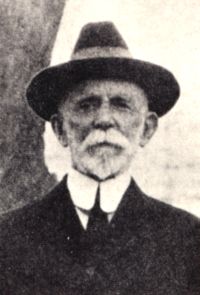
Portrait of Burt Green Wilder Burt Green Wilder,  Popular Science Monthly (1874)

“ I do not know from which spinners the various parts of the net are formed.
The spinning mammulæ, or spinnerets, are represented in Fig. 6. They form a little group upon the lower surface of the abdomen, near its hinder end. In a state of rest, they are closely approximated, but when in use they are more or less widely spread apart like so many fingers or short legs. Indeed, there is reason to regard the spinners as corresponding in essential structure with the true legs of the spider. They are jointed or articulated, and capable of considerable movement.
”
Source: Wikisource

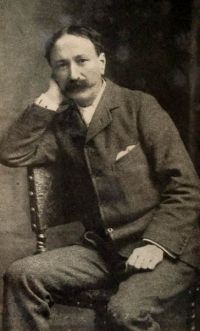
Portrait of Jean-Henri Fabre Jean-Henri Fabre,  The Life of the Fly; With Which are Interspersed Some Chapters of Autobiography

“ With a quick movement, it shifts its burden, gets it as nearly by the middle as it can, so that the two ends stick out equally on either side, and chooses the spot to place it, whereupon the spinneret sets to work at once, while the little fore legs hold the scrap of root motionless in its transversal position. The soldering is effected with a touch of silk in the middle of the bit and along a certain distance to the right and left, as far as the bending of the head permits. ”
Source: Gutenberg

Sir A. E. Shipley,  The Cambridge natural history, Vol… (1909)

“ Spinnerets as a rule terminal, and visible from above.
This important family includes a large number of species from all parts of the world, fifty-six being natives of the British Isles. There are familiar examples in the brown or mouse-coloured spiders which scurry away when stones are raised, or when loose bark is pulled off a tree.
The family may be divided into seven sub-families, of which four, Drassinae, Clubioninae, Liocraninae, and Micariinae, are represented in this country.
”
Source: Gutenberg

Get perspective with Kwize: daily news enlightened by great literature