“ His vivacity betrays itself, at all points, in his manners, in his respiration, and the inarticulate noises he makes in clearing the throat,--all significant of burly strength. He has stamina; he can take the initiative in emergencies. ”
Stamina
Definition and stakes
Stamina, often used interchangeably with endurance, refers to the ability to maintain physical or mental effort over extended durations, while resisting exhaustion and challenges. Authors such as William Blaikie associated it with bodily strength and effective communication, whereas Walter Bradford Cannon focused on its physiological basis during stressful situations.
Catharine Esther Beecher highlighted its relationship with nerve health and balanced physical activity. These viewpoints illustrate stamina as a complex characteristic, combining physical toughness with mental determination, and its development through training, as demonstrated by epigenetic changes that improve muscular and systemic resilience.
Quotes about “stamina”
William Blaikie, How to Get Strong and How to Stay So (1899)
“ The most potent speakers in all ages have been distinguished for bodily stamina. They have been, with a few remarkable exceptions, men of brawny frames, with powerful digestive organs, and lungs of great aerating capacity. They have been men who, while they had sufficient thought-power to create all their material needed, had pre-eminently the explosive power by which they could thrust their materials out at men. ”
Charles Reynolds Brown, The Cap and Gown (1910)
“ We find this made plain in several directions—first of all in the gaining and maintenance of sound health. Genuine achievement in many lines becomes in the last analysis largely a question of nerves, digestion, physical stamina. ”
swámi A. P. Mukerji, The Doctrine and Practice of Yoga
“ Now when you engage in physical exercise, for instance, you must have noticed how at first you soon get tired and all done up. But if you wait a little and then start again, you will find how the sense of fatigue has quite passed away and you can run your body under full pressure for a very long time, and the more you exert yourself the greater and more powerful the surging up of your vital energy. With each new exertion you seem to acquire a fresh start. ”
John Mead Gould, How to Camp Out
“ Seeking real strength in stimulus is as wise as an attempt to lift yourself up by your boot-straps. You may gather yourself to leap the ditch, and you clear it; but no such muscular energy can be sustained: exhaustion speedily renders further expenditure impossible. But now suppose a very powerful mental impression be made, say the circumstance of a succession of ditches in front, and a mad dog behind: if the stimulus of terror be sufficiently strong, you may leap on till you drop senseless. Alcoholic stimulus is a parallel case, and is not seldom pushed to the same extreme. ”
 Freda Du Faur,
The Conquest of Mount Cook
(1915)
Freda Du Faur,
The Conquest of Mount Cook
(1915)
“ The strain on a woman who is physically fit is not so heavy as he thinks it is, and is not to be compared to the nervous and mental tension which has to be endured by a trained hospital nurse who tends a dangerous case for sixteen hours. I have tried both, and I know that the exercise, the invigorating air, and the healthy excitement of a big climb outweigh the nervous and physical strain. A few hours' sleep and the latter are forgotten, while the effects of the former are in evidence in a sense of physical fitness which I never experienced until I took up mountaineering. ”
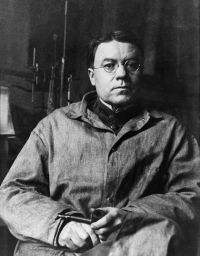 Walter Bradford Cannon,
Bodily changes in pain, hunger…
(1915)
Walter Bradford Cannon,
Bodily changes in pain, hunger…
(1915)
“ The nervous impulses delivered to the muscles, furthermore, operate upon organs well supplied with energy-yielding material and well fortified by rapidly circulating blood and by secreted adrenin, against quick loss of power because of accumulating waste. Under such circumstances of excitement the performance of extraordinary feats of strength or endurance is natural enough. ”
William Blaikie, How to Get Strong and How to Stay So
“ If the bodily exercise is such as to get all the muscles strong, and keep them so, the very work that would otherwise overdo and exhaust now has no such effect, but is gone through with spirit and ease. There is that consciousness of strength which is equal to all such trifles.The very nervousness and worry which used to be so wearing, at the sudden and ceaseless calls of the day, have gone, and for the reason that strong nerves and strong muscles are very liable to go together, and not to mind these things. What does the athlete at the top of his condition know about nervousness? ”
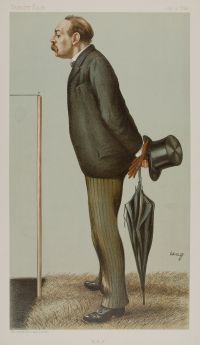 Montague Shearman,
Foot-ball: its history for five centuries
(1885)
Montague Shearman,
Foot-ball: its history for five centuries
(1885)
“ Now, if you play football or cricket, or indulge in any English pastimes, you will unquestionably forget your latter end, and will develop such a healthy energy as will be fatal to despondent bitterness of spirit, which makes the true Puritan.” The result was simple. Exercise was a waste of time, innocent pleasure an unwarrantable pampering of the flesh, an unholy coaxing of the old Adam. Now we all know the result of insufficient exercise to be derangement of the liver, the spleen, and all organs and functions of the body. ”
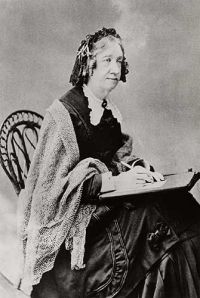 Catharine Esther Beecher,
American Woman's Home: Or, Principles of Domestic Science…
Catharine Esther Beecher,
American Woman's Home: Or, Principles of Domestic Science…
“ Inactivity produces softness, debility, and unfitness for the functions they are designed to perform.Now, the nerves, like all other parts of the body, gain and lose strength according as they are exercised. If they have too much or too little exercise, they lose strength; if they are exercised to a proper degree, they gain strength. When the mind is continuously excited, by business, study, or the imagination, the nerves of emotion and sensation are kept in constant action, while the nerves of motion are unemployed. ”
 William Gilmore Simms,
Charlemont; Or, The Pride of the Village…
William Gilmore Simms,
Charlemont; Or, The Pride of the Village…
“ In due proportion to the degree of exercise to which she subjected her mere mind—making that busy and restless—was the neglect of her sensibilities—those nice ANTENNAE OF THE HEART. “Whose instant touches, slightest pause,” teach the approach of the smallest forms of danger, however inoffensive their shapes, however unobtrusive their advance. When the sensibilities are neglected and suffered to fall into disrepute, they grow idle first, and finally obtuse! even as the limb which you forbear to exercise loses its muscle, and withers into worthlessness. ”
 George Washington Crile,
The Origin and Nature of the Emotions…
George Washington Crile,
The Origin and Nature of the Emotions…
“ Through the special senses environmental stimuli reach the brain and cause it to liberate energy, which in turn activates certain other organs and tissues, among which are the adrenals. The increased output of adrenalin activates the brain to still greater activity, as a result of which again the entire sympathetic nervous system is further activated, as is manifested by increased heart action, more rapid respiration, raised blood-pressure, increased output of glycogen, increased power of the muscles to metabolize glucose, etc. ”
Mountain Craft (1920)
“ The nerve communications are sluggish from disuse; the muscles are out of control, and distrustful of what the arbitrary will may ask of them. We become ‘nervous,’ and potter. This can all be avoided by reasonable and light practice. Regular exercise of the heart, the lungs, the muscles and the nerve-lines of communications, with occasional repetitions of our groups of familiar subconscious motions, will maintain a general level of fitness even out of training. ”
Thomas Champness, Broken Bread, from an Evangelist's Wallet
“ So thought Paul.—See 1st Cor. ix, 25 and 27. Those sixteen young fellows who will pull the oars in the race, have, for months, been undergoing strict physical training. This means abstinence from all that could be said to weaken the frame, or lower the action of the heart. There are only certain things they may eat and drink. They must have the right amount of sleep, and no more. Exercise of the most bracing kind they must take every day, and eschew every practice that could weaken the nerves or muscles in the slightest degree. ”
George Washington Crile,
The Origin and Nature of the Emotions…
“ If the activities were consummated, the fuel—glycogen— and the activating secretions from the thyroid, the adrenals, the hypophysis, would be consumed. In the activation without action these products must be eliminated as waste products and so a heavy strain is put upon the organs of elimination. It is obvious that the body under emotion might be clarified by active muscular exercise, but the subject of the emotion is so strongly integrated thereby that it is difficult for him to engage in diverting, clarifying exertion. ”
Anna M. Galbraith, Personal hygiene and physical training for women (1916)
“ Every violent physical sensation will react on the lungs; every powerful normal emotion, whatever its cause, will also make its influence felt on the respiratory functions. An exercise which is performed with tranquil breathing if the mind is free from care, quickly produces respiratory disturbances if the mind is brooding and preoccupied. Those who have acted as seconds in a duel to men accustomed to the use of the sword know that they become breathless in the duel much more quickly than they do in the fencing school. ”
George Washington Crile,
The Origin and Nature of the Emotions…
“ In the voluntary expenditure of muscular energy, as in the chase, the suspension of other functions is by no means so complete. Fear and trauma may drain to the last dreg the dischargeable nervous energy, and, therefore, the greatest possible exhaustion may be produced by fear and trauma. ”
Aegineta Paulus, The seven books of Paulus Ægineta… (1844)
“ Strong, that is to say, violent exercise gives vigour to the muscles and nerves: such are digging, and lifting a very heavy burden, while one remains in the same spot, or moves about; or lifting small weights and walking about as much as one can. Of this kind, is the exercise of scaling a rope, and many others of a like kind. The swift kinds of exercise are such as do not require strength and violence, namely, running, fighting with one’s shadow, wrestling with the extremities of the hands, the exercise with the leather bag, and that with the small Ball. ”
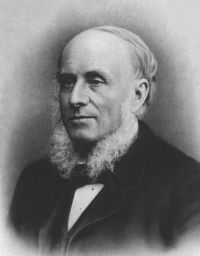 Alexander Bain,
Popular Science Monthly
(1877)
Alexander Bain,
Popular Science Monthly
(1877)
“ The oxidation of the tissues has been retarded; muscular exercise is the most direct mode of increasing it. But definite observations teach us that these two beneficial effects are arrested at the fatigue-point; so that the exercise at last contributes not to the refreshment, but to the further exhaustion of the system. ”
Anonymous, The fourth progressive reader (1871)
“ But even where natural or physical energy is deficient, an energetic manner may be acquired by practice and exercise under judicious direction; just as the muscular powers may be improved, and bodily vigor increased, even in a feeble frame, under a course of training and well-regulated exercise. ”
 Auguste Forel,
The sexual question
Auguste Forel,
The sexual question
“ Influence of Repeated Sexual Excitations.—The artificial and varied repetition of sexual excitation, by means of objects which provoke it, increases the sexual appetite. This cannot be doubted, for the law of exercise is a general truth in the physiology of the nervous system. This law, which is also called the law of training, shows that every kind of nervous activity is increased by exercise. A man becomes a glutton by accustoming himself to eat too much, a good walker by exercising his legs. ”
Ed. James, Practical Training for Running…
“ The Sanguine Temperament belongs to that class with bright, ruddy complexion, light hair, and full circulation. Their disposition is energetic and spirited, but their power of resisting disease or of bearing protracted exercise is not great, and their ardent character is rather the result of nervous excitability than of vital force. ”
Anna M. Galbraith, The Four Epochs of Woman's Life…
“ There should be the greatest variety possible in the kinds of exercise taken, not only to develop the body symmetrically, so as to obtain strength, vigor, grace, celerity, and accuracy of movement, but also because there is no such potent cause of fatigue as monotonous repetition of the same act, whether physical or mental. ”
George Washington Crile,
The Origin and Nature of the Emotions…
“ Such a motor response implies the integration of our entire being for action, this integration involving the activity of certain glands, such as the adrenals (Cannon) , the thyroid, the liver, etc., which throw into the blood-stream substances which help to form energy, but which, if no muscular action ensues, are harmful elements in the blood. While this motor preparation is going on, the entire digestive tract is inhibited. It thus becomes clear why an emotion is more harmful than action. ”
George John Romanes, Popular Science Monthly (1879)
“ Now it is evident, without comment, how immense must be the benefit of muscular exercise. Not only does it allow time for the brain to rest when exhausted by mental work, but, by increasing the circulation all over the body, it promotes the threefold function of oxygenation, nutrition, and drainage. ”
Edmund Gosse and Hans Gadow, 1911 Encyclopædia Britannica (1911)
“ This, of course, is greatest during the time of propagation, when much of the surplus of the general metabolism comes out—to use homely words—in unwonted functions, such as dancing, posing, spreading of feathers and giving voice. Every one of these muscular exertions is a spasm, releasing some energy, and—again in homely parlance—relieving the mind. ”
Theron Q. Dumont, The Power of Concentration
“ Practice inhaling long, deep breaths, not simply for the improvement of health, although that is no small matter, but also for the purpose of developing more power, more love, more life. All work assists in development.You may think it foolish to try to develop concentration by taking muscular exercises, but you must not forget that the mind is associated with muscle and nerve. ”
 William Kitchiner,
The Art of Invigorating and Prolonging Life
William Kitchiner,
The Art of Invigorating and Prolonging Life
“ The grand secret seems to be, to contrive that the exercise of the Body, and that of the Mind, may serve as relaxations to each other.Over Exertion, or Anxiety of Mind, disturbs Digestion infinitely more than any fatigue of Body—the Brain demands a much more abundant supply of the Animal Spirits, than is required for the excitement of mere Legs and Arms. ”
John Davenport, Aphrodisiacs and Anti-aphrodisiacs…
“ After violent exercise; in which case it is still more hurtful than in the preceding, where muscular strength was not consumed, but only required to the aid of another function. After bodily fatigue, on the contrary, the necessary energy is in a manner exhausted, so that every additional exertion of the body must be peculiarly injurious. ”
Julia Seton, The Short Cut to Regeneration Through Fasting… (1929)
“ After a while a new thought form body is built and we have created the habit of right breathing, speaking and thinking; our mind is as clear as a crystal, and our blood current runs bounding through our veins, fresh, pure, carrying to every tissue in our body, the right amount of vital blood. Our flesh is renewed through the renewing of our mind; we find that the things we sought are seeking us and that, through fasting, we have made ourself a higher magnet to attract to us from out the universal the things we so desired. ”
Fritz Wilhelm Woll, Alcohol, a Dangerous and Unnecessary Medicine (1900)
“ It is practically impossible for us, by voluntary exertion, to reach the degree of absolute fatigue, which the physiologist produces by electric stimulation of a nerve-muscle preparation. The sense of fatigue becomes so intense that voluntary effort cannot overcome it. ”
Julia Seton, The Short Cut to Regeneration Through Fasting… (1929)
“ The union of conscious breathing and fasting makes the very quickest exchange possible. When one fasts his respirations quicken naturally, because the muscles becoming weak demand more subjective force, and anything that calls for more energy in the blood will quicken the breath and, through this, the flow of the blood. ”
C. W. Saleeby, Woman and Womanhood: A Search for Principles
“ Apart from the question as to the particular game or form of exercise, we must be guided in each case by the first signs of anything approaching undue strain. We must look out for lack of energy, for a lessening of joy in the exercise and of spontaneous desire therefor. Fatigue that interferes with appetite, digestion, or sleep is utterly to be condemned. ”
Thomas Garnett, Popular Lectures on Zoonomia
“ As nothing contributes more to the health of the body than moderate and frequently repeated exercise, which rouses the muscles to contraction, and promotes the circulation of the blood in the veins towards the heart: it thus produces excitement; but an excess of it will produce sthenic diathesis; and, if carried to great excess, it will produce a state of indirect debility, or exhausted excitability. ”
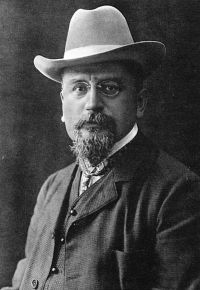 Max Verworn,
Irritability: A Physiological Analysis of the General Effect of Stimuli in Living Substance
(1913)
Max Verworn,
Irritability: A Physiological Analysis of the General Effect of Stimuli in Living Substance
(1913)
“ The catalytic stimulus brings about a disturbance of the equilibrium of metabolism, which after cessation of the stimulus is reestablished by the living substance. In other words: recovery takes place. This fundamental principle has been known for a long time as the result of observation. If a skeletal muscle of our body has been activated for a prolonged period by nerve impulses, until it has become completely fatigued and incapable of work, a recovery takes place on the cessation of these impulses and the muscle is again capable of action. ”
Julia Seton, The Short Cut to Regeneration Through Fasting… (1929)
“ Under the new method of exercise we conserve all our energies, yet have results the old methods never gave us. This new method is not alone the normal muscle function, but an almost abnormal action, brought about through tension and release. ”
