Glycogen

Definition and stakes

Annette Fiske,  Structure and Functions of the Body

“ In fact, it is the form in which carbohydrate material is supplied to the tissues as needed. Normally, much of the sugar is used up by the blood and its cells in metabolism, giving rise to heat and energy. In muscles glycogen is probably digested as lactic acid, as before action muscle is neutral or slightly alkaline and after action acid.
When the liver is deranged and allows the glycogen to pass out into the blood too freely, or when the glycogen is not held as such but turned to sugar and passed out in large quantities, sugar in the urine or diabetes mellitus results.
”
Source: Gutenberg

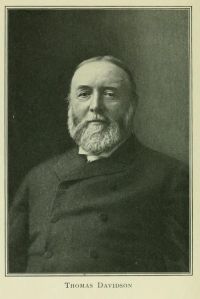
Portrait of Thomas Davidson Thomas Davidson,  Chambers's Twentieth Century Dictionary 1908… (1908)

“ Glycogen, glī′kō-jen, n. animal starch, a substance first discovered by Claude Bernard in the human liver—when pure, a white, amorphous, tasteless powder, insoluble in alcohol. [Formed from Gr. glykys, sweet, genēs, producing.]
Glycol, glī′kol, n. the type of a class of artificial compounds forming chemically a link between alcohol and glycerine. [Formed from glyc (erine) and (alcoh) ol.]
”
Source: Wikisource

Various,  Popular Science Monthly (1914)

“ Bernard believed the formation of glycogen in the liver to be a vital process, but the formation of dextrose from glycogen to be a simple enzyme action independent of life. This was contrary to the teaching of the time, for all enzyme actions were considered to be inseparable from the living cell. He showed that the blood contains an enzyme capable of forming dextrose from glycogen and suggested that a nervous control of the circulation governs the sugar formation. Comparisons were drawn between the formation of glycogen and sugar in the animal body and starch and sugar in plants. ”
Source: Wikisource

Get perspective with Kwize: daily news enlightened by great literature