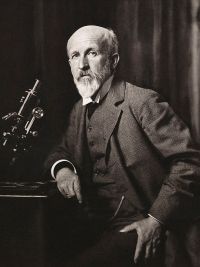
Stem cells are undifferentiated biological cells capable of developing into specialized cell types and renewing themselves indefinitely, forming the basis for tissue growth and repair. From Ernest McCulloch and James Till’s 1960s discovery of hematopoietic stem cells to modern advances such as induced pluripotent stem cells (iPSCs), scientists have investigated their potential to restore tissues and address diseases. Authors like George W.
Bush advocated for ethical alternatives to embryonic stem cell research, while Thomas Hoover emphasized their revolutionary medical potential. Ernst Haeckel’s 19th-century studies portrayed stem cells as the source of life’s developmental processes, connecting them to evolutionary biology. These varied viewpoints—from scientific progress to ethical discussion—highlight stem cells’ dual nature as both a fundamental biological element and a representation of medical innovation.
 George W. Bush,
Report of the Veto of S. 5, The Stem Cell Research Enhancement Act of 2007…
George W. Bush,
Report of the Veto of S. 5, The Stem Cell Research Enhancement Act of 2007…