Stem (fungus)

Definition and stakes

Jane Newell Moore,  Outlines of Lessons in Botany, Part I; from Seed to Leaf

“ The roots of air-plants, such as certain orchids, draw their nourishment from the air.
The experiment of marking roots and stem has been already tried, but it should be repeated. Repetition of experiments is always desirable, as it fixes his conclusions in the pupil's mind. The stem grows by a succession of similar parts, phytomera, each part, or phyton, consisting of node, internode, and leaf. Thus it follows that stems must bear leaves. The marked stems of seedlings show greater growth towards the top of the growing phyton. It is only young stems that elongate throughout.
”
Source: Gutenberg

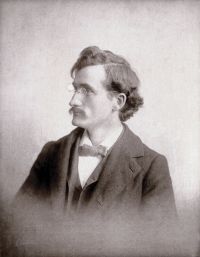
Portrait of L. H. Bailey L. H. Bailey,  Beginners' botany (1921)

“ The most prominent of these parts are root, stem, leaf, flower, fruit, and seed. Familiar plants differ wonderfully in size and shape,—from fragile mushrooms, delicate waterweeds and pond-scums, to floating leaves, soft grasses, coarse weeds, tall bushes, slender climbers, gigantic trees, and hanging moss.
The Stem Part.—In most plants there is a main central part or shaft on which the other or secondary parts are borne. This main part is the plant axis. Above ground, in most plants, the main plant axis bears the branches, leaves, and flowers; below ground, it bears the roots.
”
Source: Gutenberg

Asa Gray,  The Elements of Botany, For Beginners and For Schools

“ They have hollow stems, with partitions at the nodes; the leaves consist only of a whorl of scales at each node, these coalescent into a sheath: from the axils of these leaf-scales, in many species, branches grow out, which are similar to the stem but on a much smaller scale, close-jointed, and with the tips of the leaves more apparent. At the apex of the stem appears the fructification, as it is called for lack of a better term, in the form of a short spike or head. This consists of a good number of stalked shields, bearing on their inner or under face several wedge-shaped spore-cases. ”
Source: Gutenberg

Get perspective with Kwize: daily news enlightened by great literature