Stringed instrument

Definition and stakes

Portrait of G. K. Chesterton G. K. Chesterton,  Fancies versus fads (1923)

“ I should disbelieve it because it is inconsistent with the general nature of a musical instrument, or any instrument. I should disbelieve it long before I had thought of the thousand particular instruments to which it does not apply. I should not primarily need to think of the particular examples, though they are obvious enough. A stringed instrument cannot even be called stringed without two fixed points to hold both ends of the string. ”
Source: Wikisource

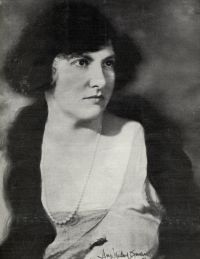
Portrait of Marion Bauer Marion Bauer,  How music grew (1925)

“ Where Stringed Instruments Came From We have seen the stringed instrument developed from the bow when primitive man winged his arrow in the hunt, and heard its twang. Later desiring fuller tone, the sounding board grew, when early peoples sank bow-like instruments and reeds into a gourd which increased and reflected the sound as the metal reflector behind a light intensifies it.
308Strings to produce sound, must be rubbed, like the bow drawn across violin strings, plucked as the mandolin or the harp is plucked, or struck with a hammer as was the dulcimer.
”
Source: Gutenberg

Carl Engel,  Musical Instruments [1876]

“ Even if the name of one particular stringed instrument is here used for stringed instruments in general, which may possibly be the case, it is only reasonable to suppose that the oldest and most universally known stringed instrument would be mentioned as a representative of the whole class rather than any other. Besides, the kinnor was a light and easily portable instrument; king David, according to the Rabbinic records, used to suspend it during the night over his pillow. All its uses mentioned in the Bible are especially applicable to the lyre. ”
Source: Gutenberg

Get perspective with Kwize: daily news enlightened by great literature