Clavichord

Definition and stakes

Carl Engel,  Musical Myths and Facts, Volume 2…

“ To note a curious instance in proof of the correctness of this assertion as afforded by the clavichord, a contemporary of the harpsichord and predecessor of the pianoforte:—The strings of the clavichord are not sounded by being twanged with quills, as is the case in the harpsichord, but are vibrated by means of iron pins, called tangents, which press under the strings when the keys are struck. The pressure of the tangent lasts as long as the key to which the tangent is attached is held down. ”
Source: Gutenberg

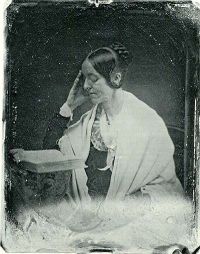
Portrait of Sarah Margaret Fuller Sarah Margaret Fuller,  Papers on Literature and Art (1846)

“ The best player on the clavichord, if he is not duly acquainted with the difference in the destination and object of the two instruments, and does not know constantly how to keep it in view, will always be a bad performer on the organ, as indeed is usually the case. Hitherto I have met with only two exceptions. The one is John Sebastian himself, and the second his eldest son, William Friedemann. Both were elegant performers on the clavichord; but, when they came to the organ, no trace of the harpsichord player was to be perceived. Melody, harmony, motion, all was different ”
Source: Wikisource

Carl Engel,  Musical Myths and Facts, Volume 2…

“ The aptness of the clavichord for yielding to these deviations from the intonation of the intervals in which it is tuned, combined with its aptness for producing with great delicacy different degrees of loudness, constitute the principal charms of the instrument, and sufficiently account for the love which our old classical composers,—Handel, Bach, etc.,—bore for the clavichord.
A musical instrument containing all conceivable perfections for performance, we do not yet possess.
”
Source: Gutenberg

Get perspective with Kwize: daily news enlightened by great literature