Supply (economics)

Definition and stakes

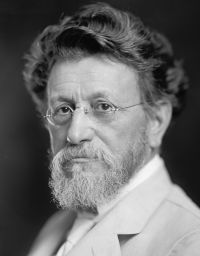
Portrait of Louis F. Post Louis F. Post,  The basic facts of economics (1927)

“ Involving the production of commodities by individual contributors of human service through an infinity of specializations, and their assignment to individuals by the intricate processes of service for service, Trade tends not only to increase the per capita supply of commodities, but also to effect their fair per capita assignment in proportions corresponding to the relative desirability of the numerous and various contributions of individual service to their production. ”
Source: Gutenberg

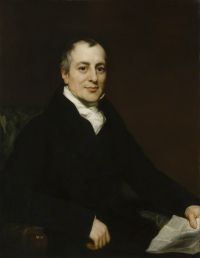
Portrait of John Stuart Mill John Stuart Mill,  Principles of Political Economy (1871)

“ We have investigated the laws which determine the value of two classes of commodities: the small class which, being limited to a definite quantity, have their value entirely determined by demand and supply, save that their cost of production (if they have any) constitutes a minimum below which they cannot permanently fall; and the large class, which can be multiplied ad libitum by labour and capital, and of which the cost of production fixes the maximum as well as the minimum at which they can permanently exchange. ”
Source: Wikisource

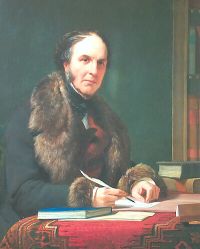
Sir Hubert Douglas Henderson,  Supply and Demand

“ Let us sum up in a general form our conclusions as to the way in which changes in the supply or demand of a commodity react upon the demand or supply of the other things with which it is jointly demanded or supplied. Everything turns, as we have seen, on the possibility of variation in the proportions in which the things are used or produced together ”
Source: Gutenberg

Get perspective with Kwize: daily news enlightened by great literature