Supremacy of law

Definition and stakes

Thiruvarur Muthuswamy Iyer Convocation Addresses of the Universities of Bombay and Madras (1892)

It should always endeavour to guard and preserve the supremacy of law in the country, and realize the fact that the empire of law is the keystone of liberty, of intellectual and material wealth, and of whatever is dear and precious to man in this life- To those of you who may enter the Government service, I shall say a word.
Source: Wikisource

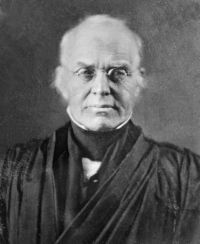
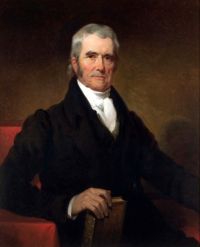
Portrait of Joseph Story Joseph Story Commentaries on the Constitution of the United States (1833)

By this, the supremacy of the constitution and laws of the United States is declared. The people so will it. No state law is to be valid, which comes in conflict with the constitution, or any law of the United States passed in pursuance of it. But who shall decide this question of interference? To whom lies the last appeal? This, sir, the constitution itself decides, also, by declaring, 'that the judicial power shall extend to all cases arising under the constitution and laws of the United States.' These two provisions, sir, cover the whole ground. They are, in truth, the keystone of the arch.
Source: Wikisource

Alexander Hamilton The Federalist Papers

But it is said that the laws of the Union are to be the SUPREME LAW of the land. But what inference can be drawn from this, or what would they amount to, if they were not to be supreme? It is evident they would amount to nothing. A LAW, by the very meaning of the term, includes supremacy. It is a rule which those to whom it is prescribed are bound to observe. This results from every political association. If individuals enter into a state of society, the laws of that society must be the supreme regulator of their conduct.
Source: Gutenberg

Get perspective with Kwize: daily news enlightened by great literature