Tender (ship)

Definition and stakes

J. R. Hutchinson,  The Press-Gang Afloat and Ashore

“ Recourse was accordingly had, in the great majority of cases, to that handy auxiliary of the fleet, the hired tender. Tenders fell into two categories—cruising tenders, employed exclusively, or almost exclusively, in pressing afloat after the manner described in an earlier chapter, and tenders used for the double purpose of "keeping" men pressed on land and of conveying them to the fleet when their numbers grew to such proportions as to make a full and consequently dangerous ship. In theory, "any old unmasted hulk, unfit to send to sea, would answer to keep pressed men in." ”
Source: Gutenberg

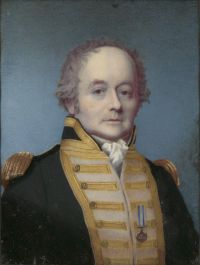
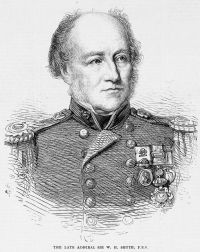
Portrait of W. H. Smyth W. H. Smyth,  The Sailor's Word-Book

“ To watch a vessel at anchor on the turn of a tide, and cast her by the helm, and some sail if necessary, so as to keep the cable clear of the anchor or turns out of her cables when moored.
TENDER. A small vessel duly commanded, and employed to attend a larger one, to supply her with stores, to carry intelligence or volunteers and impressed men to receiving ships, &c. An enemy's ship captured by cutters or boats fitted out as tenders by men-of-war, but without any commission or authority from the admiralty, will not insure a prize to the benefit of the ship.
”
Source: Gutenberg

J. R. Hutchinson,  The Press-Gang Afloat and Ashore

“ Both the frigate and the sloop were there by design, the former cruising to complete her own complement, the latter to complete that of some ship-of-the-line at Plymouth, Spithead or the Nore, to which she stood in the relation of tender.
Tenders were vessels taken into the king's service "at the time of Impressing Seamen." Hired at certain rates per month, they continued in the service as long as they were required, often most unwillingly, and were principally employed in obtaining men for the king's ships or in matters relative thereto.
”
Source: Gutenberg

Get perspective with Kwize: daily news enlightened by great literature