Thermoelectricity

Definition and stakes

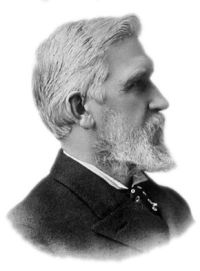
Portrait of T. O'Conor Sloane T. O'Conor Sloane,  The Standard Electrical Dictionary

“ In a thermo-electric couple a heated junction is the source of
electro-motive force, if heated more than other parts of the circuit.
The current in a copper-iron junction flows from the copper to the iron
across the heated junction. A hot section of an iron conductor next to a
cold section of the same is a source of thermoelectricity, in the sense
that the hot section is negative to the colder. A current passing from
the hot to the cold iron travels against rising potentials, and cools
the iron in the cooler parts.
”

Source: Gutenberg

Percy Phillips,  Radiation

“ A second way in which the heat lost by a body has been measured at different temperatures is by heating a conductor such as a thin platinum strip by means of an electric current, and measuring the temperature to which the conductor has attained. When its temperature is steady, all the energy given to it by the current must be lost as heat, and therefore the electrical energy, which can very easily be calculated, must be equal to the heat radiated by the body minus the heat received from the enclosure. ”
Source: Gutenberg

Portrait of Hugh Longbourne Callendar Hugh Longbourne Callendar,  1911 Encyclopædia Britannica (1911)

“ We conclude by applying Ohm's law that the electromotive force, E, of the thermocouple may be approximately represented for small differences of temperature by the formula
2. Thermoelectric Power, Series, Inversion.—The limiting value, dE/dt, of the coefficient, p, for an infinitesimal difference, dt, between the junctions is called the Thermoelectric Power of the couple. One metal (A) is said to be thermoelectrically positive to another (B) , if positive electricity flows from A to B across the cold junction when the circuit is completed.
”
Source: Wikisource

Get perspective with Kwize: daily news enlightened by great literature