Transitive verb

Definition and stakes

Benjamin L. D'Ooge,  Latin for Beginners

“ Transitive verbs take a direct object in the accusative; but sometimes they have an indirect object or dative as well. The whole question, then, as to whether or not a verb takes the dative, depends upon its capacity for governing an indirect object. A number of verbs, some transitive and some intransitive, which in their simple form would not take an indirect object, when compounded with certain prepositions, have a meaning which calls for an indirect object. Observe the following sentences:
In each sentence there is a dative, and in each a verb combined with a preposition.
”
Source: Gutenberg

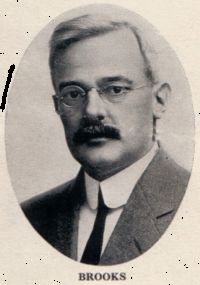
Portrait of Stratton D. Brooks Stratton D. Brooks,  Composition-Rhetoric

“ They attribute some quality or characteristic to the subject.
+52. Classes of Verbs.+—According to their uses in a sentence verbs are divided into two classes: transitive and intransitive.
A transitive verb is one that takes a following substantive, expressed or implied, called the object, to designate the receiver or the product of the action: [They seized the city. They built a city] . The transitive verb may sometimes be used absolutely: [The horse eats] . Here the object is implied.
An intransitive verb is one that does not take an object to complete its meaning
”
Source: Gutenberg

G. H. Armstrong,  English Grammar and Composition for Public Schools

“ Some verbs have only an intransitive use because they do not express action; as, be, seem, appear, remain, become, etc.
1. Write sentences using the following words as transitive verbs:—
2. Write sentences using the following words as intransitive verbs:—
LESSON XXXV. Point out each verb that is used by itself to make a complete statement, and each verb that is not used by itself to make a complete statement:—
When a verb by itself makes a complete statement, it is called a verb of complete predication
”
Source: Gutenberg

Get perspective with Kwize: daily news enlightened by great literature