Trench (military)

Definition and stakes

J. P. Cole,  Military Instructors Manual

“ Troops in a trench should crouch down in the shadowy side and remain motionless. Faces should never be turned up, as the high lights on cheek-bones and foreheads then show up distinctly. Bright metal on arms, equipment and headgear must be kept covered. Artillery wagon-trains, etc., should if possible be halted promptly on warning. When halted, their neutral coloring protects them. Trenches are best concealed: By avoiding, in construction, a too regular outline, and following as far as possible the contours of the ground. By coloring the parapet and parados to match the ground. ”

Source: Gutenberg

J. P. Cole,  Military Instructors Manual

“ The tendency is to sink the dead men too near to the trench, and to attach too many wires to one of them. It is important to sink the stakes at least one foot below the bottom of the trench. By digging holes for them instead of driving them in directly, the sides of the trench need not be disturbed by the concussion of driving the stakes. ”
Source: Gutenberg

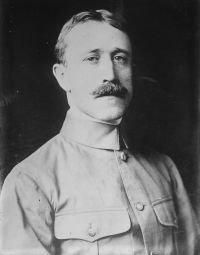
Portrait of Willis J. Abbot Willis J. Abbot,  Aircraft and Submarines

“ There is, for example, nothing new about trench warfare. The American who desires to satisfy himself about that need only to visit the Military Park at Vicksburg, or the country about Petersburg or Richmond, to recognize that even fifty years ago our soldiers understood the art of sheltering themselves from bullet and shrapnel in the bosom of Mother Earth. The trench warfare in Flanders, the Argonne, and around Verdun has been novel only in the degree to which it has been developed and perfected. ”
Source: Gutenberg

Get perspective with Kwize: daily news enlightened by great literature