Trichome

Definition and stakes

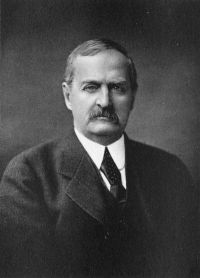
Portrait of Marshall Avery Howe Marshall Avery Howe,  The Genus Riella, with Descriptions of New Species from North America and the Canary Islands (1903)

“ The larger-celled part, derived from the apex or distal end of the initial trichome, becomes at about this time more than one cell thick in its middle and terminal regions and shows papilliform outgrowths, the beginnings of the root-hairs. The smaller-celled portion derived from the base or proximal end of the initial trichome remains only one cell thick except in the isthmus of constriction where it finally, in part at least, becomes two or more cells thick. F. 16 shows a well-developed gemma inverted as regards its original relations to the axis of the gametophyte. ”
Source: Wikisource

The Journal of Indian Botany (1919)

“ Trichomes long, flexuous, blue-green, granular, about 40/* thick; joints very short. Sheath hyaline, clearly lamellose and brownish when old. The Sub-family Schizotrickea is represented by Microcoleus vaginatus Gam. (De Toni, p. 374 ; Cooke, p. 258, pi. 99, fig. 2, under M. tcrrestris Deson) which lives commonly on damp mud, such as that in lawns, flower-pots, and around ponds and ditches. Trichomes long, collected in filiform, tortuous fascicles, enclosed in a common mucous sheath, from the apes of which they come out in a penicillate manner. ”
Source: Wikisource

Project Gutenberg,  The Gutenberg Webster's Unabridged Dictionary…

“ The sporangia of ferns are believed to be of the nature of trichomes. — Tri*chom"a*tous (#) , a.
Trich"o*phore (?) , n. [Gr. tri`x, tricho`s, hair + &?; to bear.] 1. (Bot.) The special cell in red algæ which produces or bears a trichogyne. See Illust. of Trichogyne.
2. (Zoöl.) One of the saclike organs from which the setæ of annelids arise.
— Trich`o*phor"ic (#) , a.
Tri*chop"ter (?) , n. (Zoöl.) One of the Trichoptera.
||Tri*chop"te*ra (?) , n. pl. [NL., fr. Gr. tri`x, tricho`s, a hair + &?; wing.] (Zoöl.) A suborder of Neuroptera usually having the wings covered with minute hairs.
”
Source: Gutenberg

Get perspective with Kwize: daily news enlightened by great literature