Trumpet (musical instrument)

Definition and stakes

Alfred J. Hipkins Musical Instruments, Historic, Rare and Unique

The bending back of the trumpet upon itself, now a well-known feature in the appearance of the instrument, was an invention of a Frenchman towards the end of the fifteenth century. The trumpet is one of the oldest wind instruments used in concert with others. As far back as 1607 a piece for five trumpets, in the Orfeo of Monteverde, was played at the Court of Mantua. It became an instrument much cultivated, and Handel's and Bach's parts for it are of extreme difficulty. The notes of the trumpet are the natural harmonics produced by varying pressure of the lips in the mouthpiece.
Source: Gutenberg

Carl Engel Musical Instruments [1908]

Furthermore, the Egyptians had, as far as is known to us, 14 two kinds of trumpets; three kinds of tambourines, or little hand drums; three kinds of drums, chiefly barrel-shaped; and various kinds of gongs, bells, cymbals, and castanets. The trumpet appears to have been usually of brass. A peculiar wind-instrument, somewhat the shape of a champagne bottle and perhaps made of pottery or wood, also occurs in the representations transmitted to us.
Source: Gutenberg

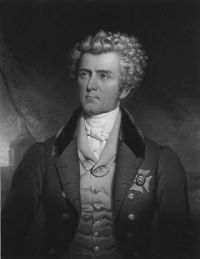
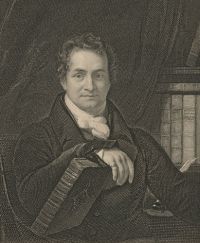
Portrait of Sir Francis Bond Head Sir Francis Bond Head Bubbles from the Brunnens of Nassau

There is something always particularly harsh and discordant in the notes of a trumpet badly blown; but when placed to the lips of a great lumbering German postilion, who, half smothered in his big boots and tawdry finery, has, besides this crooked instrument, to hold the reins of two wheel horses, as well as of two leaders, his attempt, in such deep affliction, to be musical, is comic in the extreme
Source: Gutenberg

Get perspective with Kwize: daily news enlightened by great literature