Unicellular organism

Definition and stakes

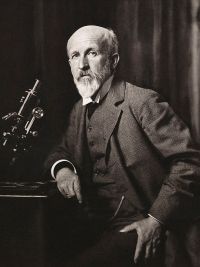
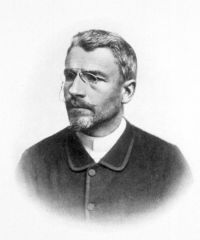
Portrait of Emil Abderhalden Emil Abderhalden,  Defensive Ferments of the Animal Organism (1914)

“ Each separate cell of an organism would be in exactly the same state as a unicellular organism. Just as these have to make a selection from amongst the disharmonious substances by which they are continually bathed, so, too, would the cells of the body have to pick out the substances they need, according to the conditions presented. Not only would the work of the single cells be enormously increased, but also, without doubt, the mutual influence of different kinds of cells, by means of certain secretions, would be much hindered. ”
Source: Wikisource

Gilbert Charles Chubb,  1911 Encyclopædia Britannica (1911)

“ In all cases, however, whether the cell-unit lives freely as a unicellular organism or forms an integral part of a multicellular individual, it exhibits in itself all the phenomena characteristic of living things. Each cell assimilates food material, whether this is obtained by its own activity, as in the majority of the protozoa, or is brought, as it were, to its own door by the blood stream, as in the higher Metazoa, and builds this food material into its own substance, a process accompanied by respiration and excretion and resulting in growth. ”
Source: Wikisource

George John Romanes,  An Examination of Weismannism

“ Nevertheless he does so, by representing that a unicellular organism, even though it present such a considerable degree of organization as we meet with in the higher Protozoa, still resembles a germ-cell of a multicellular organism, in that it consists of all the essential constituents of a germ-cell, including germ-plasm in its nucleus. And inasmuch as a germ-cell is potentially immortal, so it must be with a unicellular organism ”
Source: Gutenberg

Get perspective with Kwize: daily news enlightened by great literature