Vascular tissue

Definition and stakes

Frederick Gymer Parsons, John Gray McKendrick, and Leonard Erskine Hill,  1911 Encyclopædia Britannica (1911)

“ Hence the pressure in the vascular system cannot be raised above the normal for any length of time by the injection of even enormous quantities of fluid. he lymphatics of tissue-spaces must be regarded as art of the vascular system. There is a constant give and take between the blood-plasma and the tissue lymph. If the fluid part of the blood be increased, then the capillary transudation becomes greater, and the excess of fluid is excreted from the kidneys and glands of the alimentary canal. ”
Source: Wikisource

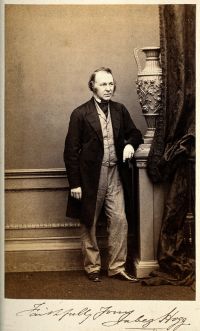
Portrait of Jabez Hogg Jabez Hogg,  The Microscope. Its History, Construction…

“ The veins ramify throughout the body, are more numerous than the arteries, and of greater capacity. They usually accompany the 663 arteries and correspond to them in structure, the larger veins possessing semi-lunar valves; these project into their interiors, and thus prevent the regurgitation of the blood. They have four coats, consisting of areolar tissue, yellow fibres combined with muscular fibres, and white fibrous tissue, two layers of yellow fibres arranged longitudinally, and a single layer of epithelial cells. ”
Source: Gutenberg

Annette Fiske,  Structure and Functions of the Body

“ The capillaries are intermediate between the arteries and the veins, the final division of the arteries and the first source of the veins. They are tiny vessels with but a single coat, continuous with the innermost coat of both arteries and veins and consisting practically of one layer of cells with a small amount of connective tissue between. [Pg 29] They spread in a great network throughout the tissues, forming plexuses and being especially abundant where the blood is needed for other purposes than local nutrition, as in the secreting glands. ”
Source: Gutenberg

Get perspective with Kwize: daily news enlightened by great literature