Vis viva

Definition and stakes

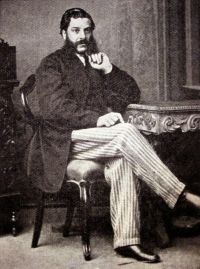
William Bower Taylor,  Kinetic Theories of Gravitation… (1876)

“ To affirm that the projected stone transfers its vis viva to space without suggesting any conceivable method by which such transfer could physically be effected, is not to proffer an hypothesis. To affirm that the falling stone receives from the illimitable ocean of space its just supply of vis viva — whether required at the instant or ten years afterward — is to bid us hope that the steam exhausted from the cylinder into the atmosphere may be induced to return to its duty when needed, in order to justify our faith in its conservation. ”
Source: Wikisource

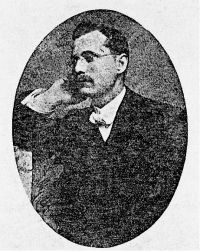
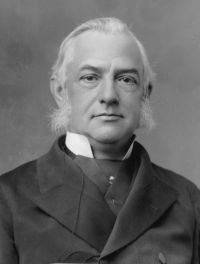
Portrait of Benoît Paul Émile Clapeyron Benoît Paul Émile Clapeyron,  Scientific Memoirs (1837)

“ Reciprocally, it is always possible to render the passage of caloric from a hot to a cold body useful for the production of a mechanical force: to obtain this it is sufficient to construct a machine resembling an ordinary steam-engine, in which the heated body serves to produce steam and the cold one to condense it. It results from this that there is a loss of vis viva, of mechanical force, or of quantity of action, whenever immediate contact takes place between two bodies of different temperatures, and heat passes from the one into the other without traversing an intermediate body ”
Source: Wikisource

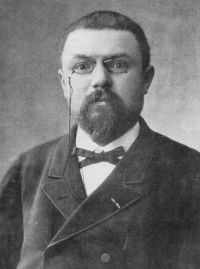
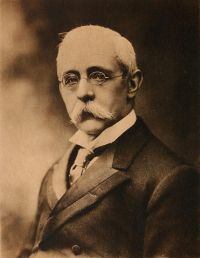
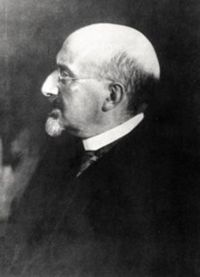
Portrait of Henri Poincaré Henri Poincaré,  The Foundations of Science (1913)

“ In the hypothesis of Lorentz, the vis viva, which is only the energy of the ether, is not proportional to v2. Doubtless if v is very slight, the vis viva is sensibly proportional to v2, the quantity of motion sensibly proportional to v, the two masses sensibly constant and equal to each other. But when the velocity tends toward the velocity of light, the vis viva, the quantity of motion and the two masses increase beyond all limit. ”
Source: Wikisource

Get perspective with Kwize: daily news enlightened by great literature