Voluntary attention
Definition and stakes
Quotes about “voluntary attention”
William James, The Principles of Psychology, Volume 1…
“ Voluntary attention is always derived; we never make an effort to attend to an object except for the sake of some remote interest which the effort will serve. But both sensorial and intellectual attention may be either passive or voluntary. ”
William James, The Principles of Psychology, Volume 1…
“ Psychology can only lay down the general rule.IS VOLUNTARY ATTENTION A RESULTANT OR A FORCE?When, a few pages back, I symbolized the 'ideational preparation' element in attention by a brain-cell played upon from within, I added 'by other brain-cells, or by some spiritual force,' without deciding which. The question 'which?' is one of those central psychologic mysteries which part the schools. When we reflect that the turnings of our attention form the nucleus of our inner self; when we see (as in the chapter on the Will we shall see) that volition is nothing but attention ”
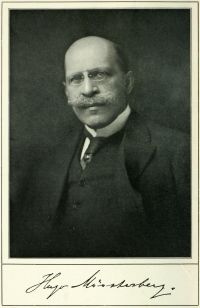 Hugo Münsterberg,
The Photoplay: A Psychological Study
“ All our working is controlled by such voluntary attention. We have the idea of the goal which we want to reach in our mind beforehand and subordinate all which we meet to this selective energy. Through our voluntary attention we seek something and accept the offering of the surroundings only in so far as it brings us what we are seeking. ”
George Herbert Betts, The Mind and Its Education
“ To stand guard as a policeman over our thoughts to see that no unworthy one enters, requires too much time and energy. Our interests must be of such a nature as to lead us away from the field of unworthy thoughts if we are to be free from their tyranny.The Will and Voluntary Attention.—In voluntary attention there is a conflict either between the will and interest or between the will and the mental inertia or laziness, which has to be overcome before we can think with any degree of concentration. ”
George Herbert Betts, The Mind and Its Education
“ If attention comes in the second way, following interest,23 it is called nonvoluntary or spontaneous attention; if in the third, compelled by the will, voluntary or active attention. Nonvoluntary attention has its motive in some object external to consciousness, or else follows a more or less uncontrolled current of thought which interests us; voluntary attention is controlled from within—we decide what we shall attend to instead of letting interesting objects of thought determine it for us. ”
 William Walker Atkinson,
Memory: How to Develop, Train, and Use It
(1919)
“ You must argue it out with yourself, until you become convinced that it is necessary and desirable for you to acquire the art of voluntary attention—you must convince yourself beyond reasonable doubt. ”
Ontario. Department of Education, Ontario Normal School Manuals: Science of Education
“ Spontaneous and Voluntary Attention Distinguished.—In describing voluntary attention as an active form of attention, psychologists assume that since the mind here wills, or resolves, to attend, in order to gain a certain end in view; therefore voluntary attention must imply a much greater degree of effort, or strain, than other types. ”
William James, The Principles of Psychology, Volume 1…
“ All forms of attentive effort would be exercised at once by one whom we might suppose at a dinner-party resolutely to listen to a neighbor giving him insipid and unwelcome advice in a low voice, whilst all around the guests were loudly laughing and talking about exciting and interesting things.There is no such thing as voluntary attention sustained for more than a few seconds at a time. What is called sustained voluntary attention is a repetition of successive efforts which bring back the topic to the mind. ”
William Walker Atkinson,
Your Mind and How to Use It: A Manual of Practical Psychology
“ The training of the voluntary attention is the first step in mental development. Training the Attention.That the voluntary attention may be deliberately trained and developed is a fact which many of the world's greatest men have proved for themselves. There is only one way to train and develop any mental power of faculty—and that is by practice and use. By practice, interest may be given to objects previously uninteresting, and thus the use of the attention develops the interest which further holds it. ”
Ontario. Department of Education, Ontario Normal School Manuals: Science of Education
“ What really goes on in consciousness in such a conflict of motives is that voluntary attention makes a single problem of the twofold situation—school versus play. To this problem the attention marshals relative ideas and selects and adjusts them to the complex problem. Finally these are built into an organized experience which solves the problem as one, say, of going to school. The so-called choice is, therefore, merely the mental solution of the situation; the necessary bodily action follows in an habitual manner, once the attention lessens the resistance in the appropriate centres. ”
George Herbert Betts, The Mind and Its Education
“ Making Different Kinds of Attention Reënforce Each Other.—A very close relationship and interdependence exists between nonvoluntary and voluntary attention. It would be impossible to hold our attention by sheer force of will on objects which were forever devoid of interest; likewise the blind following of our interests and desires would finally lead to shipwreck in all our lives. Each kind of attention must support and reënforce the other. ”
Hugo Münsterberg,
The Photoplay: A Psychological Study
“ Everything must be shaded by attention and inattention. Whatever is focused by our attention wins emphasis and irradiates meaning over the course of events. In practical life we discriminate between voluntary and involuntary attention. We call it voluntary if we approach the impressions with an idea in our mind as to what we want to focus our attention on. We carry our personal interest, our own idea into the observation of the objects. Our attention has chosen its aim beforehand, and we ignore all that does not fulfil this specific interest. ”
William Walker Atkinson,
Clairvoyance and Occult Powers
“ There is no royal road to concentration; it may be developed only by practice and exercise. The secret consists in managing the attention, so as to fix it upon a subject, no matter how uninteresting; and to hold it there for a reasonable length of time. Practice upon some disagreeable study or other task is good exercise, for it serves to train the will in spite of the influence of more attractive objects or subjects. And this all serves to train the will, remember; for the will is actively concerned in every act of voluntary attention. ”
William Walker Atkinson,
Your Mind and How to Use It: A Manual of Practical Psychology
“ We may use the will in the direction of the control of the attention—the development and direction of voluntary attention—and thus actually control every phase of mental activity. The will is nearest to the ego, or central being of man, and the attention is the chief tool and instrument of the will. This fact cannot be repeated too often. If it is impressed upon the mind it will prove to be useful and valuable in many emergencies of mental life. He who controls his attention controls his mind, and in controlling his mind controls himself. ”
Anonymous, The Philosophical Review (1892)
“ In voluntary attention, often called internal volition, it may be said that the thoughts invariably follow one another according to laws of habit or association. When one train of thought supersedes another, we call the sequence an effort of will; but here, as in regular association, one thought supersedes another in virtue of its superior force. The occasions for exercise of voluntary movements spring up as ordinary links in the chain formed by an association of ideas. Between the cerebral reflexes known as ideo-motor acts and simple voluntary acts there is no line to be drawn. ”
 James Mill,
Analysis of the Phenomena of the Human Mind
“ It may be said, however, by an objector, that this accounts only for the case in which the voluntary attention flows easy and unimpeded, almost as if it were spontaneous; when the mere perception that the idea is connected with our purpose—with the pleasurable end which suggested the train of thought, at once and without difficulty produces that exclusive occupation of the mind with it, which is called fixing the attention. ”
Carolyn Sherwin Bailey, For the Story Teller: Story Telling and Stories to Tell
“ The second story teller illustrated a method of securing a child’s involuntary, almost unconscious attention.Especially in the case of the little child who is beginning his school work, and even up to the more mature years of childhood, voluntary attention, that mental operation in which the will is called upon to open the doors of the senses and let in knowledge, is almost too much for us to ask of a child. The wonderful machinery of the mind has provided another and much more economic means of knowledge acquisition. ”
William Walker Atkinson,
Your Mind and How to Use It: A Manual of Practical Psychology
“ Anything may be used as the subject or object of your inquiry; but what is chosen must be held in the field of conscious attention firmly and fixedly. The habit once acquired, you will find the practice most fascinating. You will invent new subjects or objects of inquiry, investigation, and thought, which in them [Pg 34] selves will well repay you for your work and time. But never lose sight of the main point—the development of the power of voluntary attention. ”
William James, Talks To Teachers On Psychology…
“ It is not the mere size of a thing which, constitutes its importance: it is its position in the organism to which it belongs. Our acts of voluntary attention, brief and fitful as they are, are nevertheless momentous and critical, determining us, as they do, to higher or lower destinies. The exercise of voluntary attention in the schoolroom must therefore be counted one of the most important points of training that take place there; and the first-rate teacher, by the keenness of the remoter interests which he is able to awaken, will provide abundant opportunities for its occurrence. ”
 George Stuart Fullerton,
A Handbook of Ethical Theory
“ They weave themselves, with actions more palpably voluntary and higher in the scale, into those complicated patterns determined by the conscious selection of an end. As long as they serve their purpose, and require no effort, they may remain inconspicuous and unconsidered. But, as soon as a check is met with, attention is directed upon them and they become the subject of conscious voluntary control. ”
William Walker Atkinson,
Your Mind and How to Use It: A Manual of Practical Psychology
“ Some authorities go so far as to say that much of that which is commonly called "will power" is really but a developed form of voluntary attention, the man of "strong will" holding before him the one idea which he wishes to realize. ”
William Walker Atkinson,
Your Mind and How to Use It: A Manual of Practical Psychology
“ In studying the methods of developing and training the voluntary attention, the student should remember that any exercise which develops the will, will result in developing the attention; and, likewise, any exercise which develops the voluntary attention will tend to strengthen the will. ”
 Havelock Ellis,
The World of Dreams
“ We can probably account for the phenomena much more satisfactorily by adopting Ribot's useful distinction between voluntary attention and spontaneous attention. [16] Voluntary or artificial attention is a product of education and training. It is directed by extrinsic force, is the result of deliberation, and is accompanied by some feeling of effort. It always acts on the muscles and by the muscles; without muscular tension there can be no voluntary attention. ”
Hugo Münsterberg,
Psychotherapy
“ But if we are expecting something of importance, if we start to watch a certain development and to find something which we seek, we open the channels by our own effort beforehand and produce our own settings thus through a voluntary attention. In this way suggestion too may start from without,—by a spoken word, by a movement, by a hint ”
Various, Popular Science Monthly (1890)
“ Educators make use of fear, sympathy, and curiosity, to cultivate attention in the child; as it advances in growth, duty, emulation, and ambition are introduced; and, finally, voluntary attention is maintained by habit and organization A study of the internal mechanism shows that attention is accomplished by inhibition. In the normal state of consciousness, sensations, images, ideas come and go. ”
 Lydia Sigourney,
Letters of Life
(1866)
“ She must have great command over her own mind, or what a celebrated physician used to call 'voluntary attention,' in which most people are so lamentably deficient, that they can never write any thing well when called upon for it, or when the subject is suggested and the effort bespoken. ”
 William Kingdon Clifford,
The Scientific Basis of Morals…
“ When I look back and reflect upon a voluntary action, I seem to find that it differs from an involuntary action in the fact that a certain portion of my character has been consulted. There is always a suggestion of some sort, either the end of a train of thought or a new sensation; and there is an action ensuing, either the movement of a muscle or set of muscles, or the fixing of attention upon something. ”
 Charles Horton Cooley,
Human nature and the social order
(1902)
“ And in the life of other people voluntary action seems supreme, for very much the same reasons that it does in our own. It is always in the foreground, active, obvious, intrusive, 31the thing that creates differences and so fixes the attention. ”
George Herbert Betts, The Mind and Its Education
“ Even Good Habits Need to Be Modified.—But even in good habits there is danger. Habit is the opposite of attention. Habit relieves attention of unnecessary strain. Every habitual act was at one time, either in the history of the race or of the individual, a voluntary act ”
 Augustus J. C. Hare,
The Story of My Life, volumes 1-3
“ Now it seems to me to be an excellent discipline whereby daily some self-denial and command may be acquired in overcoming the repugnance to doing from duty that which has in itself no attraction. In the first struggle to fix the attention and learn that which is without interest, but which must be done, a habit is gained of great importance. ”
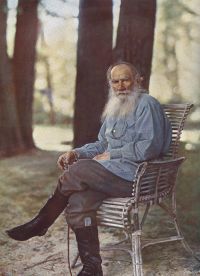 Leo Tolstoy,
Why Do Men Stupefy Themselves?
“ To grasp the full significance of such stupefying of one's consciousness, let each one carefully recall the spiritual conditions he has passed through at each period of his life. Everyone will find that at each period of his life certain moral questions confronted him which he ought to solve, and on the solution of which the whole welfare of his life depended. For the solution of these questions great concentration of attention was needful. Such concentration of attention is a labor. ”
Charlotte M. Mason, An Essay Towards a Philosophy of Education…
“ It is difficult to explain how I came to a solution of a puzzling problem,—how to secure attention. Much observation of children, various incidents from one’s general reading, the recollection of my own childhood and the consideration of my present habits of mind brought me to the recognition of certain laws of the mind, by working in accordance with which the steady attention of children of any age and any class in society is insured, week in, week out,—attention, not affected by distracting circumstances. ”
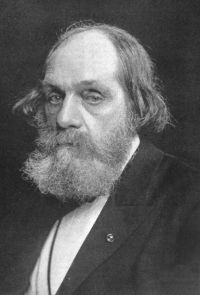 Edward Everett Hale,
How to Do It
“ It is perfectly easy for people to get control and keep control of this habit of attention. If I had the exercise I speak of, in a high school, the scholars should be brought together, as I say, and carried through a series of discipline in presence of mind. ”
E. O. Vaile, Popular Science Monthly (1875)
“ Nothing takes its place until we discover that attention is under the control of the will, and until, by perseverance, we acquire the power of thus controlling it. It is only then that we make rapid conquests, and that genuine mental discipline shows itself. ”
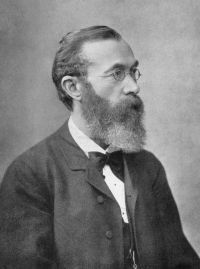 Wilhelm Max Wundt,
An Introduction to Psychology
“ So also in the psychical life of man they play a very important part—the leading part in the more composite volitional processes, and they very often arise out of these latter when these have been often repeated. The actions that arise out of several conflicting motives of strong feeling-tone we call voluntary acts, or if we are clearly aware of a previous conflict of opposite motives, selective or discriminative acts. ”
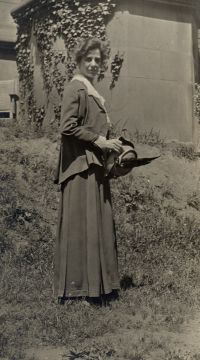 Naomi Norsworthy,
How to Teach
“ From the above discussion it must be evident that one of the chief characteristics of free attention is its unity. The mental activity of the person is all directed along one line, that which leads to the satisfying of the need. It is unified by the appeal the situation makes. As a result of such a state the attention is likely to be concentrated, and can be sustained over a long period. Of course this means that the work accomplished under such conditions will be greater in amount, more thorough, and more accurate than could be true were there less unity in the process. ”
Related terms
Authors who wrote about “voluntary attention”
Naomi NorsworthyGeorge Herbert BettsCharlotte M. Mason Adam S. BennionWilliam Walker AtkinsonWilliam JamesHugo MünsterbergOntario. Department of Education
 Hermann Ebbinghaus
 John DeweyJames MillAnonymous
 Martin Grove BrumbaughCarolyn Sherwin BaileyGeorge Stuart FullertonWilliam Kingdon CliffordCharles Horton CooleyLydia SigourneyHavelock EllisLeo Tolstoy
