Wagon train

Definition and stakes

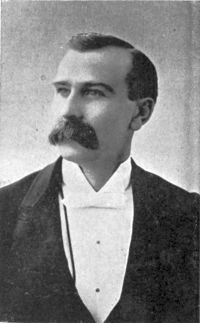
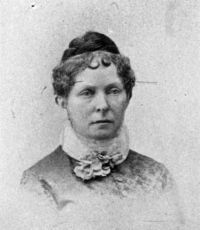
Portrait of Metta Victoria Fuller Victor Metta Victoria Fuller Victor,  Nat Wolfe; or, The gold hunters… (1872)

“ There was a stout wagon, drawn by three pairs of lean oxen at a slow and lumbering pace—probably the last wagon of a train, as it was seldom that a family ventured upon crossing the plains alone. If so, the train was out of sight along the track, which here becomes less monotonous, winding among the bluffs and along the shallow bed of a river, in which, at present, no water was visible. ”
Source: Gutenberg

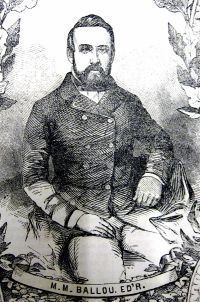
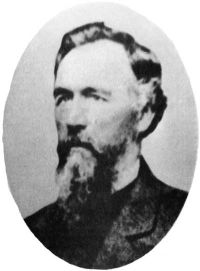
Portrait of Alexander Majors Alexander Majors,  Seventy Years on the Frontier

“ Each one of our wagons was drawn by six yoke, or twelve oxen, and contained from five to six thousand pounds of freight, and there was but one wagon to each team. The time had not yet come when, what was afterward adopted, trail wagons were in use. This means two or three wagons lashed together and drawn by one team. Twenty-five of our wagons and teams formed what was called a train, and these trains were scattered along the road at intervals of anywhere from two to three miles, and sometimes eight to ten miles, and even greater distances, so as to keep out of the way of each other. ”
Source: Gutenberg

Portrait of Oliver W. Nixon Oliver W. Nixon,  How Marcus Whitman Saved Oregon

“ The leading wagons follow him so nearly round the circle, that but a wagon length separates them. Each wagon follows in its track, the rear closing on the front until its tongue and ox-chains will 159 perfectly reach from one to the other, and so accurate the measurement and perfect the practice, that the hindmost wagon of the train always precisely closes the gateway. As each wagon is brought into position, it is dropped from its team (the teams being inside the circle) , the team unyoked, and the yokes and chains are used to connect the wagon strongly with that in its front. ”
Source: Gutenberg

Get perspective with Kwize: daily news enlightened by great literature