“ Wild fowl, quacking hordes of them, nest in the tulares. Any day's venture will raise from open shallows the great blue heron on his hollow wings. Chill evenings the mallard drakes cry continually from the glassy pools, the bittern's hollow boom rolls along the water paths. ”
Wild fowl
Definition and stakes
The theme of “wild fowl” has been addressed by authors such as John H. Robinson, Phil Robinson, Robert Jennings, Milo Hastings and John James Audubon. It is often associated with terms like poultry, duck, bird, partridge and goose.
Quotes about “wild fowl”
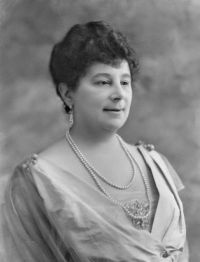 Baroness Orczy,
A Son of the People — I.
(1913)
Baroness Orczy,
A Son of the People — I.
(1913)
“ For a moment, all seems life upon the plain, for to the right and to the left, the wild fowl rise affrighted overhead, and, on the ground, bright-coloured lizards rush nervously to and fro. Then the gallop dies away in the distance, the herdsman’s whip has ceased to crack, the birds have gone to rest, and the mind is left, wondering whether this bit of tumultuous life was not another day dream, painted, and then erased by fancy. ”
 Charles Wesley Emerson,
Evolution of Expression, Volume 2…
Charles Wesley Emerson,
Evolution of Expression, Volume 2…
“ Lifted far above all harm of fowler or impediment of mountain, wild fowl are steadily flying southward. The simple sight of them fills the imagination with pictures. They have all summer long called to each other from the reedy fens and wild oat-fields of the far north. ”
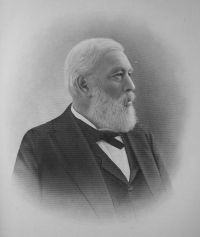 Orange Jacobs,
Memoirs of Orange Jacobs
Orange Jacobs,
Memoirs of Orange Jacobs
“ Consider the wild fowl that, moved by some mysterious impulse, start on their prodigious migrations from the frozen fens of the Pole and reach at last the shining South and summer seas; the fish that from tropic gulfs seek their spawning-grounds in the cool, bright rivers of the North; the bees that find in the garniture of fields and forests the treasure with which they store their cells; and even the wolf, the lion, and the tiger that are provided with their prey. ”
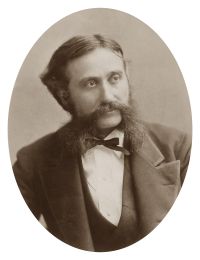 Hubert Howe Bancroft,
The Native Races [of the Pacific states…
Hubert Howe Bancroft,
The Native Races [of the Pacific states…
“ Various kinds of grass-seeds, herbs, berries, and roots, are also eaten, both roasted and raw. Wild fowl are caught in nets made of tules, spread over channels cut through the rushes in places frequented by the fowl, at a sufficient height above the water to allow the birds to swim easily beneath them. The game is gently driven or decoyed under the nets, when at a given signal, a great noise is made, and the terrified fowl, rising suddenly, become hopelessly entangled in the meshes, and fall an easy prey. ”
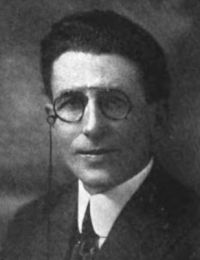 Archie P. McKishnie,
Love of the Wild
Archie P. McKishnie,
Love of the Wild
“ In the Fire Circle White splashes of foam clipped and swayed on the slate-blue waters. A hundred yards out from the rushes a clay-hued slash across the turmoiled face of the bay marked the yellow sand-bar beneath. Between the sand-bar and the rushes lay the wild celery bed. Here, shoots succulent and tender, sweetest of morsels to the man-hunted, fear-haunted fowl of the Wild, gripped the oozy muck below. ”
Various, Graham's Magazine, Vol. XXXVII, No…
“ Before proceeding to the description of these birds it is well to observe that it will be found the better way, in approaching them, as indeed all wild fowl, to work, if possible, up wind to them; not that wild fowl have the power, as some pretend, of scenting the odor of the human enemy on the tainted gale, as is undoubtedly the case with deer and many other quadrupeds, but that their hearing is exceedingly acute, and that their heads are pricked up to listen, at the occurrence of the least unusual sound, and at the next moment—hey, presto!—they are off. ”
Various, Bulletin of the Nuttall Ornithological Club… (1875)
“ On April 12 I found another male in the market; the next day I purchased a pair from a sportsman in Deering; and on April 17 detected another male in the market. That the bird’s occurrence in such numbers is very unusual there can be no doubt. In fact, so far as I have been able to learn, our most experienced hunters of wild fowl either knew the species only by tradition, before this year, or else were wholly unacquainted with it. ”
Allan Cunningham, Traditional Tales of the English and Scottish Peasantry (1887)
“ The water-fowl, starting from the sea, flew landward in a flock, fanning the waves with their wings, and uttering that wild and piercing scream which distinguishes them from all other fowl when their haunts are disturbed. ”
 William Hone,
The Every-day Book and Table Book…
William Hone,
The Every-day Book and Table Book…
“ All wild-fowl are timorous, and easily deceived. The sportsman’s huts, to the number of eight or ten, are placed in such a situation, that not until too late do the birds discover the deception, and the destruction which, under cover, the fowlers deal among them. ”
Alfred W. Drayson, Sporting Scenes amongst the Kaffirs of South Africa
“ Besides the animals that I have already particularly mentioned, very good sport could be had with wild fowl of different kinds,—partridges, guinea-fowl, pheasants, and bustard. The large description of the latter, called by the colonists the pouw, is a magnificent bird, and is considered a great delicacy for the table. They have been shot weighing about twenty or thirty pounds. They walk about the newly-burnt grass picking up the fried worms and other animals brought to light by the fire. ”
George Grey, Journals of Two Expeditions of Discovery in North-West and Western Australia…
“ But the wily savage has not yet done with them. He avails himself of the extraordinary attachment which these birds have for one another, and, fastening a wounded one to a tree, so that its cries may induce its companions to return, he watches his opportunity by throwing his kiley or spear to add another bird or two to the booty he has already obtained.MODE OF KILLING WILD-FOWL.The various kinds of wild-fowl with which the rivers and lagoons of Australia abound afford a never-failing supply of food to the natives, and many are the arts to which they have recourse to entrap these wary birds. ”
Robert Beverley, The History of Virginia, in Four Parts
“ There are such a multitude of swans, geese, brants, sheldrakes, ducks of several sorts, mallard, teal, blewings, and many other kinds of water fowl, that the plenty of them is incredible. I am but a small sportsman, yet with a fowling piece have killed above twenty of them at a shot. In like manner are the mill ponds and great runs in the woods stored with these wild fowl at certain seasons of the year. ”
G. F. Scott Elliot, The Romance of Plant Life
“ In other places the enormous quantities of water birds, myriads of ducks, geese, swans, regiments of flamingoes, snipe, and the like, have called into existence peculiar kinds of industry in fowling and netting that are not without importance. The decoys in the Fens yield hundreds of birds for the London market, and the duck-punts with their huge guns also bring in quantities of wild fowl. ”
George Teasdale Teasdale-Buckell, The Complete English Wing Shot
“ It is only in the very wildest and worst of nights and days that wild fowling is at its best. There must be snow for choice, and frost also, even on the seashore. In fact, the weather must be so hard that the fowl can only feed on mud flats that are tide-washed, for the reason that everywhere else the ground is too hard, and too much covered with snow and ice, to enable ducks to reach the mud bottoms of fresh water, or to enable widgeon and teal and geese to feed elsewhere at all. ”
 John James Audubon,
Ornithological Biography
(1831)
John James Audubon,
Ornithological Biography
(1831)
“ The Black Warrior has been seen to pounce on a fowl, kill it almost instantly, and afterwards drag it along the ground for several hundred yards, when it would conceal it, and return to feed upon it in security. It was not observed to fall on Hares or Squirrels, but at all times evinced a marked preference for common Poultry, Partridges, and the smaller species of Wild Duck. ”
John H. Robinson, Our Domestic Birds: Elementary Lessons in Aviculture
“ If neglected and abused, they become shy and wild. The most striking peculiarities of the fowl are the fleshy comb and wattles which ornament the head, and the full tail which is usually carried well up and spread perpendicularly. The head appendages vary much in size and form. They are sometimes very small, but never entirely wanting. The carriage of the tail also varies, but except in a few breeds bred especially for low tails it is noticeably high as compared with that of other poultry. Fowls [Pg 33] are readily distinguished from other birds by the voice. ”
Edward Bevan, The Honey-Bee: Its Natural History… (1827)
“ A domesticated fowl is furnished with the same apparatus as her wild sisters on the waste, for rendering her feathers impenetrable to water: yet, living principally under cover, she secretes much less of the oily fluid, destined for that purpose, and makes, when accidentally wet, a most ridiculous appearance. ”
“ The buff, white and dominique colors, unheard of in wild species, frizzles with their feathers all awry, the Polish with their deformed skulls and the sooty fowls whose skin and bones are black, are some of the remarkable characters that have sprung up and been preserved under domestication. The varieties of domestic fowl form one of the most profound exhibits of man's control over the laws of inheritance. ”
Hubert Howe Bancroft,
The Native Races [of the Pacific states…
“ When the fowl fly rapidly up to the decoys, this end is suddenly raised with a jerk, so that the birds strike it with great force, and, stunned by the shock, fall into a large pouch, contrived for the purpose in the lower part of the net. ”
 Charles Darwin,
The Variation of Animals and Plants under Domestication…
(1868)
Charles Darwin,
The Variation of Animals and Plants under Domestication…
(1868)
“ Blyth, that the domestic fowls of India do not resemble the wild G. bankiva more closely than do those of Europe. From the extremely close resemblance in colour, general structure, and especially in voice, between Gallus bankiva and the Game fowl; from their fertility, as far as this has been ascertained, when crossed; from the possibility of the wild species being tamed, and from its varying in the wild state, we may confidently look at it as the parent of the most typical of all the domestic breeds, namely, the Game-fowl. ”
R. H., The School of Recreation (1696 edition…
“ The lesser, or Web footed, Fowl, always haunt drowned Fens, as likewise the main streams of Rivers not subject to Freeze, the deeper and broader, the better; (tho' of these the Wild-Goose and Barnacle, if they cannot sound the depth, and reach the Ouze, change their Residence for shallow places, and delight in Green Winter Corn, especially if the Lands ends have Water about them:) Small Fowl also frequent hugely little Brooks, Ponds, drowned Meadows, Pastures, Moors, Plashes, Meres, Loughs, and Lakes, stored with unfrequented Islands, Shrubs, &c. ”
Charles Owen, An essay towards a natural history of serpents (1742)
“ When in want of Food, he goes into the Sea, where he lies in such a manner, that the upper Part of his Back appears above the Water, and looks like a piece of Timber floating; the wild Fowls mistrusting nothing, come so near it, that he immediately devours them: They lurk among Reeds and Bushes, on the Banks of Rivers and great Pools, from whence they suddenly leap out, and eat up their Prey, which sometimes happens to be People that come to drink or fetch Water. ”
 Gilbert White,
The Natural History of Selborne…
Gilbert White,
The Natural History of Selborne…
“ This lonely domain is a very agreeable haunt for many sorts of wild fowls, which not only frequent it in the winter, but breed there in the summer; such as lapwings, snipes, wild-ducks, and, as I have discovered within these few years, teals. Partridges in vast plenty are bred in good seasons on the verge of this forest, into which they love to make excursions: and in particular, in the dry summer of 1740 and 1741, and some years after, they swarmed to such a degree, that parties of unreasonable sportsmen killed twenty and sometimes thirty brace in a day. ”
 Dallas Lore Sharp,
The Hills of Hingham
Dallas Lore Sharp,
The Hills of Hingham
“ If the Buff Plymouth Rock is an ideal bird in her feathers, she is even more so plucked. All white-feathered fowl, in spite of yellow legs, look cadaverous when picked. All dark-feathered fowl, with their tendency to green legs and black pin-feathers, look spotted, long dead, and unsavory. ”
“ Brains parboiled in salt and water to harden them are another good substitute for sweetbreads, and offer one more change from the perpetual joint and fowls that are on every table.Game and Poultry.—A young fowl has large feet, knees, and neck in proportion to its size, and its thighs look white or pinkish. An old one has thin, scraggy legs and purplish tinge on its thighs; the scales look hard and horny, and often there are long hairs on the skin. If the beak is on, it should be soft, and so with the breast bone, which is frequently broken by the poulterer to give the bird a plump appearance. ”
 Oliver Wendell Holmes Sr.,
The Autocrat of the Breakfast-Table
(1858)
Oliver Wendell Holmes Sr.,
The Autocrat of the Breakfast-Table
(1858)
“ The bird in sable plumage flaps heavily along his straight-forward course, while the other sails round him, over him, under him, leaves him, comes back again, tweaks out a black feather, shoots away once more, never losing sight of him, and finally reaches the crow’s perch at the same time the crow does, having cut a perfect labyrinth of loops and knots and spirals while the slow fowl was painfully working from one end of his straight line to the other. ”
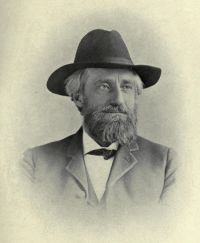 Nathaniel Southgate Shaler,
Domesticated animals
Nathaniel Southgate Shaler,
Domesticated animals
“ In their adhesion to domestication our common fowls differ in a remarkable way from all other of our captive animals except the dog, and these birds are even more ineradicably attached to man than their older companion. While the dog will sometimes become half wild, or, as we may phrase it, undomiciled, fowls seem incapable of maintaining themselves apart from human care. In much ranging of the wilderness I have never found one of these creatures more than a thousand feet away from a human habitation. ”
John James Audubon,
Ornithological biography, Vol. 4…
(1835)
“ As soon as it espies its prey, it glides silently into the air, and, sweeping easily and rapidly down, seizes it in its claws. When disturbed, it makes a short circuit, and soon settles on another perch. It builds its nest on a tree, of short sticks, lining it sparingly with deer’s hair. The eggs, from three to five in number, are equal in size to those of the domestic fowl, and have a greenish-white colour, with a few large dark brown blotches at the thick end. ”
John James Audubon,
Ornithological biography, Vol. 1…
“ Their usual mode of progression is what is termed walking, during which they frequently open each wing partially and successively, replacing them again by folding them over each other, as if their weight were too great. Then, as if to amuse themselves, they will run a few steps, open both wings and fan their sides, in the manner of the common fowl, and often take two or three leaps in the air and shake themselves. Whilst searching for food among the leaves or loose soil, they keep their head up, and are unremittingly on the lookout ”
Phil Robinson, Sinners and Saints
“ Is it not a matter of common notoriety that when pursued this fowl buries its head in the sand, and thus, of course, falls an easy prey to the intending farmer? If, on the other hand, he does not want the whole of the bird, he has only to stand by and pluck its feathers out, which, having its head buried, it cannot, of course perceive. ”
 Philip Henry Gosse,
The Romance of Natural History…
Philip Henry Gosse,
The Romance of Natural History…
“ This fowl, which is little less than a turkey, looks as if clothed in scale armour of iridescent metal, of which the specific hues can scarcely be indicated, so changeable are they; green, steel-blue, crimson, purple, and golden-bronze,—all of the utmost intensity of colour, and of dazzling refulgence, adorn this bird, set off by a broad square patch of pure white in the middle of the back, while the crown of the head carries a drooping crest of naked-shafted, broad-tipped, green feathers. ”
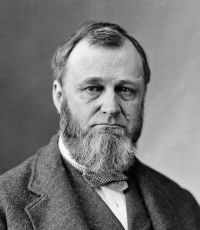 Spencer Fullerton Baird,
A History of North American Birds…
Spencer Fullerton Baird,
A History of North American Birds…
“ After thus crossing a stream of any magnitude, they are often found in a bewildered state, and fall an easy prey to the hunter.Where their food occurs abundantly they separate into smaller flocks, composed of birds of all ages and sexes. At times they are known to approach farmhouses, associate with the domesticated fowl, and enter the corn-cribs in quest of food, passing the fall and the winter in this manner. ”
P. L. Simmonds, The curiosities of food (1859)
“ Among the GALLINACEOUS fowls, large numbers contribute to the food delicacies of man. Some, like the turkey, peacock, &c., of considerable size; others, as the pigeon tribe, form smaller tit-bits.The game birds, the pheasant, partridge, grouse, &c., and the quail, guinea fowl, and jungle fowl, are bagged whenever they can be obtained by the sportsman. ”
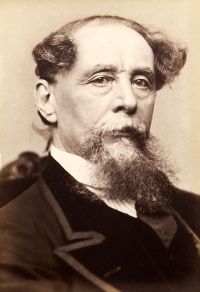 Charles Dickens,
Nicholas Nickleby
(1839)
Charles Dickens,
Nicholas Nickleby
(1839)
“ The fowls who peck about the kennels, jerking their bodies hither and thither with a gait which none but town fowls are ever seen to adopt, and which any country cock or hen would be puzzled to understand, are perfectly in keeping with the crazy habitations of their owners. Dingy, ill-plumed, drowsy flutterers, sent, like many of the neighbouring children, to get a livelihood in the streets, they hop from stone to stone in forlorn search of some hidden eatable in the mud, and can scarcely raise a crow among them. ”
Related terms
Authors who wrote about “wild fowl”
John H. RobinsonPhil RobinsonRobert Jennings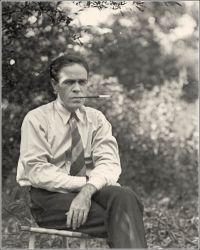 Milo HastingsJohn James AudubonCharles DarwinVariousGeorge Teasdale Teasdale-BuckellHubert Howe BancroftArchie P. McKishnieOrange JacobsGeorge GreyBaroness OrczyAllan CunninghamWilliam HoneMary AustinCharles Wesley EmersonAlfred W. DraysonRobert BeverleyEdward Bevan
Milo HastingsJohn James AudubonCharles DarwinVariousGeorge Teasdale Teasdale-BuckellHubert Howe BancroftArchie P. McKishnieOrange JacobsGeorge GreyBaroness OrczyAllan CunninghamWilliam HoneMary AustinCharles Wesley EmersonAlfred W. DraysonRobert BeverleyEdward Bevan