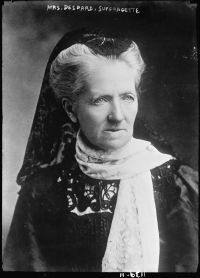
Women’s emancipation denotes the historical struggle for gender equality, focusing on women’s rights to education, employment, political involvement, and autonomy. Authors like Harriet Taylor Mill and Emma Goldman framed it as a pursuit of citizenship and self-determination, while Saddam Hussein emphasized its societal importance, stating that women’s liberation is essential for progress. C.
Gasquoine Hartley highlighted its complexity, noting that simplistic views overlook deeper causes, and Otto Weininger narrowly defined it, excluding economic or social aspects. Quotes from suffragists and theorists reveal diverse approaches, ranging from political enfranchisement to critiques of emerging limitations. The theme thus encapsulates both the aspirations and contradictions of a movement seeking to redefine women’s role in society.
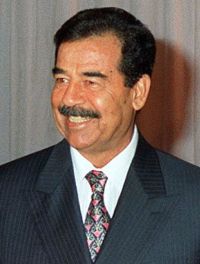 Saddam Hussein,
Women - One half of our society
Saddam Hussein,
Women - One half of our society