Worker (organism)

Definition and stakes

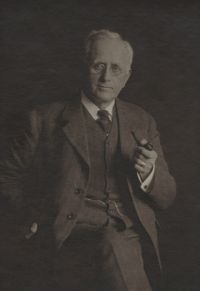
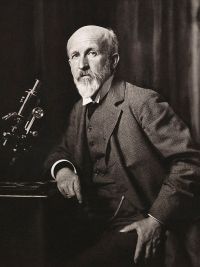
Portrait of W. P. Pycraft W. P. Pycraft,  The Courtship of Animals

“ The worker-bees are products of the germ-plasm, committed to the care of the queens. Any strain, so to speak, of that germ-plasm which gives rise to defective workers brings about its own extinction, or elimination, sooner or later. Any strain of germ-plasm which contains, so to speak, a spark of that quality which in the individual is expressed by intelligent behaviour, will gain advantages in the struggle for existence. ”
Source: Gutenberg

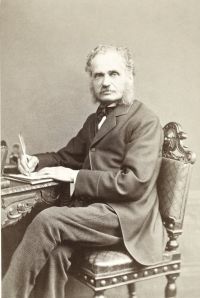
Portrait of George James Allman George James Allman,  Popular Science Monthly (1879)

“ In this society of cells each has its own work to perform, and the life of the organism is made up of the lives of its component cells. Here it is that we find most distinctly expressed the great law of the physiological division of labor. In the lowest organisms, where the whole being consists of a single cell, the performance of all the processes which constitute its life must devolve on the protoplasm of this one cell; but as we pass to more highly organized beings, the work becomes distributed among a multitude of workers. These workers are the cells which now make up the complex organism. ”
Source: Wikisource

Portrait of Charles Darwin Charles Darwin,  On The Origin of Species (1859)

“ Thus, as I believe, the wonderful fact of two distinctly defined castes of sterile workers existing in the same nest, both widely different from each other and from their parents, has originated. We can see how useful their production may have been to a social community of insects, on the same principle that the division of labour is useful to civilised man. ”
Source: Wikisource

Get perspective with Kwize: daily news enlightened by great literature