“ The most successful accumulators of capital have in all times risen from the ranks of labour itself; they are working men who have shot ahead of their fellows, and who now give employment instead of receiving it. These persons,—who are not the less working men because they have ceased to be manual labourers,—by creating and extending the sphere of productive industry, must be regarded as amongst the most effective benefactors of the people, as they unquestionably are among the principal sources of the power and wealth of any nation. ”
Working capital
Definition and stakes
The theme of “working capital” has been addressed by authors such as Henry George, John Stuart Mill, Karl Marx, David Ricardo and Adam Smith. It is often associated with terms like labor, wage, industry, profit and economics.
Quotes about “working capital”
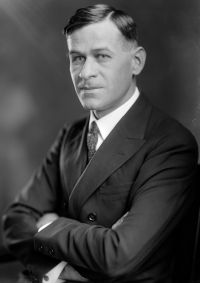 Charles G. Ross,
The Country's Plight—What Can Be Done About It…
(1931)
Charles G. Ross,
The Country's Plight—What Can Be Done About It…
(1931)
“ Now the vital difference between the wages of capital and the wares of labor is this: The labor hour once expended is non-existent, but the product of the labor hour turned over to the employer and by him exchanged for capital goes on working forever. That is, the workman's labor hour does its share in supporting his life for a day and then expires. The employer takes his profits and invests them, and thereafter for the rest of his life, and the lives of his heirs and assigns forever, these profits are capable of working and producing more profits for whoever controls them. ”
 Charles Knight,
Knowledge Is Power
Charles Knight,
Knowledge Is Power
“ Hence it necessarily results that, as has been forcibly expressed, "the additional capital, whenever it is productively employed, will tend as certainly to the benefit of the working population at large as if the owner were a trustee for their benefit." ”
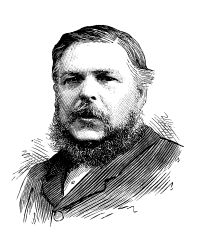 Robert Giffen,
Popular Science Monthly
(1884)
Robert Giffen,
Popular Science Monthly
(1884)
“ From this it appears that the increase of what is known as working-class income in the aggregate is greater than that of any other class, being 100 per cent, while the return to capital and the return to what are called the capitalist classes, whether it is from capital proper or, as I maintain, a return only in the nature of wages, has only increased about 100 per cent, although capital itself has increased over 150 per cent. ”
Cornelia Stratton Parker, Working With the Working Woman
“ The market wage of our industry is paid to Labor and a minimum of 6% is paid to Capital. After these have been paid, together with regular operating expenses, depreciation reserve, taxes, etc., and after the Sinking Funds have been provided for by setting aside 15% of the next profits for Labor and 15% for Capital, the remaining net profits are divided 50% for Capital and 50% for the operatives, and the latter sum divided in proportion to the amount of each one's pay for the period.... A true partnership must jointly provide for losses as well as for the sharing of profits.... ”
 Charles Bradlaugh,
A Few Words About the Devil, and Other Biographical Sketches and Essays
Charles Bradlaugh,
A Few Words About the Devil, and Other Biographical Sketches and Essays
“ They can permanently improve their condition by taking such steps as shall prevent too rapid an increase of their numbers, and, by thus checking the supply of laborers, they will, as capital augments, increase the rate of wages paid to the laborer. The steady object of each working man should be to impress on his fellow-worker the importance of this subject. ”
John Rae, Contemporary Socialism
“ Effects of machinery, and the growth of fixed capital on the working classes. The whole progress of industrial improvements is a history of fresh creations of relative surplus value, and always for the benefit of the capitalist who advances the money. ”
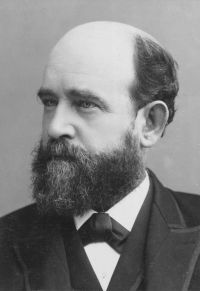 Henry George,
Progress and Poverty, Volumes I and II
Henry George,
Progress and Poverty, Volumes I and II
“ Because wages are generally paid in money, and in many of the operations of production are paid before the product is fully completed, or can be utilized, it is inferred that wages are drawn from pre-existing capital, and, therefore, that industry is limited by capital—that is to say that labor cannot be employed until capital has been accumulated, and can only be employed to the extent that capital has been accumulated. ”
Herbert Feis, The Settlement of Wage Disputes
“ Modern industry has been shaped, perhaps predominantly, by the effort to support large numbers at a high standard of economic existence. Production has become greatly subdivided among specialized groups. In industry to-day, the wage earners of various kinds perform their tasks with the assistance of such equipment, machinery, and general organization as will serve to make their labor result in a large product. The means which make possible this effective employment of labor in industry are what we mean by the term "capital." ”
 Adam Smith,
The Wealth of Nations
(1902)
Adam Smith,
The Wealth of Nations
(1902)
“ It is the circulating capital which furnishes the materials and wages of labor, and puts industry into motion. Every saving, therefore, in the expense of maintaining the fixed capital, which does not diminish the productive powers of labor, must increase the fund which puts industry into motion, and consequently the annual produce of land and labor, the real revenue of every society. ”
Henry George,
Progress and Poverty, Volumes I and II
“ As the rendering of labor precedes the payment of wages, and as the rendering of labor in production implies the64 creation of value, the employer receives value before he pays out value—he but exchanges capital of one form for capital of another form. For the creation of value does not depend upon the finishing of the product; it takes place at every stage of the process of production, as the immediate result of the application of labor, and hence, no matter how long the process in which it is engaged, labor always adds to capital by its exertion before it takes from capital in its wages. ”
 William Lyon Mackenzie King,
The Four Parties to Industry
(1919)
William Lyon Mackenzie King,
The Four Parties to Industry
(1919)
“ It is investment in industry which affords the right to share in corporate control. Capital and Management receive representation on this basis. If Capital and Management are so entitled, why not Labor also? Industry is a joint venture, a venture of Labor as well as of Capital. The difference in the nature of the investment of Capital and Labor only serves to emphasize the fundamental justice of Labor's right to a share in control. The investment of Capital is in the nature of an investment of substances and dollars ; the investment of Labor is an investment in the nature of skill and life. ”
 Timothy Thomas Fortune,
Black and White: Land, Labor, and Politics in the South
Timothy Thomas Fortune,
Black and White: Land, Labor, and Politics in the South
“ There are in the savings-banks of many manufacturing centers in our country amounts which if capitalized would place the workingmen of those towns in industrial independence; moneys which, in some instances, are actually furnishing the borrowed capital for their own employers. ”
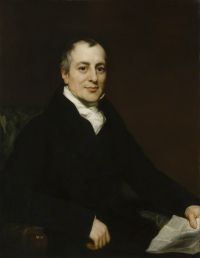 David Ricardo,
Letters of David Ricardo to Thomas Robert Malthus…
David Ricardo,
Letters of David Ricardo to Thomas Robert Malthus…
“ In the case of great improvements in machinery,—capital is liberated for other employments and at the same time the labour necessary for those employments is also liberated,—so that no demand for additional labour will take place unless the increased production in consequence of the improvement should lead to further accumulation of capital, and then the effect on wages is to be ascribed to the accumulation of capital and not to the better employment of the same capital. ”
 John Stuart Mill,
Principles of Political Economy
John Stuart Mill,
Principles of Political Economy
“ I do not mean to deny that the capital, or part of it, may be so employed as not to support laborers, being fixed in machinery, buildings, improvement of land, and the like. In any large increase of capital a considerable portion will generally be thus employed, and will only co-operate with laborers, not maintain them. ”
John Stuart Mill,
Principles of Political Economy
(1871)
“ It may be added, that any increase in the productive power of capital (or, more properly speaking, of labour) by improvements in the arts of life, or otherwise, tends to increase the employment for labour; since, when there is a greater produce altogether, it is always probable that some portion of the increase will be saved and converted into capital; especially when the increased returns to productive industry hold out an additional temptation to the conversion of funds from an unproductive destination to a productive. ”
“ The share of produce assigned to each group is divided in fixed proportions among three elements—labor, capital, and talent; the part assigned to talent being awarded by the suffrages of the group itself, and it is hoped that among the variety of human [122] capacities all, or nearly all, will be qualified to excel in some group or other. The remuneration for capital is to be such as is found sufficient to induce savings from individual consumption, in order to increase the common stock to such point as is desired. ”
A Biography of Henry Clay, the Senator from Kentucky
“ It proves that the employer can afford to give high wages to the laborer, in consequence of the profits of his business, and the borrower high interest to the lender, in consequence of the gain which he makes by the use of capital. On the contrary, in countries where business is dull and languishing, and all the walks of society are full, the small profits that are made will not justify high interest or high wages. ”
 Karl Marx,
Wage-Labor and Capital
(1902)
Karl Marx,
Wage-Labor and Capital
(1902)
“ As long as the wage-laborer remains a wage-laborer, his lot is dependent upon capital. That is what the boasted community of interests between worker and capitalists amounts to. If capital grows, the mass of wage-labor grows, the number of wage-workers increases ; in a word, the sway of capital extends over a greater mass of individuals. ”
John Stuart Mill,
Principles of Political Economy
(1871)
“ This is true, not of machinery alone, but of all improvements by which capital is sunk; that is, rendered permanently incapable of being applied to the maintenance and remuneration of labour. Suppose that a person farms his own land, with a capital of two thousand quarters of corn, employed in maintaining labourers during one year (for simplicity we omit the consideration of seed and tools) , whose labour produces him annually two thousand four hundred quarters, being a profit of twenty per cent. ”
John Stuart Mill,
Principles of Political Economy
(1871)
“ Thus the limit of wealth is never deficiency of consumers, but of producers and productive power. Every addition to capital gives to labour either additional employment, or additional remuneration; enriches either the country, or the labouring class. If it finds additional hands to set to work, it increases the aggregate produce: if only the same hands, it gives them a larger share of it; and perhaps even in this case, by stimulating them to greater exertion, augments the produce itself. ”
William Lyon Mackenzie King,
The Four Parties to Industry
(1919)
“ If Capital obtains this right, in addition to financial reward for the use of capital for the time for which it is invested, is Labor not in justice equally entitled, in addition to its monetary reward, to a voice in the control of industry in which, for the time being, its life and skill are likewise invested? ”
David Ricardo,
On The Principles of Political Economy…
“ Thus we see, that with every rise of wages, in proportion as the capital employed in any occupation consists of circulating capital, its produce will be of greater relative value than the goods produced in another occupation, where a less proportion of circulating, and a greater proportion of fixed capital are employed. ”
John Stuart Mill,
Principles of Political Economy
“ The result is a greater productiveness of industry, and so a greater sum from which both labor and capital may be rewarded. Whenever capital, unrestrained by artificial support, leaves one employment as unprofitable, it means that that employment is naturally, and in itself, less productive than the usual run of other industries in the country, and so less profitable to both labor and capital than the majority of other occupations. ”
John Stuart Mill,
Principles of Political Economy
“ What capital does for production is, to afford the shelter, protection, tools, and materials which the work requires, and to feed and otherwise maintain the laborers during the process. These are the services which present labor requires from past, and from the produce of past, labor. Whatever things are destined for this use—destined to supply productive labor with these various prerequisites—are Capital. ”
John Stuart Mill,
Principles of Political Economy
(1871)
“ Whether the ten thousand pounds thus employed are capital or not, will depend on what is done with the amount by the ultimate receiver. If the children invest their fortunes in a productive employment, or the mortgagee on being paid off lends the amount to another landholder to improve his land, or to a manufacturer to extend his business, it is still capital, because productively employed. ”
Friedrich Adolf Sorge, Socialism and The Worker (1890)
“ But—is not capital as necessary as labour? Can labour produce anything without capital? There must be raw material, there must be tools, there must be machines, there must be workshops, warehouses, and so forth; there must be soil to be tilled, &c. What can mere labour do without all these? But labour existed before capital, and made the tools, workshops, &c. Is it necessary that capital, now the foundation of successful labour, which has been produced by labour, should be owned by a few individuals? Has this minority a right to continue to take the best part of what labour produces? ”
Albert Shaw, The business career in its public relations
“ It was this fierce competition that compelled capital to pay the lowest possible wages in order to market cheap goods. But the same situation stimulated the use, one after another, of new labor-saving inventions in order to increase the per capita productivity. This process was attended by the higher efficiency of the worker and an increase in his earning capacity. ”
Henry George,
Progress and Poverty, Volumes I and II
“ There is a certain relation or ratio between wages and interest, fixed by causes, which, if not absolutely permanent, slowly change, at which enough labor will be turned into capital to supply the capital which, in the degree of knowledge, state of the arts, density of population, character of occupations, variety, extent and rapidity of exchanges, will be demanded for201 production, and this relation or ratio the interaction of labor and capital constantly maintains; hence interest must rise and fall with the rise and fall of wages. ”
George W. Daniels, The early English cotton industry (1920)
“ The fact is, of course, that the domestic system was a system of capitalist employers, and the typical workpeople were in every essential respect related to these employers in the same way as after the factory made its appearance. In the domestic system the employer’s capital was mainly embodied in the materials that were given out to workpeople, and they received a wage remuneration from him for the operations they performed upon them. ”
John Stuart Mill,
Principles of Political Economy
(1871)
“ The capital remains unemployed for a time, during which the labour market is overstocked, and wages fall. Afterwards the demand revives, and perhaps becomes unusually brisk, enabling the manufacturer to sell his commodity even faster than he can produce it: his whole capital is then brought into complete efficiency, and if he is able, he borrows capital in addition, which would otherwise have gone into some other employment. At such times wages, in his particular occupation, rise. ”
 Erastus Snow,
Journal of Discourses — Volume 19…
Erastus Snow,
Journal of Discourses — Volume 19…
“ They prefer some one to raise the capital to be invested in the enterprises, and employ them and pay them big wages; and if we have not the money necessary, they would have us borrow it at big interest, and establish shoe-shops, and woolen-factories and other various branches of industry, fitted up with the latest improved machinery, and they will say, "Let us work by the day or piece, and be paid our wages every Saturday night ”
 John Ruskin,
Arrows of the Chace, vol. 2/2
John Ruskin,
Arrows of the Chace, vol. 2/2
“ All capital is justly and rationally invested which supports productive labor (that is to say, labor directly producing or distributing good food, clothes, lodging, or fuel) ; so long as it renders to the possessor of the capital, and to those whom he employs, only such gain as shall justly remunerate the superintendence and labor given to the business, and maintain both master and operative happily in the positions of life involved by their several functions. And it is highly advantageous for the nation that wise superintendence and honest labor should both be highly rewarded. ”
American Academy of Political and Social Science, Social legislation and social activity (1902)
“ That the net profits of the business would be largely increased through the reduction of friction; the larger incentive of labor; the increase in the physical capacity of the workers to produce; the saving of useless waste; and through the absence of strikes and lock-outs; as in all of such increase in net profits the capital would be an equal sharer with its employees. ”
Related terms
Authors who wrote about “working capital”
Henry GeorgeJohn Stuart MillKarl MarxDavid RicardoAdam Smith William Graham Sumner
 Rosa Luxemburg
 John Maynard KeynesFriedrich Adolf SorgeM. GarnierRobert Giffen
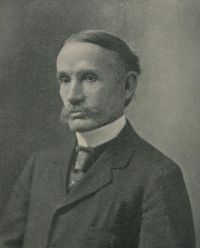 John Bates Clark
 Friedrich EngelsCharles KnightSamuel SmilesGeo. T. FairchildTimothy Thomas FortuneHerbert Feis
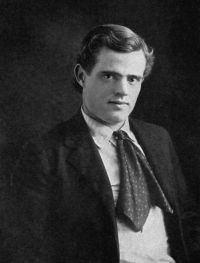 Jack LondonWilliam Lyon Mackenzie King