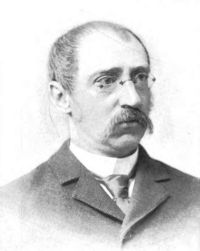
“ Still, is it not enough to show that Chinese poetry gets back near to the processes of nature by means of its vivid figure, its wealth of such figure? If we attempt to follow it in English we must use words highly charged, words whose vital suggestion shall interplay as nature interplays. Sentences must be like the mingling of the fringes of feathered banners, or as the colors of many flowers blended into the single sheen of a meadow.The poet can never see too much or feel too much. His metaphors are only ways of getting rid of the dead white plaster of the copula. ”
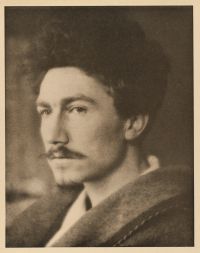
Ezra Pound
Biographical details

Ezra Weston Loomis Pound (1885–1972) was an American poet and critic, a key figure in modernist literature and a divisive voice in 20th-century politics. A founder of Imagism, he influenced the works of contemporaries like T.S. Eliot, H.D., and James Joyce, while his later support for fascism and antisemitism tainted his legacy.
His major works—Ripostes (1912), Hugh Selwyn Mauberley (1920), and The Cantos (1915–1962)—combine poetic innovation with provocative commentary, reflecting his economic theories and ideological evolution. Despite the controversy surrounding his wartime broadcasts and political associations, Pound’s impact on modern poetry remains profound, his Cantos serving as a significant, if debated, expression of his artistic vision.
Quotes by Ezra Pound
“ And they are white, White Poppy, They are white like the clouds in the forest of the sky Ere the stars arise to their hunting. O White Poppy, who art wiser than love, I am come for peace, yea from the hunting Am I come to thee for peace. Out of a new sorrow it is, That my hunting hath brought me. White Poppy, heavy with dreams, Though I am hungry for their lips When I see them a-hiding And a-passing out and in through the shadows —And it is white they are— But if one should look at me with the old hunger in her eyes, How will I be answering her eyes? ”
 Ezra Pound,
Lustra — Near Perigord
(1916)
Ezra Pound,
Lustra — Near Perigord
(1916)
“ While Born his own close purse, his rabbit warren, His subterranean chamber with a dozen doors, A-bristle with antennae to feel roads, To sniff the traffic into Perigord. And that hard phalanx, that unbroken line, The ten good miles from thence to Maent's castle, All of his flank—how could he do without her? And all the road to Cahors, to Toulouse? What would he do without her? "Papiol, Go forthright singing—Anhes, Cembelins. There is a throat; ah, there are two white hands; There is a trellis full of early roses, And all my heart is bound about with love. ”
“ In Durance I am homesick after mine own kind, Oh I know that there are folk about me, friendly faces, But I am homesick after mine own kind. "These sell our pictures"! Oh well, They reach me not, touch me some edge or that, But reach me not and all my life's become One flame, that reacheth not beyond Mine heart's own hearth, Or hides among the ashes there for thee. "Thee"? Oh "thee" is who cometh first Out of mine own-soul-kin, For I am homesick after mine own kind And ordinary people touch me not. Yea, I am homesick After mine own kind that know, and feel And have some breath for beauty and the arts. ”
“ That I have not the Countess of Beziers Close in my arms here. Even as thou shalt soon have this parchment. O hole in the wall here, be thou my jongleur, And though thou sighest my sorrow in the wind, Keep yet my secret in thy breast here; Even as I keep her image in my heart here. Mihi pergamena deest. Revolt Against the crepuscular spirit in modern poetry I would shake off the lethargy of this our time, and give For shadows—shapes of power For dreams—men. "It is better to dream than do"? Aye! and, No! Aye! if we dream great deeds, strong men, Hearts hot, thoughts mighty. ”
Ezra Pound,
Poems 1918-21, Including Three Portraits and Four Cantos
“ JOVE, be merciful to that unfortunate woman Or an ornamental death will be held to your debit, The time is come, the air heaves in torridity, The dry earth pants against the canicular heat, But this heat is not the root of the matter: She did not respect all the gods; Such derelictions have destroyed other young ladies aforetime, And what they swore in the cupboard wind and wave scattered away. Was Venus exacerbated by the existence of a comparable equal? Is the ornamental goddess full of envy? ”
“ In a garden where the whitethorn spreads her leaves My lady hath her love lain close beside her, Till the warder cries the dawn—Ah dawn that grieves! Ah God! Ah God! That dawn should come so soon! "Please God that night, dear night should never cease, Nor that my love should parted be from me, Nor watch cry 'Dawn'—Ah dawn that slayeth peace! Ah God! Ah God! That dawn should come so soon! "Fair friend and sweet, thy lips! Our lips again! Lo, in the meadow there the birds give song! Ours be the love and Jealousy's the pain! Ah God! Ah God! That dawn should come so soon! ”
“ The Chinese have been idealists, and experimenters in the making of great principles; their history opens a world of lofty aim and achievement, parallel to that of the ancient Mediterranean peoples. We need their best ideals to supplement our own—ideals enshrined in their art, in their literature and in the tragedies of their lives.We have already seen proof of the vitality and practical value of oriental painting for ourselves and as a key to the eastern soul. It may be worth while to approach their literature, the intensest part of it, their poetry, even in an imperfect manner. ”
“ Then let us be such dreams the world shall tremble at And know we be its rulers though but dreams! Then let us be such shadows as the world shall tremble at And know we be its masters though but shadow! Great God, if men are grown but pale sick phantoms That must live only in these mists and tempered lights And tremble for dim hours that knock o'er loud Or tread too violent in passing them; Great God, if these thy sons are grown such thin ephemera, I bid thee grapple chaos and beget Some new titanic spawn to pile the hills and stir This earth again. ”
Ezra Pound,
Lustra — Exile's Letter
(1916)
“ With yellow gold and white jewels, we paid for songs and laughter And we were drunk for month on month, forgetting the kings and princes. Intelligent men came drifting in from the sea and from the west border, And with them, and with you especially There was nothing at cross purpose, And they made nothing of sea-crossing or of mountain crossing, If only they could be of that fellowship, And we all spoke out our hearts and minds, and without regret. ”
Ezra Pound,
Lustra — Lament of the Frontier Guard
(1916)
“ By the North Gate, the wind blows full of sand, Lonely from the beginning of time until now! Trees fall, the grass goes yellow with autumn. I climb the towers and towers to watch out the barbarous land: Desolate castle, the sky, the wide desert. There is no wall left to this village. Bones white with a thousand frosts, High heaps, covered with trees and grass; Who brought this to pass? Who has brought the flaming imperial anger? Who has brought the army with drums and with kettle-drums? ”
Ezra Pound,
Poems 1918-21, Including Three Portraits and Four Cantos
“ My genius is no more than a girl. If she with ivory fingers drive a tune through the lyre, We look at the process How easy the moving fingers; if hair is mussed on her forehead, If she goes in a gleam of Cos, in a slither of dyed stuff, There is a volume in the matter; if her eyelids sink into sleep, There are new jobs for the author, And if she plays with me with her shirt off, We shall construct many Iliads. ”
Ezra Pound,
Lustra — Near Perigord
(1916)
“ Worked for and snatched from the string-purse of Born— The four round towers, four brothers—mostly fools: What could he do but play the desperate chess, And stir old grudges? "Pawn your castles, lords! Let the Jews pay." And the great scene— (That, maybe, never happened!) Beaten at last, Before the hard old king: "Your son, ah, since he died My wit and worth are cobwebs brushed aside In the full flare of grief. Do what you will." Take the whole man, and ravel out the story. He loved this lady in castle Montaignac? The castle flanked him—he had need of it. ”
“ But the art of singing to music went well nigh out of the words, for Metastasio has left a few catches, and so has Lorenzo di Medici, but in Bel Canto in the times of Durante, and Piccini, Paradeis, Vivaldi, Caldara and Benedetto Marcello, the music turns the words out of doors and strews; them and distorts them to the tune, out of all recognition and the philosophic canzoni of Dante and his times—men are not understandable if they are sung, and in their time music and poetry parted company; the canzone's tune becoming a sonata without singing. ”
“ The Bookman:—"No new book of poems for years past has had such a freshness of inspiration, such a strongly individual note, or been more alive with undoubtable promise."The Daily Chronicle:—" All his poems are like this, from beginning to end, and in every way, his own, and in a world of his own. For brusque intensity of effect we can hardly compare them to any other work. It is the old miracle that cannot be defined, nothing more than a subtle entanglement of words, so that they rise out of their graves and sing." ”
“ Such actions are seen, but Chinese would be a poor language and Chinese poetry but a narrow art, could they not go on to represent also what is unseen. The best poetry deals not only with natural images but with lofty thoughts, spiritual suggestions and obscure relations. The greater part of natural truth is hidden in processes too minute for vision and in harmonies too large, in vibrations, cohesions and in affinities. The Chinese compass these also, and with great power and beauty.You will ask, how could the Chinese have built up a great intellectual fabric from mere picture writing? ”
Ezra Pound,
Poems 1918-21, Including Three Portraits and Four Cantos
“ A petrification of air. The old room of the tawdry class asserts itself. The young men, never! Only the husk of talk. O voi che siete in piccioletta barca, Dido choked up with sobs for her Sicheus Lies heavy in my arms, dead weight Drowning with tears, new Eros, And the life goes on, mooning upon bare hills; Flame leaps from the hand, the rain is listless, Yet drinks the thirst from our lips, solid as echo, Passion to breed a form in shimmer of rain-blurr ”
“ Masks These tales of old disguisings, are they not Strange myths of souls that found themselves among Unwonted folk that spake a hostile tongue, Some soul from all the rest who'd not forgot The star-span acres of a former lot Where boundless mid the clouds his course he swung, Or carnate with his elder brothers sung E'er ballad makers lisped of Camelot? Old singers half-forgetful of their tunes, Old painters colour-blind come back once more, Old poets skilless in the wind-heart runes, Old wizards lacking in their wonder-lore ”
“ Have I hidden mine eyes, O God of waters. O God of silence, Purifiez nos cœurs, Purifiez nos cœurs, O God of waters, make clean our hearts within us And our lips to show forth thy praise, For I have seen the Shadow of this thy Venice Floating upon the waters, And thy stars Have seen this thing out of their far courses Have they seen this thing, O God of waters, Even as are thy stars Silent unto us in their far-coursing, Even so is mine heart become silent within me. Purifiez nos cœurs O God of the silence, Purifiez nos cœurs O God of waters. ”
“ Men seeing themselves not infrequently miserable forged an idea of a time when all men were happy. It is as if they had said, once upon a time no tree withered, no beast fell sick, no animal devoured another, the spiders did not catch flies. Hence the ideal of the Golden Age, of the egg of Arimana, of the serpent who stole the secret of eternal life from the donkey, of the combat of Typhon and Osiris, of Ophionée and the gods, of Pandora's casket, and all these other old stories, sometimes very ingenious and never, in the least way, instructive. ”
Ezra Pound,
Poems 1918-21, Including Three Portraits and Four Cantos
“ My vote coming from the temple of Phoebus in Lycia, at Patara, And in the mean time my songs will travel, And the devirginated young ladies will enjoy them when they have got over the strangeness, For Orpheus tamed the wild beasts— and held up the Threician river; And Citharaon shook up the rocks by Thebes and danced them into a bulwark at his pleasure, And you, O Polyphemus? Did harsh Galatea almost Turn to your dripping horses, because of a tune, under Aetna? We must look into the matter. ”
“ Chez Laforgue, il y a plus de gai sans-souci, de coups de batte de pierrot donnés à toutes choses, plus de "vaille-que-vaille la vie," dit d'un air de moqueuse résignation. Sa rancœur n'est pas qui encombrante. Il était un peu l'enfant indiscipliné que rit à travers les gronderies, et fait la moue à sa fantaisie; mais son haussement d'épaules gamin, et ses "Après tout?" qu'il jette comme une chiquenaude au visage du Temps, cachent toujours au fond de son cœur un lac mélancolique, un lac de tristesse et d'amours flétris, où vient se refléter sa claire imagination. ”
“ The Vicomte of Beziers's not such a bad lot. I made rimes to his lady this three year: Vers and canzone, till that damn'd son of Aragon, Alfonso the half-bald, took to hanging His helmet at Beziers. Then came what might come, to wit: three men and one woman, Beziers off at Mont-Ausier, I and his lady Singing the stars in the turrets of Beziers, And one lean Aragonese cursing the seneschal To the end that you see, friends: Aragon cursing in Aragon, Beziers busy at Beziers— Bored to an inch of extinction, Tibors all tongue and temper at Mont-Ausier, Me! ”
Ezra Pound,
Poems 1918-21, Including Three Portraits and Four Cantos
“ Probes for old wills and friendships, and the big locust-casques Bend to the tawdry table, Lift up their spoons to mouths, put forks in cutlets, And make sound like the sound of voices. Lorenzaccio Being more live than they, more full of flames and voices. Ma si morisse! Credesse caduto da se, ma si morisse. And the tall indifference moves, a more living shell, Drift in the air of fate, dry phantom, but intact, O Alessandro, chief and thrice warned, watcher, Eternal watcher of things, Of things, of men, of passions. Eyes floating in dry, dark air ”
“ When May shall bid them in in loveliness. O ye I love, who hold this loveliness Near to your hearts, may never any greyness Enshroud your hearts when ye would gather flowers, Or bind your eyes when ye would see the stars; But alway do I give ye flowers by day, And when day's plucked I give ye stars for praise. But most, thou Flower, whose eyes are like the stars, With whom my dreams bide all the live-long day, Within thy hands would I rest all my praise. Portrait From "La Mère Inconnue." ”
“ Were I a French critic, skilled in their elaborate art of writing books about books, I should probably go to some length discussing Mr. Eliot's two sorts of metaphor: his wholly unrealizable, always apt, half ironic suggestion, and his precise realizable picture. It would be possible to point out his method of conveying a whole situation and half a character by three words of a quoted phrase; his constant aliveness, his mingling of very subtle observation with the unexpectedness of a backhanded cliché. It is, however, extremely dangerous to point out such devices. ”
“ Have the earth in mock'ry, and are kind to all, My fellows, aye I know the glory Of th' unbounded ones, but ye, that hide As I hide most the while And burst forth to the windows only whiles or whiles For love, or hope, or beauty or for power, Then smoulder, with the lids half closed And are untouched by echoes of the world. ”
“ You came in out of the night And there were flowers in your hands, Now you will come out of a confusion of people, Out of a turmoil of speech about you. I who have seen you amid the primal things Was angry when they spoke your name In ordinary places. I would that the cool waves might flow over my mind, And that the world should dry as a dead leaf, Or as a dandelion seed-pod and be swept away, So that I might find you again, Alone. ”
Ezra Pound,
Poems 1918-21, Including Three Portraits and Four Cantos
“ And she then opening my eyelids fallen in sleep, Her lips upon them; and it was her mouth saying: Sluggard! In how many varied embraces, our changing arms, Her kisses, how many, lingering on my lips. “Turn not Venus into a blinded motion, Eyes are the guides of love, Paris took Helen naked coming from the bed of Menelaus, Endymion’s naked body, bright bait for Diana,” —such at least is the story. While our fates twine together, sate we our eyes with love; For long night comes upon you and a day when no day returns. Let the gods lay chains upon us so that no day shall unbind them. ”
“ Dowies, Comstocks, Societies for the Prevention of All Human Activities, are impossible in the wake of Laforgue. And he is therefore an exquisite poet, a deliverer of the nations, a Numa Pompilius, a father of light. And to many people this mystery, the mystery why such force should reside in so fragile a book, why such power should coincide with so great a nonchalance of manner, will remain forever a mystery. ”
“ Slow-Smiling is companion unto him, And Mellow-Laughter serves, his trencherman. And I a thousand beauties there beheld. And he and they made merry endlessly. And love was rayed between them as a mist, And yet so fine and delicate a haze It did impede the eyes no whit, Unless it were to make the halo round each one Appear more myriad-jewelled marvellous, Than any pearled and ruby diadem the courts o' earth ha' known. ”
“ She's a very nice woman, extraordinarily well-behaved, upright and clever and with a tremendous lot of good sense about a good many matters. Yet her conception of a novel—she has explained it to me once or twice, and she doesn't do it badly as exposition—is a thing so false that it makes me blush. It's a thing so hollow, so dishonest, so lying, in which life is so blinked and blinded, so dodged and disfigured, that it makes my ears burn. ”
“ We have drifted out of touch with the Latin authors as well, and we have mislaid the fine English versions: Golding's Metamorphoses; Gavin Douglas' Æneids; Marlowe's Eclogues from Ovid, in each of which books a great poet has compensated, by his own skill, any loss in transition; a new beauty has in each case been created. Greek in English remains almost wholly unsuccessful, or rather, there are glorious passages but no long or whole satisfaction. ”
“ The book of a reprobate people, a book for so long unknown to all the earth, a book where right, reason and decent custom are outraged on every page, and which we have presented us as irrefutable, holy, dictated by God himself? Is it not an impiety to believe it? Is it not the dementia of cannibals to persecute sensible, modest men who do not believe it? ”
“ Only scholars and poets feel painfully back along the thread of our etymologies and piece together our diction, as best they may, from forgotten fragments. This anemia of modern speech is only too well encouraged by the feeble cohesive force of our phonetic symbols. There is little or nothing in a phonetic word to exhibit the embryonic stages of its growth. It does not bear its metaphor on its face. We forget that personality once meant, not the soul, but the soul's mask. This is the sort of thing one can not possibly forget in using the Chinese symbols. ”
“ There is no perception of beauty without a corresponding disgust. If the price for such artists as James Joyce is exceeding heavy, it is the artist himself who pays, and if Armageddon has taught us anything it should have taught us to abominate the half-truth, and the tellers of the half-truth in literature. ”
“ They do not even know what they lost. They have not stopped for eight minutes to consider the meaning of his last public act. After a year of ceaseless labor, of letter writing, of argument, of striving in every way to bring in America on the side of civilization, he died of apoplexy. On the side of civilization—civilization against barbarism, civilization, not Utopia, not a country or countries where the right always prevails in six weeks! ”
“ It is a mistake to suppose, with some philosophers of æsthetics, that art and poetry aim to deal with the general and the abstract. This misconception has been foisted upon us by mediæval logic. Art and poetry deal with the concrete of nature, not with rows of separate "particulars," for such rows do not exist. Poetry is finer than prose because it gives us more concrete truth in the same compass of words. Metaphor, its chief device, is at once the substance of nature and of language. Poetry only does consciously [8] what the primitive races did unconsciously. ”
“ This is a moral instruction, most truly, a lesson to be learned from all ancient fables, to wit, that scarcely had the race come into existence before one brother assassinated another, but what appears to the wise of this world, contrary to all justice, contrary to all the common sense principles, is that God has eternally damned the whole human race, and has slaughtered his own son, quite uselessly, for an apple, and that he has pardoned a fratricide. ”
“ There is a natural hierarchy among groups. Streets have no set middle, no veritable limitations; they hold a long vacillating sort of life which night flattens out almost to nothingness. Cross-roads and squares take on contour, and gather up the nodes of their rhythms. Other groups have a fashioned body, they endure but a little space, but they have learned, almost, to die; they even resurrect themselves as by a jerk or dry spasm, they begin the habit of being, they strive toward it, and this puts them out of breath. ”
“ The moment we use the copula, the moment we express subjective inclusions, poetry evaporates. The more concretely and vividly we express the interactions of things the better the poetry. We need in poetry thousands of active words, each doing its utmost to show forth the motive and vital forces. We can not exhibit the wealth of nature by mere summation, by the piling of sentences. Poetic thought works by suggestion, crowding maximum meaning into the single phrase pregnant, charged, and luminous from within.In Chinese character each work accumulated this sort of energy in itself. ”
“ Now we are in condition to appreciate the full splendor of certain lines of Chinese verse. Poetry surpasses prose especially in that the poet selects for juxtaposition those words whose overtones blend into a delicate and lucid harmony. All arts follow the same law; refined harmony lies in the delicate balance of overtones. In music the whole possibility and theory of harmony is based on the overtones. In this sense poetry seems a more difficult art.How shall we determine the metaphorical overtones of neighboring words? We can avoid flagrant breaches like mixed metaphor. ”
“ Orion's gaseous fog was the Brother Benjamin of her galaxy. But she was no more the "little" Salome, this night brought a change of relations, exorcised from her virginity of tissue she felt peer to these matrices, fecund as they in gyratory evolutions. Yet this fatal sacrifice to the cult (still happy in getting out of so discreetly) had obliged her in order to get rid of her initiator, to undertake a step (grave perhaps) , perhaps homicide;—finally to assure silence, cool water to contingent people,—elixir of an hundred nights' distillation. It must serve. ”
“ Rimbaud does not endanger his intensity by a chuckle. He is serious as Cézanne is serious. Comparisons across an art are always vague and inexact, and there are no real parallels; still it is possible to think of Corbière a little as one thinks of Goya, without Goya's Spanish, with infinite differences, but with a macabre intensity, and a modernity that we have not yet surpassed. ”
“ These we can fairly well identify in primitive Sanskrit. They are, almost without exception, vivid verbs. The wealth of European speech grew, following slowly the intricate maze of nature's suggestions and affinities. Metaphor was piled upon metaphor in quasi-geological strata.Metaphor, the revealer of nature, is the very substance of poetry. The known interprets the obscure, the universe is alive with myth. The beauty and freedom of the observed world furnish a model, and life is pregnant with art. ”
“ How can we go on thinking that an individual is a solitary thing which is born, grows, reproduces itself and dies? This is a superior and inveterate manner of being an individual. But groups are not truly born. Their life makes and unmakes itself like an unstable state of matter, a condensation which does not endure. They show us that life, at its origin, is a provisory attitude, a moment of exception, an intensity between two relaxations, not continuity, nothing decisive. ”
“ On almost every page of Joyce you will find just such swift alternation of subjective beauty and external shabbiness, squalor, and sordidness. It is the bass and treble of his method. And he has his scope beyond that of the novelists his contemporaries, in just so far as whole stretches of his keyboard are utterly out of their compass.The conclusion or moral termination from all of which is that the great writers of any period must be the remarkable minds of that period; they must know the extremes of their time; they must not represent a social status ”
“ Nature furnishes her own clues. Had the world not been full of homologies, sympathies, and identities, thought would have been starved and language chained to the obvious. There would have been no bridge whereby to cross from the minor truth of the seen to the major truth of the unseen. ”
“ One superiority of verbal poetry as an art rests in its getting back to the fundamental reality of time. Chinese poetry has the unique advantage of combining both elements. It speaks at once with the vividness of painting, and with the mobility of sounds. It is, in some sense, more objective than either, more dramatic. In reading Chinese we do not seem to be juggling mental counters, but to be watching things work out their own fate.Leaving for a moment the form of the sentence, let us look more closely at this quality of vividness in the structure of detached Chinese words. ”
Common terms
Works by Ezra Pound
InstigationsPoems 1918-21, Including Three Portraits and Four CantosPersonaeExultationsHugh Selwyn MauberleyLustra — CommissionLustra — Song of the Bowmen of ShuLustra — MeditatioLustra — PreferenceLustra — The RestLustra — Homage to Quintus Septimius Florentis ChristianusLustra — To DivesLustra — To a Friend Writing on Cabaret DancersLustra — South Folk in Cold CountryLustra — The GarretLustra — Exile's LetterLustra — Near PerigordLustra — Dance FigureThe Sea of GlassTame CatLustra — ἰμέρρωLustra — Το ΚαλὸνLustra — Women before a ShopLustra — Ts'ai Chi'hLustra — To Formianus' Young Lady FriendLustra — The Three PoetsLustra — The Tea ShopLustra — The Study in AestheticsLustra — The SpringLustra — The Social OrderLustra — The Seeing EyeLustra — The River SongLustra — The PatternsLustra — The New Cake of SoapLustra — The Jewel Stairs' GrievanceLustra — The GipsyLustra — The GardenLustra — The Game of ChessLustra — The FaunLustra — The EncounterLustra — The CondolenceLustra — The BellairesLustra — The Beautiful ToiletLustra — The Bath TubLustra — TenzoneLustra — TemporaLustra — Surgit FamaLustra — SocietyLustra — SimulacraLustra — Shop GirlLustra — Sennin Poem by KakuhakuLustra — SalvationistsLustra — Salutation the SecondLustra — Provincia DesertaLustra — Poem by the Bridge at Ten-ShinLustra — PhyllidulaLustra — PapyrusLustra — Our ContemporariesLustra — OrtusLustra — Old Idea of Choan by RosoriuLustra — Liu Ch'eLustra — Les MillwinLustra — Lament of the Frontier GuardLustra — LadiesLustra — L'Art, 1910Lustra — IteLustra — In a Station of the MetroLustra — Image from D'OrleansLustra — HeatherLustra — GentildonnaLustra — Further InstructionsLustra — Four Poems of DepartureLustra — Fish and the ShadowLustra — Fan-piece, for her Imperial LordLustra — EpitaphsLustra — EpilogueLustra — Dum Capitolium ScandetLustra — Dans un Omnibus de LondresLustra — CoitusLustra — CodaLustra — CausaLustra — CathayLustra — AridesLustra — AprilLustra — AncoraLustra — Ancient Wisdom, Rather CosmicLustra — AmitiésLustra — AlbâtreLustra — After Ch'u YuanLustra — A Song of the DegreesLustra — A PactLustra — A Ballad of the Mulberry RoadCoupletLustra — Villanelle: The Psychological HourThe Coming of War: ActaeonLustra — The River Merchant's Wife…Lustra — Black Slippers: Bellotti