Summary

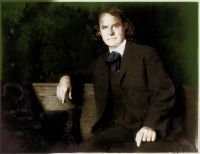
Portrait of Elbert Hubbard Elbert Hubbard Little Journeys to the Homes of the Great - Volume 04

It is genius. To be able to make a statue is little, but to breathe into its nostrils the breath of life—ah! that is something else! The last elusive, undefinable stroke of the brush, that something uniting the spirit of the beholder with the spirit of the artist, so that you feel as he felt when he wrought—that is art. Burne-Jones is the avatar of Giorgione. He subdues you into silence, and you wait, expecting that one of his tall, soulful dream-women will speak, if you are but worthy—holding your soul in tune.
Source: Gutenberg

Portrait of Elbert Hubbard Elbert Hubbard Little Journeys to the Homes of the Great - Volume 04

Leonardo was more of a painter than a sculptor. His pictures are full of rollicking mirth, and the smile on the faces of his women is handed down by imitation even to this day. The joyous freedom of animal life beckons from every Leonardo canvas; and the backgrounds fade off into fleecy clouds and shadowy, dreamy, opiate odor of violets.
Michelangelo, however, is true to his own life as Leonardo was to his—for at the last the artist only reproduces himself. He never painted a laugh, for life to him was serious and full of sober purpose.
Source: Gutenberg

Portrait of Elbert Hubbard Elbert Hubbard Little Journeys to the Homes of the Great - Volume 04

And again in the dusk of a winter night we see black-lined against the sky the bent figure of an old woman, bearing her burden of fagots; and again we are shown the plain, homely interior of a cottage where the family watches by the bedside of a dying child.
And always the picture is not quite complete—the faces are never distinct—no expression of feature is there, but the soul worked up into the canvas conveys its silent message to all those who have eyes to see and hearts to feel.
Source: Gutenberg

Get perspective with Kwize: daily news enlightened by great literature