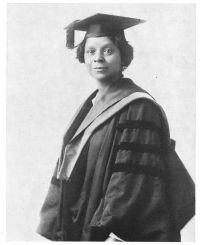
Georgiana Rose Simpson

Georgiana Rose Simpson

Summary

Portrait of Georgiana Rose Simpson Georgiana Rose Simpson Herder's conception of "das Volk" (1921)

Any knowing without willing would be false and incomplete. If knowing is only a deep feeling of truth, who is going to see truth and at the same time be blind to it—know goodness and not will to do it? Every single passion or feeling thus knowing the good would at the same time will the good. Herder is emphatic about the interdependence of these two. Just as no knowing is without willing, no willing is without knowing; they are only one energy of the soul.
Source: Gutenberg

Portrait of Georgiana Rose Simpson Georgiana Rose Simpson Herder's conception of "das Volk" (1921)

Primitive man, to himself and enigma, he observes, when comparing his visible condition, his natural capacities, his will-power with enduring nature, was forced to a feeling of weakness, to a sense of mortal existence; he finds himself of the earth, a fragile house of clay. Sympathy then and the realization of one’s duty to one’s fellow-men began here.
But the consciousness of frailty led also to a knowledge of our powers and abilities, to a sense of our calling and our duties, and brought us to a deep consideration of human nature.
Source: Gutenberg

Portrait of Georgiana Rose Simpson Georgiana Rose Simpson Herder's conception of "das Volk" (1921)

This harmony between expression and feeling began its decline under the influences of overrefinement and of tastes that had been distorted by excessive civilization. Therefore, he argues, it is the common man, the crude rustic, rather than the polished and elegant courtier who reveals his heart in all purity; we may deal with this common man without suspicions, fears, reserves, and treacheries. It was the simplicity of ancient times when men lived in a primitive state that bred innocence and virtue, courage and genuine humanity.
Source: Gutenberg

Get perspective with Kwize: daily news enlightened by great literature