Summary

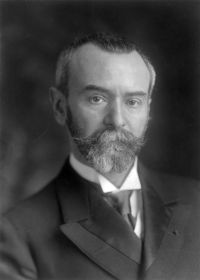
Portrait of J. J. Jusserand J. J. Jusserand English Wayfaring Life in the Middle Ages…

There come Chaucer, the knight, the squire, the friar, the host—old acquaintances. We are by ourselves, no one need be afraid to speak, the foaming ale renders hearts expansive; and the unseen coils of that tortuous soul unfold to view, he gives the summary of a whole life, the theory of his existence, the key to his secrets. What matters his frankness? he knows that it cannot hurt him; time and again has the bishop brought his practices to light, but the crowd always troops around him.
Source: Gutenberg

Portrait of J. J. Jusserand J. J. Jusserand English Wayfaring Life in the Middle Ages…

Accident played a great part in the social life of the fourteenth century. It was the moment when modern life began, the outward brilliancy of a novel civilization had recently modified society from top to bottom, the need to be constantly on the watch had become less apparent; the moated castle with its drawbridge, battlements and loop-holes, had begun to change into a villa or a mansion, while the hut was growing into a house. Confidence was greater, but not always justified: accidents are unexpected mishaps.
Source: Gutenberg

Portrait of J. J. Jusserand J. J. Jusserand English Wayfaring Life in the Middle Ages…

On the verge of capture, the poor squire is fain to choose between a shameful death and retreat into “the grene wode.” His betrothed, who is nothing less than a baron’s daughter, wishes to follow him; and then, in every couplet, her lover, in order to try her, pictures to her the terrors and dangers of the fugitive’s life; she may perhaps see him taken and die a robber’s death:
“For an outlawe this is the lawe, that men hym take and binde
Wythout pytee, hanged to bee, and waver with the wynde.”
Source: Gutenberg

Get perspective with Kwize: daily news enlightened by great literature