Summary

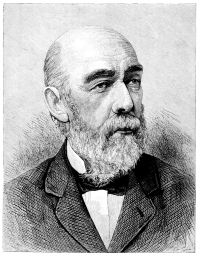
Portrait of James Fergusson James Fergusson,  Rude Stone Monuments in All Countries…

“ Yet the Khassia looks down on these new forms of civilization unmoved. As a servant or a trader he must have been for centuries familiar with both: but he clings to his old faith, and erects his rude-stone monuments, as his forefathers had done from time immemorial, and it is doubtful whether either our soldiers or our missionaries will soon wean him from this strange form of adoration. ”
Source: Gutenberg

Portrait of James Fergusson James Fergusson,  Rude Stone Monuments in All Countries…

“ It is difficult, however, to believe that mankind were long content with so simple a mode of sepulture. To heap earth or stones on the body of the beloved departed so as to crush and deface it, must have seemed rude and harsh, and some sort of coffin was probably early devised for the protection of the corpse,—in well-wooded countries, this would be of wood, which, if the mound is old, has perished long ago—in stony countries, as probably of stone, forming the rude cists so commonly found in early graves. ”
Source: Gutenberg

Portrait of James Fergusson James Fergusson,  Rude Stone Monuments in All Countries…

“ That rail is unique in India, whether we consider its extent, the beauty of its sculptures, or the elaborateness of its finish. Other rails exist elsewhere surrounding dagobas or sacred spots, but none where the circle itself is relatively so much greater and more magnificent than the surrounding objects. The question thus arises, did the Amravati circle grow out of the rude-stone graves that cluster round the hills in its neighbourhood, or are the rude circles humble copies of that pride of the city? ”
Source: Gutenberg

Get perspective with Kwize: daily news enlightened by great literature