Summary

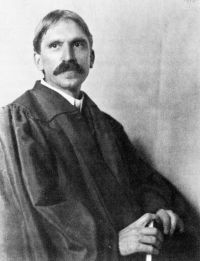
Portrait of John Dewey John Dewey The Child and the Curriculum

Nothing can be developed from nothing; nothing but the crude can be developed out of the crude—and this is what surely happens when we throw the child back upon his achieved self as a finality, and invite him to spin new truths of nature or of conduct out of that. It is certainly as futile to expect a child to evolve a universe out of his own mere mind as it is for a philosopher to attempt that task.
Source: Gutenberg

Portrait of John Dewey John Dewey The Child and the Curriculum

His development, his growth, is the ideal. It alone furnishes the standard. To the growth of the child all studies are subservient; they are instruments valued as they serve the needs of growth. Personality, character, is more than subject-matter. Not knowledge or information, but self-realization, is the goal. To possess all the world of knowledge and lose one's own self is as awful a fate in education as in religion. Moreover, subject-matter never can be got into the child from without. Learning is active.
Source: Gutenberg

Portrait of John Dewey John Dewey The Child and the Curriculum

Classification is not a matter of child experience; things do not come to the individual pigeonholed. The vital ties of affection, the connecting bonds of activity, hold together the variety of his personal experiences. The adult mind is so familiar with the notion of logically ordered facts that it does not recognize—it cannot realize—the amount of separating and reformulating which the facts of direct experience have to undergo before they can appear as a "study," or branch of learning. A principle, for the intellect, has had to be distinguished and defined
Source: Gutenberg

Get perspective with Kwize: daily news enlightened by great literature