Summary

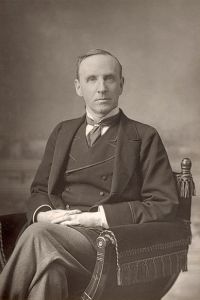
Portrait of John Morley John Morley Critical Miscellanies (Vol. 1 of 3…

Billaud was too formidable. He was always the impersonation of the ruder genius of the Revolution, and the incarnation of the philosophy of the Terror, not as a delirium, but as a piece of deliberate policy. His pale, sober, and concentrated physiognomy seemed a perpetual menace. He had no gifts of speech, but his silence made people shudder, like the silence of the thunder when the tempest rages at its height. It was said by contemporaries that if Vadier was a hyæna, Barère a jackal, and Robespierre a cat, Billaud was a tiger.
Source: Gutenberg

Portrait of John Morley John Morley Critical Miscellanies (Vol. 1 of 3…

Danton cannot be called noble, because nobility implies a purity, an elevation, and a kind of seriousness which were not his. He was too heedless of his good name, and too blind to the truth that though right and wrong may be near neighbours, yet the line that separates them is of an awful sacredness. If Robespierre passed for a hypocrite by reason of his scruple, Danton seemed a desperado by his airs of 'immoral thoughtlessness.' But the world forgives much to a royal size, and Danton was one of the men who strike deep notes.
Source: Gutenberg

Portrait of John Morley John Morley Critical Miscellanies (Vol. 1 of 3…

The Convention would have yawned, if it had not trembled under him, but the Jacobin Club never found him tedious. Robespierre's style had no richness either of feeling or of phrase; no fervid originality, no happy violences. If we turn from a page of Rousseau to a page of Robespierre, we feel that the disciple has none of the thrilling sonorousness of the master; the glow and the ardour have become metallic; the long-drawn plangency is parodied by shrill notes of splenetic complaint. The rhythm has no broad wings
Source: Gutenberg

Get perspective with Kwize: daily news enlightened by great literature