“ Sir Philip Sidney may be said to have been the first typical example in English society of the true gentleman. The charm which attracted men to him in life, the fame which he left behind him, are not to be accounted for simply by his accomplishments as a courtier, a poet, a lover of literature, a gallant soldier; above all this there was something not found in the strong or brilliant men about him, a union and harmony of all high qualities differing from any of them separately, which gave a fire of its own to his literary enthusiasm, and a sweetness of its own to his courtesy. ”
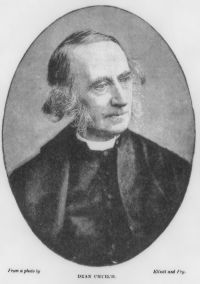
R. W. Church
Summary
R. W. Church’s Spenser offers a critical examination of the Elizabethan poet Edmund Spenser, delving into his literary legacy, moral values, and the impact of Ireland on his creative output. Concentrating on The Faery Queen, Church emphasizes Spenser’s allegorical perspective, intertwining themes of virtue, defiance, and the conflict between nobility and human weakness.
The work highlights Spenser’s position as a poet influenced by both the ideals of the English Renaissance and the volatile conditions of Irish rule, while also considering his original use of language and the majesty of his imaginative realm. Church’s interpretation ultimately portrays Spenser as a figure encapsulating the age’s effort to balance personal honor with national aspirations.
Quotes from Spenser (R. W. Church)
“ All conjecture is idle waste of time. We only know that the first of English poets perished miserably and prematurely, one of the many heavy sacrifices which the evil fortune of Ireland has cost to England; one of many illustrious victims to the madness, the evil customs, the vengeance of an ill-treated and ill-governed people.One Irish rebellion brought him to Ireland, another drove him out of it. Desmond's brought him to pass his life there, and to fill his mind with the images of what was then Irish life, with its scenery, its antipathies, its tempers, its chances, and necessities. ”
“ Love comes on the scene in shapes which are exquisitely beautiful, in all its purity, its tenderness, its unselfishness. But the claims of its all-ruling and irresistible might are also only too readily verified in the passions of men; in the follies of love, its entanglements, its mischiefs, its foulness. In one shape or another it meets us at every turn; it is never absent; it is the motive and stimulant of the whole activity of the poem. ”
