Summary

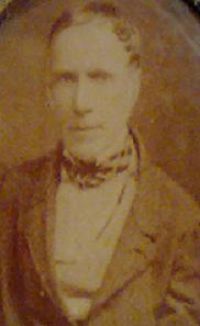
Portrait of Thomas Medwin Thomas Medwin Journal of the Conversations of Lord Byron (1824)

Sheridan was an extraordinary compound of contradictions, and Moore will be much puzzled in reconciling them for the Life he is writing. The upper part of Sheridan’s face was that of a God—a forehead most expansive, an eye of peculiar brilliancy and fire; but below he shewed the satyr.
“Lewis was a pleasant companion, and would always have remained a boy in spirits and manners— (unlike me!) He was fond of the society of younger men than himself. I myself never knew a man, except Shelley, who was companionable till thirty. I remember Mrs. Pope once asking who was Lewis’s male-love this season!
Source: Wikisource

Portrait of Thomas Medwin Thomas Medwin Journal of the Conversations of Lord Byron (1824)

Rogers was very much offended at its being said that his ‘Pleasures,’ &c. were to be found shining in green and gold morocco-bindings in most parlour-windows, and on the book-shelves of all young ladies.”
“But, don’t we all write to please them? I am sure I was more pleased with the fame my ‘Corsair’ had, than with that of any other of my books. Why? for the very reason because it did shine, and in boudoirs. Who does not write to please the women? And Rogers has succeeded: what more can he want or wish?
Source: Wikisource

Portrait of Thomas Medwin Thomas Medwin Journal of the Conversations of Lord Byron (1824)

No one can be absurd enough to contend, that the preservation of the unities is a defect,—at least a fault. Look at Alfieri’s plays, and tell me what is wanting in them. Does he ever deviate from the rules prescribed by the ancients, from the classical simplicity of the old models? It is very difficult, almost impossible, to write any thing to please a modern audience.
Source: Wikisource

Get perspective with Kwize: daily news enlightened by great literature