Summary

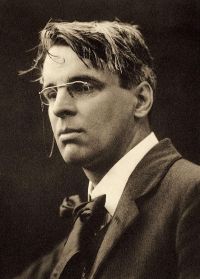
Portrait of W. B. Yeats W. B. Yeats The Trembling of the Veil

Is there nation-wide multiform reverie, every mind passing through a stream of suggestion, and all streams acting and reacting upon one another, no matter how distant the minds, how dumb the lips? A man walked, as it were, casting a shadow, and yet one could never say which was man and which was shadow, or how many the shadows that he cast. Was not a nation, as distinguished from a crowd of chance comers, bound together by these parallel streams or shadows; that Unity of Image, which I sought in national literature, being but an originating symbol?
Source: Gutenberg

Portrait of W. B. Yeats W. B. Yeats The Trembling of the Veil

Her beauty, backed by her great stature, could instantly affect an assembly, and not as often with our stage beauties because obvious and florid, for it was incredibly distinguished, and if—as must be that it might seem that assembly’s very self, fused, unified, and solitary—her face, like the face of some Greek statue, showed little thought, her whole body seemed a master work of long labouring thought, as though a Scopas had measured and calculated, consorted with Egyptian sages, and mathematicians out of Babylon, that he might outface even Artemisia’s sepulchral image with a living norm.
Source: Gutenberg

Portrait of W. B. Yeats W. B. Yeats The Trembling of the Veil

I have described what image—always opposite to the natural self or the natural worldWilde, Henley, Morris, copied or tried to copy, but I have not said if I found an image for myself. I know very little about myself and much less of that anti-self: probably the woman who cooks my dinner or the woman who sweeps out my study knows more than I. It is perhaps because nature made me a gregarious man, going hither and thither looking for conversation, and ready to deny from fear or favour his dearest conviction, that I love proud and lonely things.
Source: Gutenberg

Get perspective with Kwize: daily news enlightened by great literature