Alamanni

Definition and stakes

The historians' history of the world in twenty-five volumes…

“ The Alamanni, who had stationed themselves in the woods, fell suddenly on the legions in the dusk of the evening, and nothing but the firmness and skill of the emperor saved the Romans from a total overthrow. A second battle was fought near Fanum in Umbria, on the spot where Hannibal’s brother Hasdrubal was defeated and slain five hundred years before. The Alamanni [422] were totally routed, and a concluding victory at Ticinum delivered Italy from their ravages. Aurelian pursued the barbarians beyond the Alps, and then turned to Pannonia, which the Vandals had invaded. ”
Source: Gutenberg

Frederick George Meeson Beck,  1911 Encyclopædia Britannica (1911)

“ From the middle of the 4th century onward it appears most frequently in the regions south of the Main, and soon the names Alamanni and Suabi are used synonymously The Alamanni (q.v.) seem to have been, in part at least, the descendants of the ancient Hermunduri, but it is likely that they had been joined by one or more other Suebic peoples, from the Danubian region, or more probably from the middle Elbe, the land of the ancient Semnones. ”
Source: Wikisource

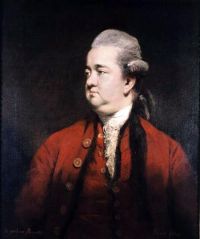
Portrait of Edward Gibbon Edward Gibbon,  The History of the Decline and Fall of the Roman Empire (1897)

“ Some of their tribes settled in Rhætia, under the protection of Theodoric; whose successors ceded the colony and their country to the grandson of Clovis. [This is probably the true view; and we must prefer it to the theories that part of Alamannia remained independent, or was annexed by Theodoric the Ostrogoth. For his treatment of the fugitive Alamanni, see also Ennodius, Panegyricus, c. xv. p. 212, ed. Vogel.] ”
Source: Wikisource

Get perspective with Kwize: daily news enlightened by great literature