Ancient Egyptian architecture

Definition and stakes

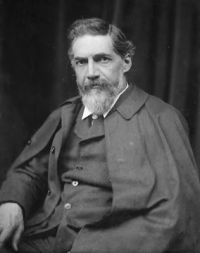
Portrait of Franz von Reber Franz von Reber,  History of Ancient Art

“ The architecture of Egypt was practised in a manner to show almost no historical development—with the sculpture this is the case in still greater degree. The most ancient carved remains, which with reasonable security may be assigned to the fifth dynasty, show the formal system, retained during the subsequent twenty centuries, as already perfected. Even at that early date the network of lines, which the Egyptian sculptors (more as mechanics than as artists) followed down to the time of the Ptolemies, was already calculated and introduced as a canon. ”
Source: Gutenberg

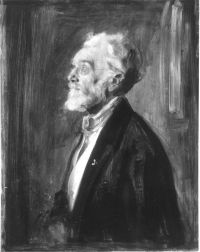
Portrait of Franz von Reber Franz von Reber,  History of Ancient Art

“ Egyptian art worked upon purely mechanical principles, according to a typical network of lines. Sculpture was drawn into the province of architecture, and slavishly subordinated to it; carved figures became little else than architectural members through uniformity, symmetrical regularity, and multiplicity of repetition. Piers masked by the form of Osiris were thus substituted for columns, and long rows of sphinxes or colossal statues were set, like the obelisks, to decorate the avenues leading to the temples. ”
Source: Gutenberg

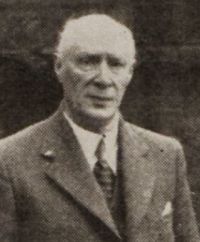
Charles Chipiez,  A History of Art in Ancient Egypt…

“ Such a society never allowed the mechanical reproduction of orthodox types to be forced upon its artists, until, indeed, its final decadence deprived it of all power to invent new forms. We have seen how great was the variety of plan and decoration in Egyptian religious architecture, from the marked simplicity of the temple near the sphinx, to the sumptuous majesty of the Theban buildings and the elegance of those of Sais. The style and taste of Egyptian sculpture underwent a change at each renascence of art. ”
Source: Gutenberg

Get perspective with Kwize: daily news enlightened by great literature