Anglo-Saxon England

Definition and stakes

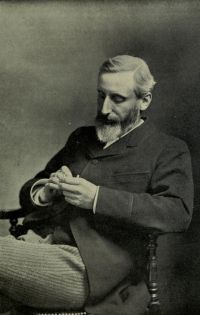
Mary Platt Parmele,  The Evolution of an Empire: A Brief Historical Sketch of England

“ Exterminating the Britons was diversified with efforts to exterminate one another. Seven kingdoms, four Anglian and three Saxon, for 300 years tried to annihilate each other; then, finally submitting to the strongest, united completely,—as only children of one household of nations can do. The Saxons had been for two centuries dominating more and more until the long struggle ended—behold, Anglo-Saxon England consolidated English under one Saxon king! ”
Source: Gutenberg

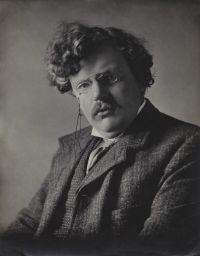
Portrait of Gilbert Keith Chesterton Gilbert Keith Chesterton,  A Short History of England (1917)

“ If we could look from the outside at our own institutions, we should see that the very notion of turning a thousand men into one large man walking to Westminster is not only an act of faith, but a fairy tale. The fruitful and effective history of Anglo-Saxon England would be almost entirely a history of its monasteries. Mile by mile, and almost man by man, they taught and enriched the land. ”
Source: Wikisource

Reuben Post Halleck,  Halleck's New English Literature

“ The History of Anglo-Saxon England.—The first task of the Anglo-Saxons after settling in England was to subdue the British, the race that has given King Arthur and his Knights of the Round Table to English literature. By 600 A.D., after a century and a half of struggle, the Anglo-Saxons had probably occupied about half of England.
They did not build on the civilization that Rome had left when she withdrew in 410, but destroyed the towns and lived in the country. The typical Englishman still loves to dwell in a country home.
”
Source: Gutenberg

Get perspective with Kwize: daily news enlightened by great literature