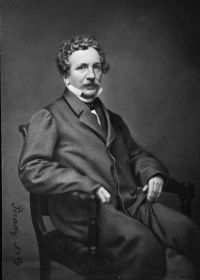
“ It was from him that I learned the earlier part of my own history, and that of the Count de Bagnols, whose papers I had many an opportunity of seeing, for they lay wrapped in a piece of old sheepskin in the drawer with the syringes. Thus passed the time till a company of players visited Auch; and as every night of their performance I went to see them, I speedily acquired a taste--I may say a passion, for the stage, which evidently showed that nature had destined me to wear the buskin. ”
Auch
Definition and stakes
The term "Auch" primarily refers to a town in the Gers department of southwestern France, renowned for its historical importance as the seat of an archbishopric and its connection to the Toulouse académie. Although the name appears in a range of literary works—from G. P. R. James’s tale of theatrical discovery in De L'Orme to George Birkbeck Norman Hill’s somber depiction of Auchinleck in Footsteps of Dr.
Johnson—it frequently represents a place of cultural or personal change. These varied mentions, found in fiction, encyclopedic sources, and travel writings, together highlight Auch’s function as both a geographical landmark and a symbolic passage in stories of identity and aspiration.
Quotes about “Auch”
1911 Encyclopædia Britannica, Volume 11… (1911)
“ Gers is divided into the arrondissements of Auch, Lectoure, Mirande, Condom and Lombez, with 29 cantons and 466 communes. The chief town is Auch, the seat of an archbishopric. The department falls within the circumscription of the appeal-court of Agen, and the region of the XVII. army corps. It forms part of the académie (educational circumscription) of Toulouse. Auch, Condom, Lectoure and Mirande are the principal towns. The following are also of interest: Lombez, with its church of Sainte-Marie, once a cathedral, dating from the 14th century, when the bishopric was created ”
 George Birkbeck Norman Hill,
Footsteps of Dr. Johnson (Scotland…
George Birkbeck Norman Hill,
Footsteps of Dr. Johnson (Scotland…
“ I came to Auchinleck on Monday last, and I have patiently lived at it till Saturday evening.... It is hardly credible how difficult it is for a man of my sensibility to support existence in the family where I now am. ”
Various, Graham's Magazine, Vol. XXXVI, No…
“ None of us returned with empty baskets, which you know has sometimes been the case; and we not only found strawberries, but, would you believe it, picked up a real, actual beau! Now, guess who it was—some one you have not seen in a long time?”I did guess, but remaining silent, my companion continued —“Why, we were actually discovered by the college-poet, Henry Auchinclass, just returned to be lionized and spoiled—who came upon us rather suddenly as we were making somewhat of a noise for well-behaved young ladies, and insisted upon helping us. What a merry time we had! ”
William Grant Stewart, The popular superstitions and festive amusements of the Highlanders of Scotland (1851)
“ Life, however, is exceedingly sweet when we are on the brink of losing it, and necessity had so far subdued every vestige of fear, that Auchriachan [86] resolved at all hazards to take a night’s lodging with the inmates, whatever their nature or calling might be. The door was open, and he entered the place. His courage, however, was a good deal appalled, on meeting at the door an old female acquaintance, whose funeral he had recently attended, and who, it appeared, acted in this family in the capacity of housewife. ”
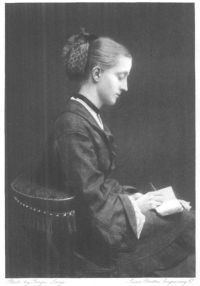 Juliana Horatia Ewing,
We and the World: A Book for Boys…
Juliana Horatia Ewing,
We and the World: A Book for Boys…
“ In a son, from whom he looked for manly feeling and good English common-sense, it was painful in the extreme. Vanity, the love of my own way, and want of candour— (my father took a pinch of snuff between each count of the indictment) —these were my besetting sins, and would lead me into serious trouble. This new fad, just, too, when he had made most favourable arrangements for my admission into my Uncle Henry’s office as the first step in a prosperous career. I didn’t know; didn’t I? Perhaps not. Perhaps I had been at the Woods’ when he and my mother were speaking of it. ”
W. S. Auchincloss, The Book of Daniel Unlocked
“ But if ye will not make known unto me the dream, there is but one decree for you: for ye have prepared lying and corrupt words to speak before me, till the time be changed: therefore tell me the dream, and I shall know that ye can shew me the interpretation thereof. 10. The Chaldeans answered before the king, and said, There is not a man upon the earth that can shew the king’s matter: therefore there is no king, lord, nor ruler, that asked such things at any magician, or astrologer, or Chaldean. ”
Mary Hays, Memoirs of Emma Courtney
“ Yes! my wildest mistakes had in them a dignified mixture of virtue. While the institutions of society war against nature and happiness, the mind of energy, struggling to emancipate itself, will entangle itself in error'—'Permit me to ask you,' interrupted Augustus, 'whether, absorbed in your own sensations, you allowed yourself to remember, and to respect, the feelings of others?'I could no longer restrain my tears, I wept for some moments in silence—Augustus breathed a half-suppressed sigh, and turned from me his face. ”
Various, Tales from "Blackwood," Volume 1
“ The rule of three is all very well for base mechanical souls; but I flatter myself I have an intellect too large to be limited to a ledger. “Augustus,” said my poor mother to me, while stroking my hyacinthine tresses, one fine morning, in the very dawn and budding-time of my existence—“Augustus, my dear boy, whatever you do, never forget that you are a gentleman.” ”
“ But my fame was spred about in every place, and the qualities which I could doe, insomuch that my master was renowned throughout all the Country by reason of mee. For every man would say: Behold the Gentleman that hath an Asse, that will eate and drinke with him, that will dance, and understand what is said to him, will shew his fantasie by signes. ”
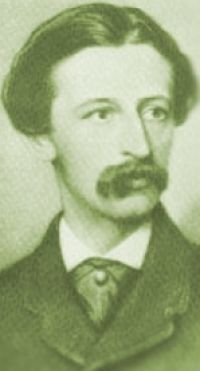 Augustus John Cuthbert Hare,
The Story of My Life — Chapter II: Childhood
(1890s)
Augustus John Cuthbert Hare,
The Story of My Life — Chapter II: Childhood
(1890s)
“ He wants to be taught obedience, and if his way is thwarted or he cannot immediately have what he wants, he goes into a violent fit of passion. Sometimes it is soon over and he laughs again directly, but if it goes on he will roll and scream on the floor for half-an-hour together. In these cases we leave him without speaking, as everything adds to the irritation, and he must find out it is useless. But if by prevention such a fit may be avoided it is better, and Mary Lea is very ingenious in her preventing.”“Oct. 3.—Augustus improves in obedience already. ”
 Samuel Taylor Coleridge,
Shakespeare, Ben Jonson, Beaumont and Fletcher
Samuel Taylor Coleridge,
Shakespeare, Ben Jonson, Beaumont and Fletcher
“ Ajax, under the one condition, that he shall be called on to do nothing but abuse and slander, and that he shall be allowed to abuse as much and as purulently as he likes, that is, as he can;—in short, a mule,—quarrelsome by the original discord of his nature;—a slave by tenure of his own baseness,—made to bray and be brayed at, to despise and be despicable. ”
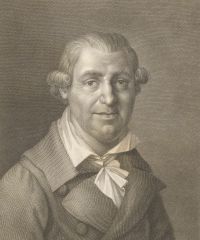 Johann Karl August Musäus,
Tales by Musæus, Tieck, Richter
(1874)
Johann Karl August Musäus,
Tales by Musæus, Tieck, Richter
(1874)
“ At parting, she gave him his response in friendly words: “The gods will not that thou shouldst contend with a man of violence in the land; to bear and suffer is the lot of the weaker. Return to thy father; be the comfort of his old age; and support him by the labour of thy diligent hand. Take two white Steers as a present from my herd; and this Staff to drive them; and when it blossoms and bears fruit, the spirit of prophecy will descend on thee.” ”
L. Mühlbach, Old Fritz and the New Era
“ Have you not enough of blustering generals, of affected women? and of running about the streets like one possessed to see here a miserable church, or there a magnificent palace? Are you not weary of crawling about as one of the many, while at home you stride about as the only one of the many? And weary also of seeing your friend and pupil Carl August put off with fair promises and hollow speeches like an insignificant, miserable mortal, without being able to answer with thundering invectives. ”
 Thomas Aquinas,
Summa Theologiae — Question 47 - OF PRUDENCE, CONSIDERED IN ITSELF…
Thomas Aquinas,
Summa Theologiae — Question 47 - OF PRUDENCE, CONSIDERED IN ITSELF…
“ Even different ends, one of which is subordinate to the other, diversify the species of a habit, thus for instance, habits directed to riding, soldiering, and civic life, differ specifically although their ends are subordinate to one another. In like manner, though the good of the individual is subordinate to the good of the many, that does not prevent this difference from making the habits differ specifically; but it follows that the habit which is directed to the last end is above the other habits and commands them. ”
 G. A. Henty,
A Knight of the White Cross: A Tale of the Siege of Rhodes
G. A. Henty,
A Knight of the White Cross: A Tale of the Siege of Rhodes
“ Avoid luxury, live simply and modestly; be not led away by others, upon whom their vows may sit but lightly; keep ever in your mind that you have joined the Order neither to gain fame nor personal advantage, but simply that you may devote the strength and the intelligence that God has given you to protect Christendom from the advance of the infidel. I shall hear of you from time to time from D'Aubusson, and feel sure that the expectations I have formed of you will be fulfilled. ”
A. L. O. E., Pride and His Prisoners
“ The earnestness and tenderness of the clergyman’s manner might have made some impression on his brother, but Pride threw himself between them, and laid an iron grasp on his slave. Oh, how difficult is it to speak rebuke, without arousing the demon of Pride, and arming his giant strength against us!Augustine rose from his seat, and said coldly, “Lawrence, we have had enough of this, and more than enough. Thanks for your well-meant sermon, though it savours more of the musty volumes of old divinity, than the enlightened systems of an age of progress. ”
 Jane Austen,
Sense and Sensibility
Jane Austen,
Sense and Sensibility
“ If their praise is censure, your censure may be praise, for they are not more undiscerning, than you are prejudiced and unjust.” “In defence of your protégé you can even be saucy.” “My protégé, as you call him, is a sensible man; and sense will always have attractions for me. Yes, Marianne, even in a man between thirty and forty. He has seen a great deal of the world; has been abroad, has read, and has a thinking mind. ”
 Anthony Hope,
The King's Mirror
(1899)
Anthony Hope,
The King's Mirror
(1899)
“ Princess Heinrich seized on the inconsistency, and pointed it out to her daughter with an exasperating lucidity. "You are ready enough to remember that Augustin is king when you want anything from him," she would observe. "You forget it only when you are asked to give way to him." ”
W. S. Auchincloss, The Book of Daniel Unlocked
“ While the word was in the king’s mouth, there fell a voice from heaven, saying, O king Nebuchadnezzar, to thee it is spoken; The kingdom is departed from thee. 32. And they shall drive thee from men, and thy dwelling shall be with the beasts of the field: they shall make thee to eat grass as oxen, and seven times shall pass over thee, until thou know that the most High ruleth in the kingdom of men, and giveth it to whomsoever he will. ”
báró József Eötvös, The Village Notary: A Romance of Hungarian Life
“ I prove that I was in the 'usus:' that I have always ploughed and reaped to a certain point—say a stone, or tree, or any thing you like. Very well. You say it's a bad habit of mine, and that the field belongs to you. But it's all of no use: I've the usus on my side, and if you go on with your action you're a fool, that's all. Or say, you and I are joint proprietors of a farm. I keep sheep, and you don't. [Pg 247] At last you take it into your head to keep sheep. But I say, 'No, you shall not!' And why? Because I've the usus for me!" [27] See Note X."But of what use is all this in our case?" ”
Thomas Aquinas,
Summa Theologiae — Question 58 - OF The DIFFERENCE BETWEEN MORAL AND INTELLECTUAL VIRTUES…
“ Because the appetitive faculty obeys the reason, not blindly, but with a certain power of opposition; wherefore the Philosopher says (Polit. i, 3) that "reason commands the appetitive faculty by a politic power," whereby a man rules over subjects that are free, having a certain right of opposition. Hence Augustine says on Ps. 118 (Serm. 8) that "sometimes we understand [what is right] while desire is slow, or follows not at all," in so far as the habits or passions of the appetitive faculty cause the use of reason to be impeded in some particular action. ”
Thomas Aquinas,
Summa Theologica — Treatise on Habits…
“ And in such an agent a habit cannot be caused by its own act: for which reason natural things cannot become accustomed or unaccustomed, as is stated in Ethic. ii, 1. But a certain agent is to be found, in which there is both the active and the passive principle of its act, as we see in human acts. For the acts of the appetitive power proceed from that same power according as it is moved by the apprehensive power presenting the object: and further, the intellective power, according as it reasons about conclusions, has, as it were, an active principle in a self-evident proposition. ”
 Frances Milton Trollope,
Paris and the Parisians in 1835…
Frances Milton Trollope,
Paris and the Parisians in 1835…
“ In reading some of the most celebrated discourses of the Abbé Auzou, I was the most struck with one entitled—"Discours sur les Plaisirs Populaires, les Bals, et les Spectacles." The text 295 is from St. Matthew,—"Come unto me all ye that labour and are heavy laden, and I will give you rest ... for my yoke is easy, and my burden is light."In this singular discourse, among some things that are reasonable, and more that are plausible, it is impossible to avoid seeing a spirit of lawless uncontrol, which seems to breathe more of revolution than of piety. ”
Thomas Aquinas,
Summa Theologiae — Question 63 - OF THE CAUSE OF VIRTUES…
“ Again, this is so in respect of the individual nature, in so far as by reason of a disposition in the body, some are disposed either well or ill to certain virtues: because, to wit, certain sensitive powers are acts of certain parts of the body, according to the disposition of which these powers are helped or hindered in the exercise of their acts, and, in consequence, the rational powers also, which the aforesaid sensitive powers assist. ”
Thomas Aquinas,
Summa Theologiae — Question 3 - OF THE MODE OF UNION ON THE PART OF THE PERSON ASSUMING…
“ But the assumption which is by the grace of union is common on the part of the principle, but not on the part of the term, as was said above.Art. 5 - Whether each of the Divine Persons could have assumed human nature? Objection 1: It would seem that no other Divine Person could have assumed human nature except the Person of the Son. For by this assumption it has been brought about that God is the Son of Man. ”
Mrs. A. T. Thomson, The Wits and Beaux of Society. Volume 2
“ The honourable gentlemen descended—or, as they thought, ascended—to the most vehement invective, and such was at times the torrent of personal abuse which parties heaped on one another, while good-natured John Bull looked on and smiled at his rulers, that, as in the United States of to-day, a debate was often the prelude to a duel. ”
Thomas Aquinas,
Summa Theologiae — Question 20 - OF GOODNESS AND MALICE IN EXTERNAL HUMAN AFFAIRS…
“ A form as received into matter, is subsequent to matter in the order of generation, although it precedes it in the order of nature: but inasmuch as it is in the active cause, it precedes in every way. Now the will is compared to the exterior action, as its efficient cause. Wherefore the goodness of the act of the will, as existing in the active cause, is the form of the exterior action. ”
“ Augustine, which is in the White Forest, and may only be found by adventure. Much he wished to undertake the quest alone, but this the Queen would not suffer, and to do her pleasure he consented that a youth, tall and strong of limb, should ride with him as his squire. Chaus was the youth's name, and he was son to Gwain li Aoutres. 'Lie within to-night,' commanded the King, 'and take heed that my horse be saddled at break of day, and my arms ready.' 'At your pleasure, Sir,' answered the youth, whose heart rejoiced because he was going alone with the King. ”
 Allen Upward,
A crown of straw
(1896)
Allen Upward,
A crown of straw
(1896)
“ Auguste shook his head.“It is lucky for you that the Chancellor takes the business of government a little more seriously. What would you do if a revolutionary mob invaded your Happy Valley?”“Offer them refreshments, of course, and then make them listen to one of your operas. If that did not subdue their fierceness, nothing would,” added Maximilian, unable to resist the temptation to banter his friend. “But tell me, Auguste, do you seriously suppose that any one wants to deprive me of the throne in favour of poor Ernest?” ”
 Hjalmar Hjorth Boyesen,
Tales from Two Hemispheres
Hjalmar Hjorth Boyesen,
Tales from Two Hemispheres
“ In a life so outwardly barren and monotonous as Augusta’s—a life in which the small external events were so firmly interwoven with the subtler threads of yearnings, wants, and desires—the introduction of so large and novel a fact as Marcus Strand would naturally produce some perceptible result. ”
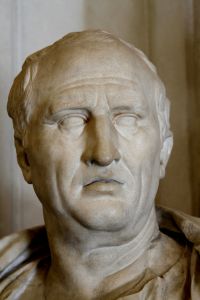 Marcus Tullius Cicero,
Letters of Marcus Tullius Cicero
Marcus Tullius Cicero,
Letters of Marcus Tullius Cicero
“ The result is that I console myself with the consciousness of my uprightness in the past and my moderation in the present, and apply that simile of Accius's not to jealousy, but to fortune, which I hold—as being inconstant and frail—ought to be beaten back by a strong and manly soul, as a wave is by a rock. ”
 Samuel Johnson,
The Works of Samuel Johnson, LL.D. in Nine Volumes…
Samuel Johnson,
The Works of Samuel Johnson, LL.D. in Nine Volumes…
“ Acastus was soon prevailed upon by his curiosity to set rocks and hardships at defiance, and commit his life to the winds; and the same motives have in all ages had the same effect upon those whom the desire of fame or wisdom has distinguished from the lower orders of mankind. ”
