Cervidae

Definition and stakes

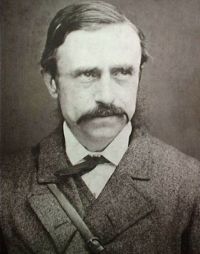
Portrait of R. F. Scharff R. F. Scharff,  The History of the European Fauna

“ Considering that so many Cervidæ have been found in French and English pliocene deposits, and that remains of the Red Deer occur not only in the English Forest-Bed, but have been found associated with those of the Pigmy Hippopotamus in Malta, it would only be reasonable to suppose that the genus Cervus had originated in Europe. It might also be argued with equal force that the Red Deer had its birthplace in our continent. ”
Source: Gutenberg

Frank E. Beddard,  The Cambridge natural history, Vol…

“ The only two points which distinguish all Bovidae from all Cervidae [202] are the nature of the horns already described, and the polycotyledonary condition of the placenta. Moreover the horns are usually present in both sexes, though there are exceptions, such as the Sheep and Goats, and various genera of Antelopes (Tragelaphus, Tetraceros, etc.) . There are never the first two phalanges belonging to the rudimentary digits II., V., as there are in all Deer excepting Cervulus. There is as a rule but one orifice to the lachrymal duct. There are never persistent upper canine teeth in either sex. ”
Source: Gutenberg

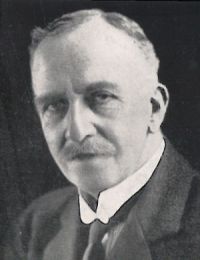
Portrait of Robert Armitage Sterndale Robert Armitage Sterndale,  Natural History of the Mammalia of India and Ceylon

“ The position of these splints is an important factor in the classification of the Cervidæ into two divisions, distinguished by Sir Victor Brooke as the Plesiometacarpals, in which the splint is near the carpus, and the Telemetacarpals, in which the splint is far from the carpus, and articulated with the digital phalanges. All the known species of deer can be classified under these two heads ”
Source: Gutenberg

Get perspective with Kwize: daily news enlightened by great literature