Chandragupta Maurya

Definition and stakes

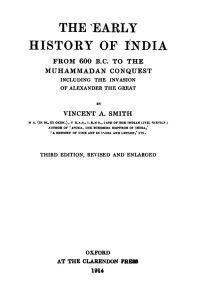
Portrait of Vincent Arthur Smith Vincent Arthur Smith,  History of India (1906)

“ At that time the only approximately certain date in the early history of India was that of the accession of Chandragupta Maurya, as determined by his identification with Sandrakottos, the contemporary of Seleukos Nikator, according to Greek authors. By the subsequent establishment of the synchronism of Chandragupta's grandson, Asoka, with Antiochos Theos, grandson of Seleukos, and four other Hellenistic princes, the chronology of the Maurya dynasty was placed upon a firm basis, and it is no longer open to doubt in its main outlines. ”
Source: Wikisource

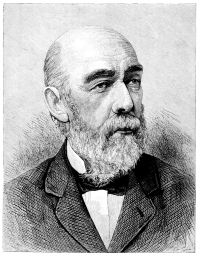
James Sutherland Cotton, William Wilson Hunter, Charles James William Grant,  1911 Encyclopædia Britannica, Volume 14… (1911)

“ Meanwhile a new power had arisen in India. Among the Indian adventurers who thronged Alexander’s camp in the Punjab, each with his plot for winning a kingdom or crushing a rival, Chandragupta Maurya, an exile from the Gangetic valley, seems to have played a Chandragupta Maurya. somewhat ignominious part. He tried to tempt the wearied Greeks on the banks of the Beas with schemes of conquest in the rich south-eastern provinces ”
Source: Wikisource

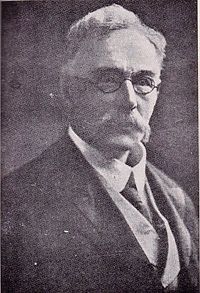
1911 Encyclopædia Britannica, Volume 5… (1911)

“ The great army acquired from his predecessor he increased until it reached the total of 30,000 cavalry, 9000 elephants, and 600,000 infantry; and with this huge force he overran all northern India, establishing his empire from the Arabian Sea to the Bay of Bengal. In 305 Seleucus Nicator crossed the Indus, but was defeated by Chandragupta and forced to a humiliating peace (303) , by which the empire of the latter was still farther extended in the north. About six years later Chandragupta died, leaving his empire to his son Bindusura. ”
Source: Wikisource

Get perspective with Kwize: daily news enlightened by great literature