Chinese person

Definition and stakes

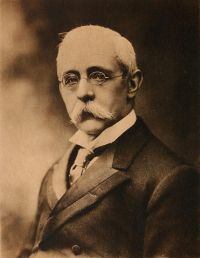
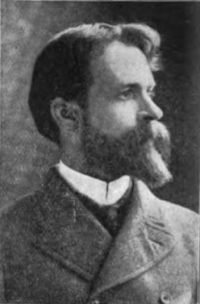
Portrait of Louise Jordan Miln Louise Jordan Miln,  When We Were Strolling Players in the East

“ A happy marriage has made many a plain woman pretty. China has been very happy in the race that has drawn its sustenance from her. Her civilisation is one of the oldest extant. Her architecture is antique. But she, in her own person, is verdant, fresh, and smiling. She has been loved and cared for tenderly.
CHAPTER XVII THE CHINESE NEW YEAR
If one had a great many debtors and no creditors one might well wish on New Year’s Day to be among the Chinese a Chinaman.
”
Source: Gutenberg

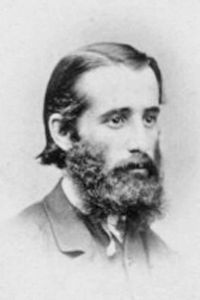
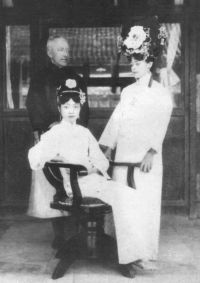
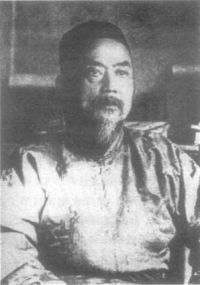
Portrait of Gu Hongming Gu Hongming,  The Spirit of the Chinese People (1915)

“ In short the real Chinaman is a person with the head of a grown-up man and the heart of a child. The Chinese spirit, therefore, is a spirit of perpetual youth, the spirit of national immortality. Now what is the secret of this national immortality in the Chinese people? You will remember that in the beginning of this discussion I said that what gives to the Chinese type of humanity—to the real Chinaman—his inexpressible gentleness is the possession of what I called sympathetic or true human intelligence. ”
Source: Wikisource

Philip Lake, Richard Lydekker, Augustine Henry, Herbert A. Giles, George Jamieson, Henry Yule, Friedrich Hirth, Robert K. Douglas, Ignatius V. Chirol, Laurence Binyon, Charles J. Holmes and Lionel Giles,  1911 Encyclopædia Britannica (1911)

“ Every Chinese character is an indivisible unit, representing a sound and standing for a root-idea. Being free from inflection or agglutination of any kind, it is incapable of indicating in itself either gender, number or case, voice, mood, tense or person. Of European languages, English stands nearest to Chinese in this respect, whence it follows that the construction of a hybrid jargon like pidgin English presents fewer difficulties than would be the case, for instance, with pidgin German. ”
Source: Wikisource

Get perspective with Kwize: daily news enlightened by great literature