“ MICKLEGATE BAR THE CITYAs each town has its characteristic features and peculiar advantages, we may ask what it is that constitutes the special attraction exerted by the city of York, not only upon those, who with more or less of appreciation dwell within its limits but upon its visitors. It would seem that if there is one thing which can be done at York better almost than anywhere else in the kingdom, that thing is the realisation of history. ”
City of York
Definition and stakes
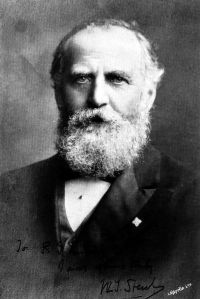
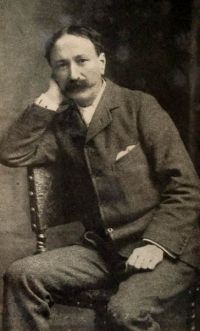
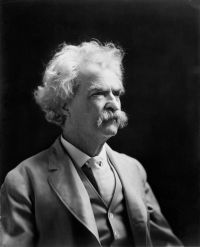
The City of York, a unitary authority in North Yorkshire, England, is renowned for its historic architecture, Roman origins, and rich cultural heritage. Authors such as George Benson emphasized its role as a living archive of history, while P. H. Ditchfield underscored its importance as a Roman settlement and medieval center of power.
Gordon Home and William Winter described its striking landscapes and cathedral, portraying York as a link between antiquity and romanticism. These viewpoints converge on York’s lasting appeal: a city where past and present merge through its storied streets and significant landmarks.
Quotes about “City of York”
George Gilbert, Cathedral Cities of England
“ Though customs have greatly changed since those days of unsafe travelling, the quaint streets, the great gateways of bold architecture, and the magnificent church all lend the city of York the wonderful fascination of age, heightened by the situation of the river Ouse at its junction with the Foss.In what county of England the famous city and glorious minster of York are, requires little mental effort. It is the most ancient metropolitan see in England. At one time great controversy arose between York and Canterbury as to precedence. ”
P. H. Ditchfield, The Cathedrals of Great Britain…
“ YORK CATHEDRAL Few cities can rival York in interest, dignity and importance. The ancient city of Roman Cæsars, the centre of Saxon Christianity, of Danish supremacy, of mercantile enterprise, the abode of kings, the seat of an archbishopric that long contended for supremacy with Canterbury, York may well claim a foremost place in English history, and possesses features of peculiar interest. ”
William Winter, Gray Days and Gold in England and Scotland
“ The minster stands out like a mountain, and the giant towers rear themselves in solemn [226] majesty,—the grandest piece of church architecture in England! The brimming Ouse shines as if it were a stream of liquid ebony. The meadows around the city glow like living emeralds, while the harvest-fields are stored and teeming with stacks of golden grain. Great flights of startled doves people the air,—as white as snow under the sable fleeces of the driving storm. I had seen York under different guises, but never before under a sky at once so sombre and so romantic. ”
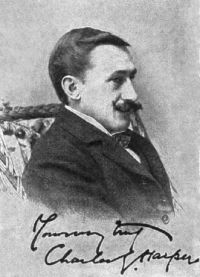
Charles G. Harper,
The Great North Road, the Old Mail Road to Scotland…
“ A wide street, the terminus of a tramway, a mile-long row of cottages, a would-be Gothic church; here you have it. Before you, by degrees, York unfolds itself, past the military barracks and nondescript, but always disappointing, streets, until, emerging from Fishergate, the ancient city, free from suburban excrescences, opens out, with the grim castle in front, and the Ouse and Skeldergate Bridge to the left. The so-called “London Road” lies away beyond the Ouse, its name referring to the Doncaster, Ferrybridge, Sherburn, and Tadcaster route taken by some of the old-time coaches. ”
Henry Scadding, Toronto of Old
“ When, in 1799, staid inhabitants were found seriously dignifying the group of buildings then to be seen on the borders of the bay, with the magnificent appellation of the "City of York," it is no wonder that at a later period indignation is frequently expressed at the ignominious epithet of "Little," which persons in the United States were fond of prefixing to the name of the place. ”
P. H. Ditchfield, Vanishing England
“ The city of York has lost many of its treasures, and the City Fathers seem to find it difficult to keep their hands off such relics of antiquity as are left to them. There are few cities in England more deeply marked with the impress of the storied past than York—the long and moving story of its gates and walls, of the historical associations of the city through century after century of English history. ”
“ The bright, creamy colour of the stonework is a pleasant reminder of the purity of York's atmosphere, for should the smoke of the city ever increase to the extent of even the smaller manufacturing towns, the beauty and glamour of every view would gradually disappear. ”
George Thomas Clark, Mediæval Military Architecture in England…
“ NO man of English race, at all acquainted with the history of his country, can enter the city of York without feeling something of that respect for a glorious past of which all men are more or less conscious, and which in the higher and nobler sort acts as an incentive to greatness both in thought and deed. ”
Edwin Benson, Life in a Mediæval City
“ York, as it is to-day, is a city marvellously rich in survivals of past ages. It is also, as a result especially of the nineteenth century, a city of destruction. While we may regret but not repine at the disappearance of much of interest and value as the result of progress, yet wanton, ruthless destruction, such as has taken place within the last century, deserves the sternest denunciation. In spite of its being, in consequence, a "city of destruction," York is a store-house of original material for the history of England. ”
Charles G. Harper,
The Great North Road, the Old Mail Road to Scotland…
“ The grim blackened walls of York Castle confront the traveller who approaches the city by Fishergate, and lend a gloomy air to the entrance; the more gloomy because those heavy piles of sooty masonry nowadays encircle a prison for malefactors, rather than forming the defences of a garrison, and keep our social enemies within, instead of a more chivalric foe without. For over two hundred years York Castle has been an assize court and a gaol, and the military element no longer lends it pure romance. ”
Edwin Benson, Life in a Mediæval City
“ Life in York in the fifteenth century was active. Trade, home and continental, was flourishing. Building operations were in hand; work was always proceeding at the Minster or at one or other of the religious houses and churches. There were so many social elements established in and visiting York that something of interest was always taking place. Entertainments were plentiful and pageants were as well produced in York as anywhere in the kingdom. The city enjoyed a particularly large measure of local government. ”
Thos. D. Murphy, In Unfamiliar England
“ We come in sight of its graceful twin towers while yet afar from the town, after a thirty-mile run from York through some of the most prosperous farming country in the shire. As we come nearer, the mass of red tiles, from which rises the noble bulk of the minster, resolves itself into the houses of the old town, whose ancient heart has lost none of its charm in the little city which has more recently grown up around it. ”
Mrs. Rodolph Stawell, Motor tours in Yorkshire
“ We have too long accepted the roof of a railway station as our first view of such places. It is not an inspiring view. But to see York Minster from afar, shining under the evening sky and lifted high above the city; to watch it growing larger and larger, rising higher and higher, increasing in beauty every moment, until at last one drives slowly into its huge shadow ”
“ The military architecture of York, whilst giving an idea of strength and power to the city, adds greatly to its picturesqueness. The line of embattled walls is agreeably broken by buttresses and mural towers, whilst the stately gatehouses set along the line of fortification give a sense of dignity, at the same time reflecting the sturdy independence of the men of York. ”
Charles G. Harper,
The Great North Road, the Old Mail Road to Scotland…
“ Endeavour, by an effort of the imagination, to see the ground outside the walls free from the suburbs that now spread far in almost every direction, and you have the York of ancient days, little changed; for from p. 7this point of view, looking down upon the clustered red roofs of the city, with its gardens and orchards, the towering bulk of the Minster, and the broad expanse of adjoining lawns, nearly all the signs of modern life are hidden. Something of an effort it is to imagine the great railway station of York away, for it bulks very largely outside the walls near the Lendal Bridge ”
Henry Bryan Binns, A Life of Walt Whitman
“ Who does not feel the delight of such a ferry, the swing of the boat, the windy gleam in the sky, the lights by day or night upon the water, the sense of weariless and unceasing movement as of life itself? New York, on its island, is richer than most cities in these river crossings, which take you at once out of the closeness and cares of the streets into the free broad roadways of wind and water, roadways which you can scarcely traverse without some enlargement and liberation of the city-pent soul in your breast. ”
J. N. Larned, History for ready reference, Volume 3… (1895)
“ The greatness of York made it arrogant; and it sent a deputation of aldermen and burgesses to the General Court at Saco, to save its metropolitan rights by a solemn protest. The Proprietary was its friend, and before long exalted it still more by a city charter, authorizing it and its suburbs, constituting a territory of 21 square miles, to be governed, under the name of 'Gorgeana,' by a Mayor, twelve Aldermen, a Common Council of 24 members, and a Recorder, all to be annually chosen by the citizens. Probably as many as two thirds of the adult males were in places of authority. ”
“ This is due, in a large measure, to the fortunate fact that York is well outside the area of coal and iron, and has never become a manufacturing centre, the few factories it now possesses being unable to rob the city of its romance and charm. ”
George Thomas Clark, Mediæval Military Architecture in England…
“ It may, indeed, be that those who dwell within the city, or have been familiar with it from childhood, are less conscious of this feeling than those who visit it as strangers, and to whom the noble river, ancient walls, and535 venerable minster, stand out unassociated with the concerns of every-day life; but, on the other hand, the men of York cannot but feel for their birthplace something of the love of children for a parent, something of the pride of citizens of no mean city, something of that secret charm by which every man, worthy of the name, is attracted to his native land. ”
Joseph Hunter, Pope, His Descent and Family Connections…
“ The descent of the maternal ancestors of the illustrious Poet may be traced to a source whence many families among the present aristocracy of Yorkshire have originally sprung,—the trade or commerce of the city of York. ”
W. T. Stead,
Satan's Invisible World Displayed…
“ You are trying to sleep in the heart of Central New York, in the midst of all the thunder and the rush and the roar of her million-crowded streets, along which surges as a restless tide the turbid and foaming flood of city life. ”
1911 Encyclopædia Britannica (1911)
“ In 1652, when Massachusetts extended her jurisdiction over Maine, the city of Gorgeana became the town of York. In 1692 most of the houses were burned by the Indians and the inhabitants killed or taken captive. York was the shire town of Yorkshire from 1716 to 1735, the shire town with Portland (then Falmouth) of the district of Maine from 1735 to 1760, and a county-seat of York county from 1760 to 1832. During the middle of the 18th century York had considerable trade with the West Indies and along the coast, and as late as the middle of the 19th century it had important fishing interests. ”
Nathaniel Hawthorne,
Passages from the English Notebooks…
“ Before reaching York, first one old lady and then another (Quaker) lady got into the carriage along with me; and they seemed to be going to York, on occasion of some fair or celebration. This was all the company I had, and their advent the only incident. It was about eleven o'clock when I beheld York Cathedral rising huge above the old city, which stands on the river Ouse, separated by it from the railway station, but communicating by a ferry (or two) and a bridge. ”
1911 Encyclopædia Britannica (1911)
“ The city is situated in a farming and stock raising region, and among its manufactures are foundry products, bricks and flour. York was settled in 1864, was laid out in 1869, was incorporated as a town in 1875 and was chartered as a city in 1877. ”
Edwin Benson, Life in a Mediæval City
“ Although the present city looks, in parts, more typically mediæval than modern, York to-day forms a very great contrast with the fifteenth-century city. We are separated from the fifteenth century by the Renaissance, the Reformation, and Tudor England, by the Civil War and the Restoration, by the "age of prose and reason," the keen-minded and rough-mannered eighteenth century, by the Industrial Revolution, and by that second Renaissance, the Victorian Age, during which the amenities of daily life were revolutionised. ”
Edwin Benson, Life in a Mediæval City
“ The number of inhabitants to-day is about six times that of the mediæval city. The contrast, which is so great in most ways as to be quite obvious, is an interesting and profitable study, but it might have been founded on more precise data, for, great as is the amount of valuable material that York can supply concerning its history, investigation shows how much greater that amount would have been had the city and its rulers during the last century or two realised the value of the accumulated original historical riches that it contained. ”
William Dean Howells,
Seven English Cities
“ We do not begin to have such a hoar antiquity as is articulate in the mother city, speaking with muted voices from the innumerable monuments which the earth has yielded from the site of our hotel and its adjacent railway station. All underground York is doubtless fuller of Home than even Bath is; and it has happened that her civilization was much more largely dug up here than elsewhere when the foundations of the spreading edifices were laid. ”
Morley Roberts,
A Tramp's Notebook
“ I hardly know an ordinary Londoner who would not shiver at the notion of being "dead broke" in any foreign city, to say nothing of one on the other side of the world; and though it is not a pleasant experience it has some charms and many uses. It wakes a man up, shows him the real world again, and makes him know his own value once more. So I started for New [Pg 143] York in rather a devil-may-care spirit, without the slightest chance of doing the business in comfort. ”
Thos. D. Murphy, British Highways and Byways from a Motor Car
“ A mere corner is large enough to care for the congregations, the vast body of the church being seldom used except on state occasions. Though York is a city of seventy-five thousand population, I think there were not more than four or five hundred people in attendance, though the day was exceptionally fine. ”
Elizabeth Vassall Fox Holland, The journal of Elizabeth Lady Holland… (1908)
“ Those in Italy again are in a different taste; that at Pavia is, I believe, anterior to any we have in England. It is very ugly, and bears the rugged marks of tasteless cost and unskilful labour. York is one of the oldest cities in the island, and to a lover of Shakespeare all around it is classical ground. The remains of the walls, the city gates, and the ruins of an old nunnery near the river make it altogether a place rather worth seeing. ”
“ A walled-in city offers great attractions to the student of history, who is desirous of understanding mediaeval ways and methods, for although documents and quaint pictures may give a fair idea, it is the walls, gates, churches, and houses that lend the necessary vividness and reality. Other once-fortified cities have destroyed their walls as being useless, and those at York have from time to time barely escaped destruction. ”
“ Within the walls, and well seen from the rampart walk, are red-tiled roofs intermingled with more modern slated buildings. Amidst these rise prominently, here and there, the spires and towers of the churches, notably the broad pre-Conquest tower of St. Mary, Bishophill Junior; the tower of St. Michael’s, Ousegate, from which the Curfew is rung nightly, and the graceful octagonal tower of All Saints, Pavement, which, in the days when York was surrounded by forests, held a lamp to direct pilgrims through the pathways to the city.York is a city of churches. ”
Edwin Benson, Life in a Mediæval City
“ York, which is the natural centre for the North of England, is the halfway house between London and Edinburgh, and is on the shortest and quickest land or air route, however the journey is made, between these two capitals. The Ouse and Humber have enabled it always to be within navigable distance of the North-East coast. The city itself is situated on an advantageous site in the centre of a great plain, the north and south ends of which are open. The surrounding hills and valleys are so disposed that a large number of rivers radiate towards the centre of the plain. ”