Curfew

Definition and stakes

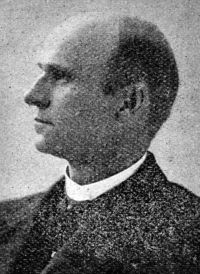
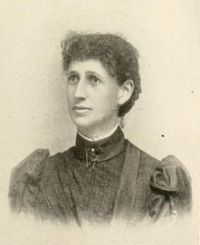
Portrait of Rose Hartwick Thorpe Rose Hartwick Thorpe,  Curfew Must Not Ring Tonight (1887)

“ Upward still, her pale lips saying, "Curfew shall not ring to-night!"
She has reached the topmost ladder, o'er her hangs the great dark bell;
Awful is the gloom beneath her, like the pathway down to hell.
See! the ponderous tongue is swinging; 'tis the hour of curfew now,
And the sight has chilled her bosom, stopped her breath, and paled her brow.
Shall she let it ring? No, never! Her eyes flash with sudden light,
As she springs, and grasps it firmly: "Curfew shall not ring to-night!"
”
Source: Wikisource

1911 Encyclopædia Britannica (1911)

“ The practice of tolling a bell at a fixed hour in the evening, still extant in many places, is a survival of the ancient curfew. The common hour was at first seven, and it was gradually advanced to eight, and in some places to nine o’clock. In Scotland ten was not an unusual hour. In early Roman times curfew may possibly have served a political purpose by obliging people to keep within doors, thus preventing treasonable nocturnal assemblies, and generally assisting in the preservation of law and order. ”
Source: Wikisource

William Andrews,  Old Church Lore

“ At eight in the evening, a bell was rung, the sound of which was the signal for everyone to put out, or rather cover, their fires, extinguish all lights, and go to bed. This was the curfew law, which it has been the custom to regard as a repressive measure adopted by the tyrant Conqueror to prevent seditious meetings of the turbulent Saxons. We “find the [Pg 228] name of curfew law employed as a bye-word denoting the most odious tyranny, and historians, poets, and lawyers, speaking of it as the acme of despotism, levelled alone at the vanquished English.” ”
Source: Gutenberg

Get perspective with Kwize: daily news enlightened by great literature