Coimbatore

Definition and stakes

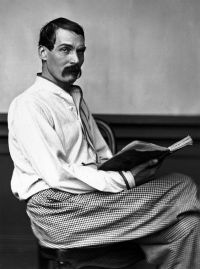
Sir Clements R. Markham,  Travels in Peru and India

“ In the end of November I set out from Ootacamund, by way of the Coonoor ghaut and Coimbatore, with the intention of examining the suitability of the Pulney hills in Madura for chinchona cultivation. The Coonoor ghaut, on the southern side of the Neilgherry hills, leads down into the plain of Coimbatore. The road is good, though much too steep ever to make a convenient means of carriage traffic, and the scenery is exceedingly fine. The deep gorge has forest-covered mountains on the left, and a grand range of cliffs on the right, crowned by the bold peak of the Hoolicul Droog. ”
Source: Gutenberg

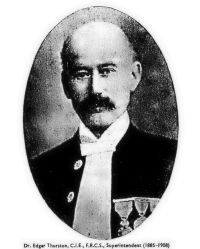
Portrait of Edgar Thurston Edgar Thurston,  Castes and Tribes of Southern India (1909)

“ The Kiraikkārans of Coimbatore, whose main occupation is cultivating kirai (Amarantus) and other vegetables, are said to be Kempati Okkiliyans, i.e., Okkiliyans who emigrated from Kempampatti in Mysore.
The hereditary headman of the caste, at Coimbatore, is called Pattakāran, who has under him a Chinna (little) Pattakaran. The headman presides over the caste council meetings, settles disputes, and inflicts fines and other forms of punishment. If a person is accused of using coarse language, he is slapped on the cheek by the Chinna Pattakāran.
”
Source: Wikisource

Get perspective with Kwize: daily news enlightened by great literature