Cupid and Psyche

Definition and stakes

1911 Encyclopædia Britannica (1911)

“ Cupid, however, falls in love with her himself, and carries her off to a secluded spot, where he visits her by night, unseen and unrecognized by her. Persuaded by her sisters that her companion is a hideous monster, and forgetful of his warning, she lights a lamp to look upon him while he is asleep; in her ecstasy at his beauty she lets fall a drop of burning oil upon the face of Cupid, who awakes and disappears. Wandering over the earth in search of him, Psyche falls into the hands of Venus, who forces her to undertake the most difficult tasks. ”
Source: Wikisource

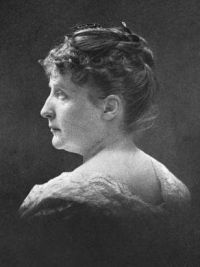
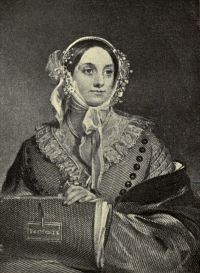
Portrait of Eliza Leslie Eliza Leslie,  Pencil Sketches; or, Outlines of Character and Manners

“ The clouds seemed unwilling to stay behind the hills, but had come so boldly forward and looked so like masses of stone, that there was much apparent danger of their falling on the heads of the lovers and crushing them to atoms. Psyche was an immensely tall, narrow woman, of a certain age, and remarkably strong features; and Cupid was a slender young man, of nineteen or twenty, about seven feet high, with long tresses descending to his waist. ”
Source: Gutenberg

Portrait of Andrew Lang Andrew Lang,  Custom and Myth — Cupid, Psyche… (1874)

“ CUPID, PSYCHE, AND THE ‘SUN-FROG.’
'Once upon a time there lived a king and a queen,' says the old woman in Apuleius, beginning the tale of Cupid and Psyche with that ancient formula which has been dear to so many generations of children. In one shape or other the tale of Cupid and Psyche, of the woman who is forbidden to see or to name her husband, of the man with the vanished fairy bride, is known in most lands, 'even among barbarians.' According to the story the mystic prohibition is always broken: the hidden face is beheld; light is brought into the darkness
”
Source: Wikisource

Get perspective with Kwize: daily news enlightened by great literature