David Strauss

Definition and stakes

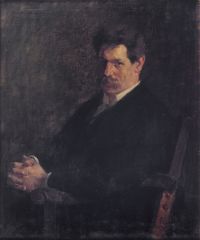
Portrait of Friedrich Nietzsche Friedrich Nietzsche,  David Strauss: the Confessor and the Writer

“ Strauss has his full share of the temerity to which every successful hero assumes the right: all flowers grow only for him—the conqueror; and he praises the sun because it shines in at his window just at the right time. He does not even spare the venerable old universe in his eulogies—as though it were only now and henceforward sufficiently sanctified by praise to revolve around the central monad David Strauss. ”
Source: Wikisource

1911 Encyclopædia Britannica (1910)

“ Other critical works are: a criticism of the gospels and a history of their origin, Kritik der Evangelien und Geschichte ihres Ursprungs (1850–1852) , a book on the Acts of the Apostles, Apostelgeschichte (1850) , and a criticism of the Pauline epistles, Kritik der paulinischen Briefe (1850–1852) . He died at Rixdorf on the 13th of April 1882. His criticism of the New Testament was of a highly destructive type. David Strauss in his Life of Jesus had accounted for the Gospel narratives as half-conscious products of the mythic instinct in the early Christian communities. ”
Source: Wikisource

Portrait of Friedrich Nietzsche Friedrich Nietzsche,  David Strauss: the Confessor and the Writer

“ The strength of the Culture-Philistine steps into the broad light of day when he acknowledges his weakness; and the more he acknowledges it—the more cynically he acknowledges it—the more completely he betrays his consciousness of his own importance and superiority. We are living in a period of cynical Philistine confessions. Just as Friedrich Vischer gave us his in a word, so has David Strauss handed us his in a book; and both that word and that book are cynical.
III. Concerning Culture-Philistinism, David Strauss makes a double confession, by word and by deed
”
Source: Wikisource

Get perspective with Kwize: daily news enlightened by great literature