Dion Cassius

Definition and stakes

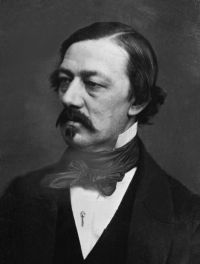
Portrait of Plutarch Plutarch,  Parallel Lives (c. 100 AD)

“ Besides this, Brutus and Cassius, when they fled from Rome, could not live safe or quiet, being condemned to death and pursued, and were thus of necessity forced to take arms and hazard their lives in their own defense, to save themselves, rather than their country. On the other hand, Dion enjoyed more ease, was more safe, and his life more pleasant in his banishment, than was the tyrant's who had banished him, when he flew to action, and ran the risk of all to save Sicily. ”
Source: Gutenberg

The historians' history of the world in twenty-five volumes…

“ English translation by Manning, The History of Dion-Cassius, London, 1704, 8 vols.
Dion Cassius Cocceianus, born 155 A.D. at Nicæa, in Bithynia, was a grandson of Dion Chrysostom. He held many official positions under different Roman emperors from Commodus to Alexander Severus, but about 230 returned to Nicæa where he passed the remainder of his life. His great work consists of 80 books, divided into decades. It originally covered the whole history of Rome from the landing of Æneas in Italy down to 229 A.D., but unfortunately only a small portion of it has come down to us entire.
”
Source: Gutenberg

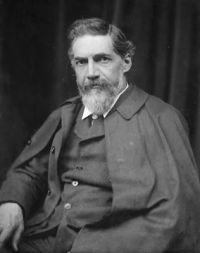
Portrait of Flinders Petrie Flinders Petrie,  Neglected British History (1917)

“ The account by Dion Cassius seems to distrust a large part of Caesar’s narrative. The advance across the Thames, and the capture of the town of Cassivellaunus, are not mentioned, and in this the British account agrees. Yet this latter is not derived from Dion, as it differs in the interval between the two invasions (two years for one) , in the return to Gaul after the second storm, and in Caesar staying the winter in London. Dion, therefore, is not the source of Tysilio, though both agree in disregarding Caesar’s attack on Cassivellaunus. ”
Source: Wikisource

Get perspective with Kwize: daily news enlightened by great literature