Dresden porcelain

Definition and stakes

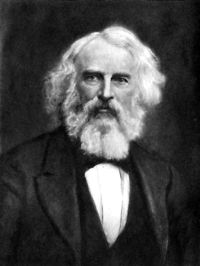
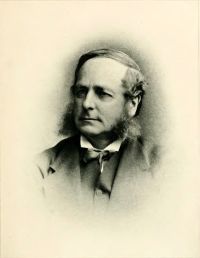
Portrait of Charles Wyllys Elliott Charles Wyllys Elliott,  Pottery and Porcelain, from early times down to the Philadelphia exhibition of 1876

“ It may not be amiss to hint to incipient collectors that not all Dresden porcelain is equally beautiful or desirable—which is true of the paintings of Raphael or Murillo—and that every collector should consider the intrinsic excellence of each piece, rather than the mark or name of the factory. ”
Source: Gutenberg

Portrait of Charles Wyllys Elliott Charles Wyllys Elliott,  Pottery and Porcelain, from early times down to the Philadelphia exhibition of 1876

“ The production of hard porcelain at this period had become a matter of importance; for it was well known that at Dresden most finished work of this kind had for a long time been made. Soft porcelain, though equally or more beautiful, was difficult to make, was then expensive, and lacked the strength and durability of the hard. Hard porcelain or pâte dure, was the one thing desired. But this could not{260} be made without the peculiar clay called kaolin, which the Saxons had, but which they would not allow the French to get. ”
Source: Gutenberg

Portrait of Charles Wyllys Elliott Charles Wyllys Elliott,  Pottery and Porcelain, from early times down to the Philadelphia exhibition of 1876

“ This is work which will bring any price, because it is so difficult and so uncommon; but it is not what I should value upon delft or{156} porcelain. It can never be so good as upon canvas; it is much more difficult to make it, and a small accident ruins it past repair.
It is not “decorating china;” it is simply trying to make a picture with materials unsuited for the purpose; and its only merit is that it shows difficulties overcome. It is precisely the same in principle as the mosaics. It would have been idiotic for Raffaelle to have made the Dresden Madonna in mosaic or on porcelain.
”
Source: Gutenberg

Get perspective with Kwize: daily news enlightened by great literature