 Anthony Trollope,
The Duke's Children
“ No one, probably, ever felt himself to be more alone in the world than our old friend, the Duke of Omnium, when the Duchess died. ”
Anthony Trollope,
The Duke's Children
“ No one, probably, ever felt himself to be more alone in the world than our old friend, the Duke of Omnium, when the Duchess died. ”
Taylor Prewitt, The Way They Lived Then
“ They gamble and lose, they fall in love, they run for office, they scheme and dally, they sin and reform. But the story is really about the one person who doesn't do anything: the Duke of Omnium. Grieved by the sudden loss of his wife and forced to deal with issues she would have addressed—basically, the children—he is forced to learn that where the children are concerned, even the Duke is far from omnipotent. ”
Evelyn Everett-Green, In Taunton town : a story of the rebellion of James Duke of Monmouth in 1685
“ I exclaimed eagerly, "surely you are for the Duke?""I am for the rightful King of the realm, whoever he be," was the cautious answer. "It is not given to us to choose our monarch. God sets Kings upon the throne, and bids us submit ourselves to the powers that be. ”
Anthony Trollope,
Phineas Redux
(1874)
“ They have been saying ever so long that the old Duke of Omnium means to marry her on his deathbed, but I don't suppose there can be anything in it.""Why should he put it off for so very inopportune an occasion?" asked Phineas. ”
Anonymous, Gesta Romanorum Vol. I (1871)
“ My beloved, the emperor represents any one whom the pride and vanity of life wholly engross. The knight to whom Jovinian first applied, is Reason; which ever disclaims the pomps and fooleries of life. The duke is conscience; the savage dog, is the flesh, which alarms the falcon, that is, divine Grace. The wife is the human soul; the clothes in which the emperor was at last arrayed, are the virtues that befit the true sovereign, that is, the good Christian. ”
 Charles Sears Baldwin,
Renaissance literary theory and practice
(1939)
“ And if the other son of Amphitryon, who there appears in habit of a duke, has as much mind to seize dominion as he has to follow good and flee evil, all the birds—not to say the men who act in this great play—would flock to obey him. ”
 Friedrich Schiller,
The Works of Frederick Schiller
“ Removed from the theatre of war, and condemned to irksome inaction, while his rivals gathered laurels on the field of glory, the haughty duke had beheld these changes of fortune with affected composure, and concealed, under a glittering and theatrical pomp, the dark designs of his restless genius. Torn by burning passions within, while all without bespoke calmness and indifference, he brooded over projects of ambition and revenge, and slowly, but surely, advanced towards his end. ”
“ It seems to me, my dear duke, that destiny has in the same way brought us together, endowed with conflicting attributes; you who have received from the gods the gift of reaching all hearts, I whose heart will never be made prisoner. ”
Evelyn Everett-Green, In Taunton town : a story of the rebellion of James Duke of Monmouth in 1685
“ The Duke came forward, riding a fine horse with all the grace and manly skill which helped to make him a King amongst men. His face was bright with smiles, he held his head-piece in his hand, and bowed right and left as he passed through the ranks of shouting, cheering citizens and country folk, all come out to do him honour.Beside him rode a body-guard of some forty or fifty gentlemen, well mounted and equipped; and amongst these I soon singled out my lord the Viscount, whose gallant bearing and golden locks made him conspicuous even amongst so many gay riders. ”
“ Lead to the King of Rome. My scarlet badge I thought unfading— The Duke. Faded in the sun? The Young Man. Of Austerlitz! Yes! History makes us drunk. The battles which no more are fought, are told. The blood is vanished, but the glory gleams. So that to-day there is no he but HE! He never won such victories as now: His soldiers perished, but his poets live. The Duke. In short— The Young Man. In short the huckstering times; the god They exiled; you, your touching fate, our weariness, And everything—I said— The Duke. ”
The Black Box: A Tale of Monmouth's Rebellion
“ Truly, a handsome warrant for your zeal; and may you fight as well for us. Grey hairs, when mixed with zeal and wisdom, count for much. And as for that sword-cut on your face, well, what adornment could outvie it in true loveliness? ..."Next, next! Remember that there is something for you all. Here a little--there a little--everywhere a little, and much for those as are right valiant. The Duke is not one to forget, I tell you. No, no, the sowers shall indeed reap heavily! What now, there, you who hold back, muttering? Hath Satan put a craven fear within your hearts? ”
 Edward Gibbon,
History of the Decline and Fall of the Roman Empire…
“ The youth of the emperor, and the impending dangers of a minority, required the support of a mature and experienced guardian; of an associate raised above the envy of his equals, and invested with the name and prerogatives of royalty. For the interest of the prince and people, without any selfish views for himself or his family, the great duke consented to guard and instruct the son of Theodore; but he sighed for the happy moment when he might restore to his firmer hands the administration of his patrimony, and enjoy the blessings of a private station. ”
Evelyn Everett-Green, In Taunton town : a story of the rebellion of James Duke of Monmouth in 1685
“ Looking round on this crowd of gallant officers and gentlemen, and seeing the hundreds pressing to join the standard, how could I feel that the Duke had aught but a triumphal march before him? He rewarded my confidence by taking me by the hand, and calling me a right brave and honest lad, whom he should remember in days to come; and then, whilst my hand was still tingling with the pressure, and my heart leaping for triumph and joy, I was given a place beside the other scribe, and commenced my duties as writer of names. ”
Evelyn Everett-Green, In Taunton town : a story of the rebellion of James Duke of Monmouth in 1685
“ After all, good Sir Ralph, if you and I can foresee a day when perhaps some such struggle must again be fought, though with another and a more righteous and legitimate champion, ere this land can be freed from the curse of tyranny, can we blame so harshly the younger and more ardent souls who saw in this young Duke a champion of liberty and religion? ”
 August Wilhelm von Schlegel,
Lectures on Dramatic Art and Literature
“ The interest here reposes altogether on the represented action; curiosity contributes nothing to our delight, for the Duke, in the disguise of a Monk, is always present to watch over his dangerous representative, and to avert every evil which could possibly be apprehended; we look to him with confidence for a happy result. The Duke acts the part of the Monk naturally, even to deception; he unites in his person the wisdom of the priest and the prince. Only in his wisdom he is too fond of round-about ways; his vanity is flattered with acting invisibly like an earthly providence ”
Evelyn Everett-Green, In Taunton town : a story of the rebellion of James Duke of Monmouth in 1685
“ How will the day turn? Which Duke will be England's King? We know that thou canst read the future in the stars, and the cards, and the crystal. Prithee tell us what will betide, and whether the friends or the foes of liberty and religion will triumph."It was a bold question; but I had not come empty-handed, and I slipped the golden guinea Lord Lonsdale had given me into the witch's palm. ”
Parodies of the works of English & American authors… (1886)
“ He’s an ogre to meet, and the devil to pass,With his charger prancing,Grim eye glancing,Chin, like a Mufti,Grizzled and tufty,Galloping, dreary Duke. Ye misses, beware of the neighbourhoodOf this galloping, dreary Duke;Avoid him, all, who see no goodIn being run o’er by a Prince of the Blood.For, surely, no nymph isFond of a grim phiz,And of the married,Whole crowds have miscarriedAt sight of this dreary Duke. Song supposed to be addressed by Lord Eldon to Ernest Augustus, Duke of Cumberland (afterwards King of Hanover) on his leaving England:—Fly Not Yet. ”
 John Dryden,
The Works of John Dryden, now first collected in eighteen volumes…
“ Next, to take as near our king as he could, he calumniates the Duke of Monmouth, with that height of impudence, that his sense is far blacker than his ink, exposing him to all the censures that a murderer, a traitor, or what a subject of most ambitious evil can possibly comprehend. ”
John Inglesant: A Romance (Volume 2 of 2…
“ The old Duke, broken-hearted by this blow, has virtually made over the succession to the Holy Father, and lives now, alone and silent in his magnificent palace, caring for no worldly thing, and devoting all his thoughts to religion and to his approaching end. He is unhappy in the prospect of his dissolution, and the only persons who are admitted to his presence are those who promise him any comfort in the anticipation, or any clearness in the vision, of the future life. ”
active 12th century de Troyes Chrétien, Cliges: A Romance
“ The emperor greatly rejoiced when he heard his nephew, Cliges, who thus addresses and exhorts them; right glad and comforted is he thereof. And the duke is utterly dumfounded, for now he knows well that he is betrayed unless his force is the greater; he bids his men close their ranks and keep together. ”
Henry Digby Beste, Four Years in France
“ Every one must lament the early fate of this prince, and the extinction of an illustrious house. The duke perished for having done or attempted to do what he thought to be his duty, and Bonaparte, in causing him to suffer death, regarded himself as acting according to his own. ”
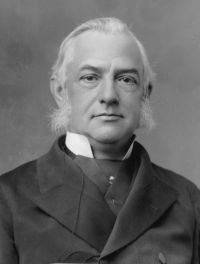 F. Max Müller,
Auld lang syne
(1898)
“ Whether he is supposed to be a sovereign by the grace of God, or by hereditary right, or by the voice of the people, he represents the country and the people; he is their duke, their king, their emperor, and if they wish to see him honoured by others, they must not fail to honour him themselves. ”
Henry Hallam, Introduction to the Literature of Europe in the Fifteenth…
“ A wise prince will honour the nobility, at the same time that he gives content to the people. [751] If the observance of these maxims is likely to subvert a ruler’s power, he may be presumed to have designed the ruin of the Medici. The first duke in the new dynasty of that house, Cosmo I., lived forty years in the practice of all Machiavel would have advised, for evil as well as good; and his reign was not insecure. ”
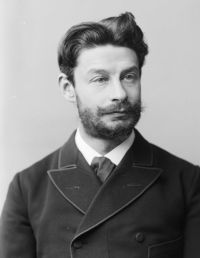 Georg Brandes,
Main Currents in Nineteenth Century Literature - 5…
“ The Duke rises; he takes a little time to fasten his mantle, which slips first off one shoulder, then off the other; he is unconsciously trying to delay his departure—too proud not to be ready to go, even if it be to death, and yet human enough to hesitate a moment on the fatal threshold. ”
Friedrich Schiller,
The Piccolomini: A Play
“ Then after come what may come. 'Tis man's nature To make the best of a bad thing once past. A bitter and perplexed "what shall I do?" Is worse to man than worst necessity. QUESTENBERG. Ay, doubtless, it is true; the duke does spare us The troublesome task of choosing. BUTLER. Yes, the duke Cares with a father's feelings for his troops; But how the emperor feels for us, we see. QUESTENBERG. His cares and feelings all ranks share alike, Nor will he offer one up to another. ”
 Romain Rolland,
Colas Breugnon
(1919)
“ No one cared whether the statue resembled the Duke or not; statues seldom do look like the people that they are supposed to represent; witness those of the saints, or our Lord Himself; but to the eye of faith they are perfectly satisfactory, and as a devout believer sees his god in a log of wood, just so that day we saw our Duke before us. All obstacles being removed, his Lordship proudly entered his own meadows, and we naturally followed; banners waving, drums beating, trumpets sounding, and the Holy Sacrament as a fitting climax. ”
 David Hume,
The History of England in Three Volumes…
“ Though theological principles, when set in opposition to passions, have often small influence on mankind in general, still less on princes, yet when they become symbols of faction, and marks of party distinctions, they concur with one of the strongest passions in the human frame, and are then capable of carrying men to the greatest extremities. Notwithstanding the better judgment and milder disposition of the king, how much has the influence of the duke already disturbed the tenor of government! ”
 Augustus J. C. Hare,
The Story of My Life, volumes 4-6
“ The Duke is here, and very unaffected and pleasant, really a very nice prince, and quite good-looking. He never fails to be punctual to the moment—a grand quality for a prince, and due, probably, to naval discipline. He talks a great deal, and talks well, but in reality princes have no chance—no chance at all—conversationally, as no one ever contradicts them, however much they disagree; no subjects are aired but those which they choose for themselves, and the merest commonplaces from royal lips are listened to as if they were oracles. ”
Evelyn Everett-Green, In Taunton town : a story of the rebellion of James Duke of Monmouth in 1685
“ But yet, I ween, there is something in our nature which makes us eager to see all that is to be seen, whether the sight be of sorrow or terror or joy; and therefore, when I approached the place where the Duke's standard had been set up, and saw that some sort of a tumult was going on about and around it, I pressed the more eagerly forward, and soon made my way (thinking less of my manners than of my eagerness and curiosity) into the innermost circle. ”
Imbert de Saint-Amand, The Happy Days of the Empress Marie Louise
“ One might say that he came into the world only to give a lasting example of the instability of human greatness. When he was at the point of death, worn out with suffering, he said sadly, "My birth and my death comprise my whole history." But this short story is perhaps richer in instruction than the longest reigns. The Emperor's son will be known for many ages by his three titles,—the King of Rome, Napoleon II., and the Duke of Reichstadt. ”
“ Such is Mount Olympus, the mouthpiece of all the wisdom of this great country. It may probably be said that no place in this 19th century is more worthy of notice. No treasury mandate armed with the signatures of all the government has half the power of one of those broad sheets, which fly forth from hence so abundantly, armed with no signature at all.Some great man, some mighty peer,—we'll say a noble duke,—retires to rest feared and honoured by all his countrymen,—fearless himself ”
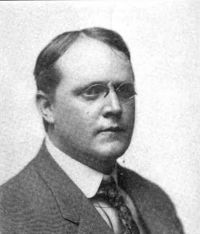 Frederic Stewart Isham,
Under the Rose
“ Charles? Francis? Not one of the troop would leave me for emperor or king! Not one but would follow me—where ambition leads!" Holding up the glass, he looked into the depths of the thick burgundy. "Why, a likely fellow like you should carry a gleaming blade, not a wooden sword. I know your duke—a man of lineage—a string of titles long as my arm—an underling of the emperor, while I"—closing his great jaw firmly—"owe allegiance to no man, or monarch, which is the same thing. ”
Evelyn Everett-Green, In Taunton town : a story of the rebellion of James Duke of Monmouth in 1685
“ Heaven alone knows what the issue of this day's work will be; but all that I have heard on this vexed question tends to the belief that England will not have your Duke for King, like she her present monarch never so little! If that be so, there will be lives lost and heads will fall—it may be mine amongst others. But no other man shall lose his life [Pg 175] through fault of mine. I might have brought a score, perhaps a hundred gallant followers into the field, but I would not tempt one to what may be his doom. Let each man choose his own lot in the struggle. ”
Earl of Beaconsfield Benjamin Disraeli, The Young Duke
“ All the world was there and of course our hero. Never was the arrival of a comet watched by astronomers who had calculated its advent with more anxiety than was the appearance of the young Duke. Never did man pass through such dangers. ”
C. Lee, The oak staircase (1900)
“ Power's description, had never been known in England since the days of the Black Prince. Indeed I began to think again of those marvellous stories that Shad used to tell of King Arthur and his knights of the Round Table, and my admiration for the Duke of Monmouth waxed hotter than ever. The Duke (so Dr. Power told us) was a true and stanch Protestant, and his uncle King James a bigoted Papist, who would force us all soon to be Papists too, unless we chose rather to be put to the torture or burned alive, like those poor souls in wicked Queen Mary's reign. ”
Evelyn Everett-Green, In Taunton town : a story of the rebellion of James Duke of Monmouth in 1685
“ The Duke had heard that there was an army of four thousand men close at hand, and he was afraid that he should be attacked before and behind if he pursued his intention, and be discomfited altogether. ”
 G. P. R. James,
Henry of Guise; or, The States of Blois…
“ This head may be lowly in the dust ere then.""Or circled with the crown of France," said the Count de St. Paul."God forbid!" exclaimed the Duke earnestly. If I thought that it would ever produce a scheme to wrest the sceptre from the line that rightfully holds it, I would bear it to-morrow to the foot of the throne, myself, as my own accuser. No, no! bad kings may die or be deposed: but there is still some one on whose brow the crown descends by right. And let him have it."The Cardinal of Bourbon, your Highness," said an attendant entering, "has just arrived from Soissons. ”
 Max BeerbohmHeadon HillFriedrich SchillerFrederic Stewart IshamG. P. R. James
 Niccolò Machiavelli
 Edith WhartonDr. Doran
 Alexandre DumasAnthony TrollopeEarl of Beaconsfield Benjamin Disraeli
 William Shakespeare
 Alphonse Daudet
 Edmond RostandRomain RollandF. Max Müller
 L. W. De LaurenceArtemus Ward
 Sigismund von Herberstein
