Eleusinian Mysteries

Definition and stakes

Dudley Wright,  The Eleusinian Mysteries and Rites

“ The Mysteries declared that the future life was not the shadowy, weary existence which it had hitherto been supposed to be, but that through the rites of purification and sacrifices of a sacramental character man could secure a better hope for the future. Thus the Eleusinian Mysteries became the chief agent in the conversion of the Greek world from the Homeric view of Hades to a more hopeful belief as to man's state after death. ”
Source: Gutenberg

Dudley Wright,  The Eleusinian Mysteries and Rites

“ Tully promulgated a law forbidding nocturnal sacrifices in which women were permitted to take part, but made an express exception in favour of the Eleusinian Mysteries, giving as his reason: "Athens hath produced many excellent, even divine inventions and applied them to the use of life, but she has given nothing better than those Mysteries by which we are drawn from an irrational and savage life and tamed, as it were, and broken to humanity. ”
Source: Gutenberg

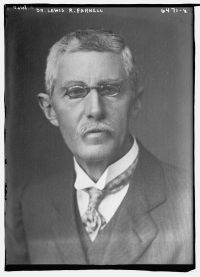
Portrait of Lewis Richard Farnell Lewis Richard Farnell,  1911 Encyclopædia Britannica (1911)

“ We must also be on our guard against supposing that when Pagan or Christian writers refer vaguely to “mysteria,” they always have the Eleusinian in their mind.
The questions that the critical analysis of all the evidence may hope to solve are mainly these: (a) What do we know or what can we infer concerning the personality of the deities to whom the Eleusinian mysteries were originally consecrated, and were new figures admitted at a later period? (b) When was the mystery taken over by Athens and opened to all Hellas, and what was the state-organization provided?
”
Source: Wikisource

Get perspective with Kwize: daily news enlightened by great literature